Paraguay is rewriting the price of its best-known competitive advantage. On 4 August 2026, the new president of the national electricity administration ANDE, Miguel Báez Reyes, said the utility would define a single, transparent technical tariff for every company that wants to set up in the country, with the study expected within 15 to 20 days.
Update, 13 September 2026: both deadlines in this item, the tariff study due within 15 to 20 days and the energy board's 30 days, have passed. Late-August coverage reported that ANDE was still studying the voltage-based tariffs and had not yet done its residential study, so check with ANDE before relying on any rate.
President Santiago Peña's instruction, as Báez Reyes described it, was to arrive at "a strictly technical tariff" rather than one negotiated case by case.
Priced by Voltage, Not by Volume
The structural change is what the tariff is based on. Rates are set by the voltage level at which a company connects, not by how much it consumes.
Connections at 500 kV are the cheapest, followed by 220 kV, then 66 kV and 23 kV. The logic is investment rather than favoritism: a customer taking power at high voltage absorbs the cost of the transformers needed to step it down, and pays less per unit as a result. A smaller operation connecting at 23 kV leaves that investment with the utility and pays the highest rate.
The immediate trigger is Atome, the industrial project whose power requirements forced the question, but ANDE has framed the outcome as a published schedule that applies to everyone rather than a bespoke deal.
Cheap, but Measurably Less Cheap
Here is the number worth writing down. According to the international reference study underpinning the work, the projected average tariff for the 2026 to 2030 period rises from a current average of 49.2 USD/MWh to 68.6 USD/MWh.
That is roughly a 39% increase over the period. Paraguay would still be inexpensive by regional and global standards, and cheap power will remain a genuine argument for locating energy-intensive operations here. But the era of assuming the number only ever falls is ending, and any business case built on today's rate holding through 2030 needs revisiting.
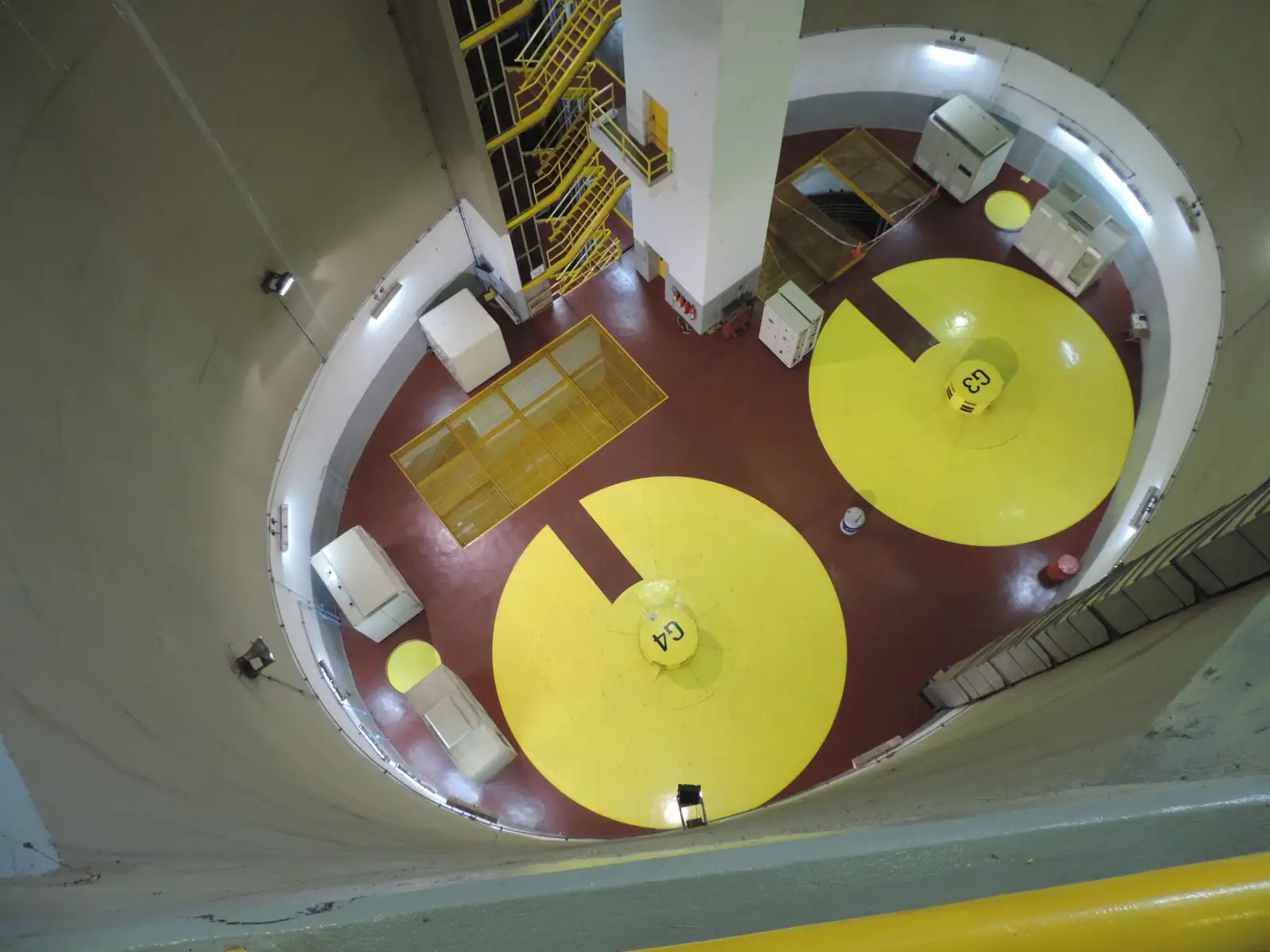
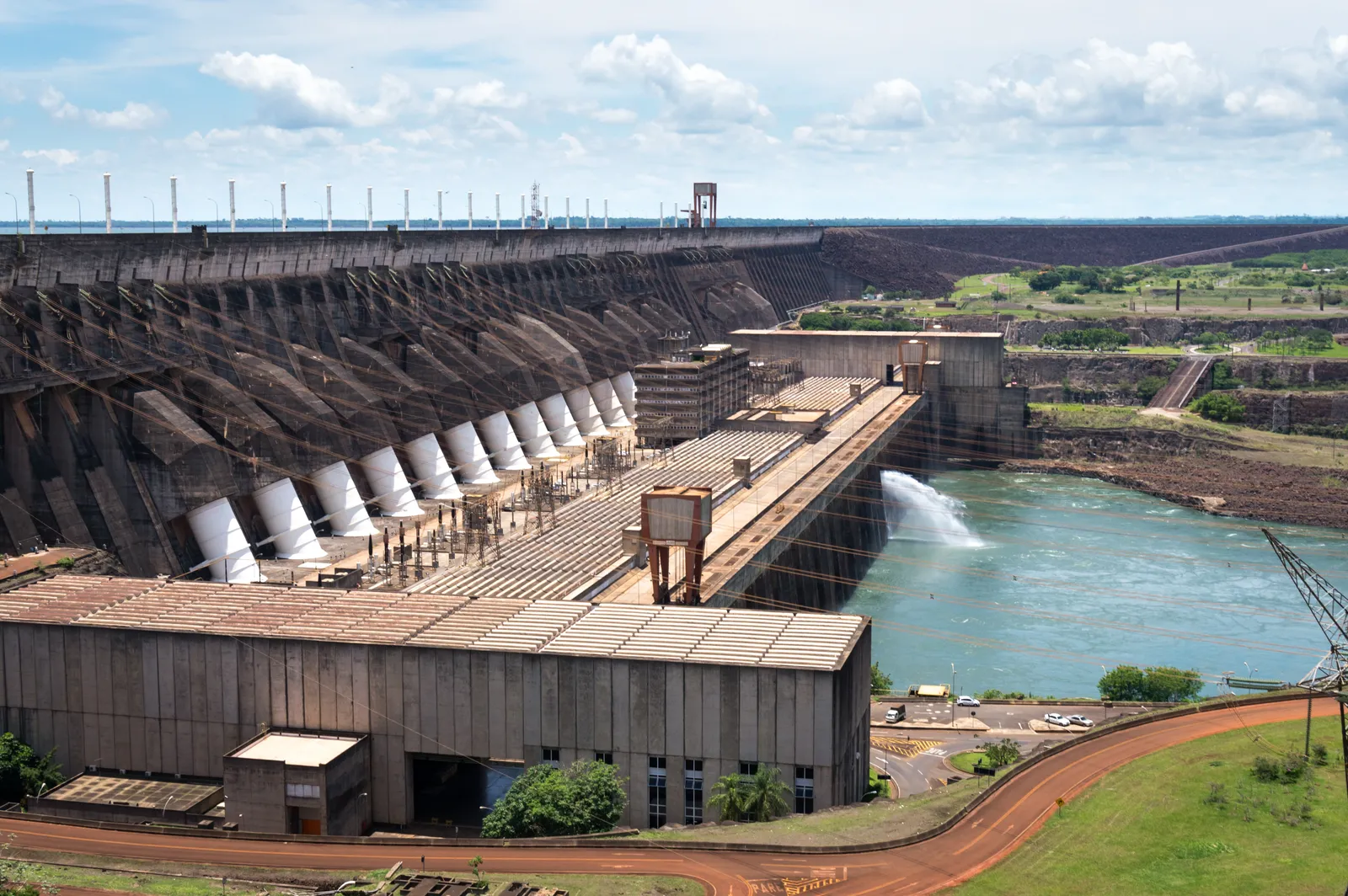
The pressure behind that is physical, not political. ANDE has stated that industrial connection requests now exceed the power available from Itaipú, and Báez Reyes has described the system as being at an inflection point, with periods of abundance becoming scarce.
Households Are in the Same Review
This is the part most coverage aimed at investors leaves out, and it matters more to a resident than the industrial schedule does.
ANDE is separately studying whether the residential tariff should rise. Báez Reyes put the principle bluntly: consumers should pay what corresponds to the real cost. No decision has been announced and no figure has been published, so nobody should budget for a specific increase. But the direction of the institutional thinking is not ambiguous.
If you are costing out a move, the current figures in our guide to utility costs remain accurate today and should be treated as a floor rather than a fixed ceiling for the years ahead.
The Institutional Rebuild Behind the Tariff
The tariff is one piece of a wider reconstruction. After replacing ANDE's leadership, Peña convened the national energy board and gave it 30 days to produce concrete proposals on rules for investors.
Vice-Minister of Mines and Energy Mauricio Bejarano has set out the intended architecture: a dedicated Ministry of Energy, an independent regulatory entity created by law to supervise the sector and guarantee transparency, and a public-private working group for the electricity subsector, which he called the first time the private sector will be invited to debate the electrical system this broadly.
The aim is legal certainty for private generation investment, in a sector where the state utility has effectively been operator, planner and regulator at once.
What It Means If You Live or Invest Here
For a household, nothing has changed yet, and any residential adjustment would be announced with a figure and a date rather than arriving silently.
For a business, the change is arguably positive even though the price rises. A published tariff by voltage level is something you can model; a case-by-case negotiation is something you can only hope to win. If you are weighing company formation or investment in Paraguay around energy-intensive activity, and mining or data infrastructure especially, the practical questions are now grid access, connection voltage and queue position rather than the headline rate.
This also sits behind the country's civil nuclear memorandum with the United States and the supply crunch we covered in July. One set of pressures, three responses: reprice the power, rebuild the institutions, and look for new generation.
Taxation is untouched by any of it. Paraguay's territorial system does not move with energy policy, and the two are unrelated despite appearing side by side in most investment pitches.
US citizens and green-card holders: electricity policy has no bearing on your tax position. The United States taxes worldwide income on the basis of citizenship, so a US person operating from Paraguay keeps filing at home regardless of what a local tariff does. Get US-qualified advice on your own circumstances.
Frequently Asked Questions
Will my electricity bill in Paraguay go up?
Possibly, but nothing is decided. ANDE has said it is studying whether the residential tariff should reflect real costs, without publishing a figure or a date. The confirmed trajectory applies to the industrial reference average, which is projected to rise from 49.2 to 68.6 USD/MWh across 2026 to 2030.
Why does connecting to the ANDE grid at a higher voltage cost less?
Because the customer takes on the transformer investment needed to step the power down. At 500 kV the company absorbs that cost and pays a lower rate per unit; at 23 kV the utility carries it and the rate is higher. It reflects who paid for which equipment, not a discount for size.
Is cheap electricity still a reason to bring a business to Paraguay?
Yes, though with a shorter horizon than the marketing suggests. Even at 68.6 USD/MWh Paraguay compares well internationally, and the supply is overwhelmingly hydroelectric. What has changed is that the rate is now trending up and that available capacity, rather than price, is becoming the binding constraint.
Weighing Paraguay for something that runs on power rather than paperwork? Grid access and connection voltage are settled with ANDE; we coordinate the residency side. Get in touch.
Disclaimer: This article is general information, not investment or tax advice. Tariff studies are provisional and the figures cited are projections, not set rates. Confirm the current position with ANDE or a qualified adviser before making commitments.
Sources
- ▹ABC Color: ANDE definirá este mes nueva tarifa técnica para Atome y todas las industrias que quieran venir
- ▹Última Hora: Tarifa única para Atome y otras industrias se definiría este mes
- ▹Última Hora: ANDE estudia si sube o no la tarifa residencial
- ▹ABC Color: Tras cambiar al titular de la ANDE, Peña da 30 días a la Mesa Energética para fijar reglas a inversores
- ▹Última Hora: ANDE, pedidos de industrias superan a la potencia disponible de Itaipú
- ▹La Tribuna: Se enfría el debate sobre el tarifazo eléctrico, pero no descartan una suba

About the author
Yannick Schroth
Founder · Paraguay relocation support
Spends regular time in Paraguay and, with his team on the ground in Asunción, guides international nomads, entrepreneurs and investors through residency, the cédula and the RUC paperwork.