
You found Paraguay's 0% territorial tax, you priced out an apartment in Asunción, and then your US passport ruined the math. If you are a US citizen or a green-card holder, moving to Paraguay does not switch off your US tax return. The United States taxes its citizens on worldwide income no matter where they live, and Paraguay residency changes almost nothing about that obligation.
This is the honest version most relocation pitches skip: what US tax still applies, what the Foreign Earned Income Exclusion actually saves you, why self-employment tax is the real sting, and what renouncing citizenship would really cost. For the practical side of the move itself, see our guide to moving from the US to Paraguay.
If you are not a US person, this page is not your problem. Skip to Paraguay's 0% territorial tax system or the Paraguay vs Dubai vs Panama vs Georgia comparison, because most of the good news in Paraguay marketing was written for you, not for Americans.
US citizens and green-card holders: You are taxed on your worldwide income regardless of where you live (citizenship-based taxation). Paraguay residency does not remove your US tax filing or liability; only renouncing citizenship does, with a possible exit tax. The FEIE only helps partially. Consult a US-qualified advisor.
Why US Citizens Still Owe US Tax After Moving to Paraguay
Here is the 40-second answer, because it is the whole article in miniature. A US citizen who lives full-time in Paraguay still has to file a US federal tax return for every year their income reaches the IRS filing threshold, still reports worldwide income on it, and still potentially owes US tax on income Paraguay leaves at 0%. Paraguay does not tax your foreign-source income. The United States does.
Residency in a zero-tax country removes the foreign tax but not the US tax, and for many Americans that is exactly the wrong way round.
This surprises people because almost every other developed country works on residency-based taxation. A German, a Canadian, or an Australian who genuinely moves their tax residence to Paraguay generally stops owing income tax back home on foreign earnings. The American who does the identical thing keeps the IRS as a lifelong tax authority. The physical move is the same. The tax outcome is not, and that gap is the single most expensive misunderstanding US persons carry into a Paraguay plan.
None of this means Paraguay is pointless for Americans. It means the value proposition is different: lower cost of living, a stable second residency, a genuine plan B, and a base that is friendly to remote work. Just not the clean 0% that a non-American gets. Read the rest before you sign anything.
Citizenship-Based Taxation: The Rule Almost No Other Country Uses
The technical name for the trap is citizenship-based taxation. The United States is one of only two countries on earth that taxes on the basis of citizenship rather than residence (the other is Eritrea). Every other major economy taxes people based on where they actually live. So while a Portuguese or a Georgian tax resident of Paraguay can legitimately reach a very low or zero personal rate, a US citizen carries US tax jurisdiction in their passport.
Practically, citizenship-based taxation means three things follow you across every border for as long as you hold the passport. First, an annual Form 1040 filing obligation, even in years you owe nothing. Second, worldwide income reporting: wages, self-employment profit, dividends, interest, capital gains, crypto gains, and rental income, wherever earned. Third, a stack of information returns (covered further down) that have nothing to do with tax owed and everything to do with disclosure.
The system has real teeth because it is enforced through the banks. FATCA presses foreign financial institutions to identify US account holders and pass their details to the IRS, which is why some banks abroad decline American clients rather than deal with the paperwork. You do not escape US tax by being quiet about it.
Paraguay is a gray zone here rather than a reporting pipeline. No FATCA intergovernmental agreement with the US is in force, only a Model 2 text agreed in substance, although some Paraguayan banks still ask Americans for a W-9. Your own filing duties do not wait for any of that.
Does Paraguay Residency Reduce Your US Tax Bill?
Directly, no. Paraguay residency does not reduce your US federal tax on its own, because the US does not care where you are resident; it cares that you are a citizen. What Paraguay gives you is a place to live cheaply and a legitimate tax home abroad, and that tax home is what unlocks the US-side reliefs that do exist. So the honest framing is: Paraguay does not lower your US tax, but living in Paraguay can qualify you for US tax breaks that a stateside American cannot use.
There is a bitter irony worth naming. The main US relief for expats, the Foreign Tax Credit, offsets US tax dollar-for-dollar with tax you paid to a foreign government. In a normal high-tax country an American often owes little US tax because the local tax already ate the bill. On foreign-source income Paraguay charges 0%, so there is no foreign tax to credit, and the US tax can land in full on anything the exclusions do not cover.
The 0% that makes Paraguay attractive to everyone else can leave an American more exposed to US tax, not less.
That is why the two levers that matter for Americans in Paraguay are the Foreign Earned Income Exclusion and, if you go far enough, renunciation. Everything else is bookkeeping. For the entity side, the guide to Form 5472 for foreign-owned LLCs covers how a US company fits with a Paraguay base, though the personal citizenship-based tax on the owner still applies.
One caveat on the Paraguay side runs in the opposite direction. Pay for tasks you perform inside Paraguay's borders may be treated as locally sourced, landing in the IRP bracket of 8 to 10%, even if all your clients sit outside the country. Sorting out which side of that line your earnings fall on is a job for a Paraguayan tax adviser, and whether tax paid there changes your US credit is a question for your US preparer.

The Foreign Earned Income Exclusion (FEIE) and Form 2555: Partial Help
The Foreign Earned Income Exclusion is the relief every American expat has heard of, and it is genuinely useful, within limits. Filed on Form 2555, the FEIE lets you exclude a large slice of earned income from US tax: $132,900 for the 2026 tax year, up from $130,000 in 2025 and indexed upward each year. On top of it, a Foreign Housing Exclusion can shelter some housing costs above a base amount, capped by location.
To claim it you have to qualify as living abroad, by one of two tests. The Physical Presence Test requires 330 full days outside the US in any rolling 12-month period. The Bona Fide Residence Test requires being a genuine resident of a foreign country for a full calendar year, which a real Paraguay residency and cédula supports well.
Note the friction: the 330-day test means your US visits are effectively rationed to about a month a year, and a couple of extra weeks stateside can blow the exclusion for a whole year.
Now the limits, because this is where hype dies. The FEIE only covers earned income: salary and net self-employment profit. It does nothing for passive income. Dividends, interest, capital gains, crypto disposals, and rental income are all fully taxable by the US with no FEIE shelter at all. An investor or trader living off a portfolio gets almost no help from Form 2555. And if you earn above the exclusion ceiling, everything over the cap is taxed by the US at regular rates.
Considering the move with a US passport? On a free intro call we walk through the Paraguay half: which residency route fits, the documents, the trips, and how long the cédula takes. Your US numbers belong with a US tax professional (CPA or enrolled agent), because our packages stop at the Paraguayan paperwork. Book an intro call
Self-Employment Tax: The Trap Most Nomads Miss
Here is the part that catches freelancers, consultants, and one-person online businesses, and it catches them hard. The FEIE excludes income from income tax. It does nothing for self-employment tax. If you run your business as a sole proprietor or a US LLC taxed as a disregarded entity, your net profit is subject to US self-employment tax at 15.3% (12.4% for Social Security up to the annual wage base, plus 2.9% for Medicare with no ceiling), no matter how far below the FEIE ceiling you are.
Read that again, because it is the single most common shock. A digital nomad who nets $90,000 of self-employment profit, lives 365 days a year in Asunción, and correctly excludes all of it from income tax via the FEIE, can still owe roughly $12,000 to $13,000 in US self-employment tax. The move south did not touch it. The IRS treats that profit as if you were sitting in Ohio.
Some countries have a Totalization Agreement with the US that can exempt an American from US self-employment tax where they pay into a foreign social-security system instead. Paraguay does not have one with the US, as of 2026. So there is no local system to opt into that switches the US self-employment charge off. This is precisely why the choice of business structure matters so much for US persons.
That decision needs a US-qualified advisor, not a blog, because the wrong structure can cost more than it saves.
FBAR and FATCA: The Reporting Side of US Tax Compliance
Even in a year you owe zero US tax, US persons abroad face disclosure obligations that carry brutal penalties for non-filing. Two acronyms dominate.
The FBAR (FinCEN Form 114) must be filed if the combined high balance of all your foreign financial accounts exceeds $10,000 at any single moment during the year. Not the average, the peak, and not per account but aggregated. A Paraguayan bank account, a foreign brokerage, and a fintech wallet that briefly total $10,001 together trigger it. The FBAR is not a tax; it is a report.
But willful failure to file carries penalties that can exceed the account balance, which makes it one of the most dangerous forms to ignore.
FATCA reporting, on Form 8938, is filed with your tax return when foreign financial assets exceed thresholds that are higher for Americans living abroad, generally starting around $200,000 at year-end for a single filer, more for couples. It overlaps with the FBAR but is not the same form, and yes, you can be required to file both for the same accounts.
Add in Form 5471 or 8865 if you own foreign companies and Form 3520 for certain foreign trusts and gifts, and you see the pattern: US tax compliance abroad is less about tax owed and more about a filing burden that a stateside American never touches; our FBAR and FATCA guide for expats walks through both forms in detail.
The takeaway is not "give up". It is "budget for a US expat tax preparer". Doing your own 1040 with FEIE, self-employment tax, FBAR, and FATCA is a way to make an expensive mistake for the sake of saving a few hundred dollars.
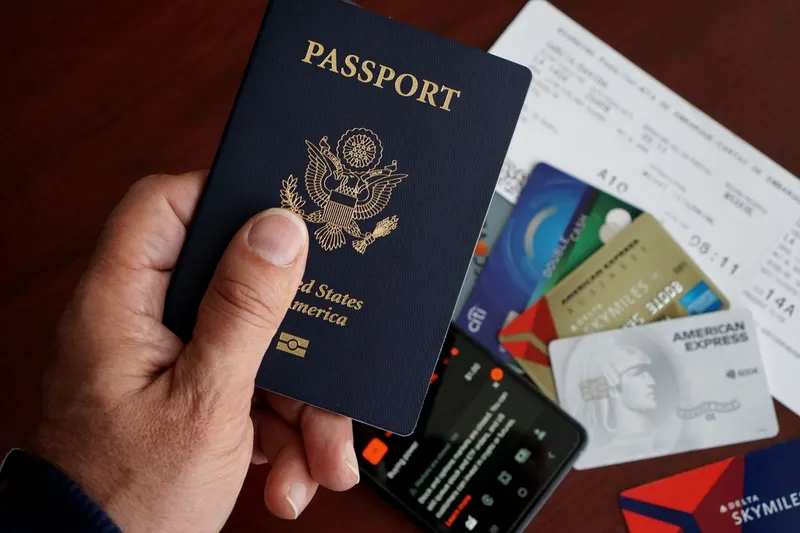
Green-Card Holders: The Same Worldwide US Tax Rules Apply
If you hold a US green card, do not assume any of this is lighter for you. A lawful permanent resident is a US tax resident and is taxed on worldwide income under the same rules as a citizen, for every year the green card is valid, even if you spend that year entirely in Paraguay. Physically leaving the US does not end green-card tax status; the card has to be formally abandoned or it stays live in the eyes of the IRS.
Long-term green-card holders face an extra sting. If you held the card in at least 8 of the last 15 years, you are a "long-term resident", and giving up the card can trigger the same expatriation exit tax that applies to citizens who renounce (below). Many green-card holders assume they can quietly let the card lapse and walk away tax-free. For long-term holders that is not how it works, and the exit tax can apply on the way out.
For green-card holders the calculus around a Paraguay move is genuinely different from a citizen's, because you may plan to surrender the card eventually anyway. That makes the timing of expatriation, and getting five clean years of US tax compliance on record first, a decision worth professional planning well before you move.
Renouncing US Citizenship and the Exit Tax Reality
For some high-earning US persons, the only route to a true 0% life in Paraguay is to renounce US citizenship. It is legal, it is done, and it is not a decision to romanticize. Renunciation is irreversible, requires an in-person appointment at a US consulate, and carries a State Department fee of $450, cut from $2,350 on 13 April 2026. You also have to certify five prior years of full US tax compliance to do it cleanly.
The financial catch is the exit tax under Section 877A, which applies to "covered expatriates". You are a covered expatriate if you meet any one of three tests: a net worth of $2 million or more; an average annual US income tax liability over the past five years above an inflation-indexed threshold ($211,000 for 2026, indexed each year); or a failure to certify five years of tax compliance.
Hit any one, and the US treats you as if you sold everything you own the day before you expatriated, taxing the unrealized gain above an exclusion amount ($910,000 for 2026, indexed) at capital-gains rates. Retirement accounts and certain deferred assets get their own harsh treatment.
So renunciation is a real tool, but a blunt one, and it is genuinely useful mainly for people wealthy enough that the lifetime US tax drag exceeds the one-time exit cost, or young enough and asset-light enough to fall under the covered-expatriate thresholds. If your net worth is modest and your income is ordinary, renunciation is usually not the relevant question, and the FEIE is the main relief to model with your preparer.
If your net worth is high, renunciation is a multi-year project you start long before you move, with a US-qualified advisor and, usually, another citizenship already secured.
Not a US person? Then Paraguay's territorial rules apply to you without the US layer. See how residency actually works in the Paraguay residency and cédula guide and how the tax base is built in the 0% territorial tax guide.
Who Actually Benefits From Paraguay as a US Person
Strip out the hype and Paraguay still makes sense for several kinds of Americans, just for reasons other than a clean 0%. If your income is mostly earned and sits under the FEIE ceiling, you can wipe out US income tax and be left only with self-employment tax, which structure can sometimes reduce. If your priority is cost of living, a stable second residency, and a real plan B rather than tax zero, Paraguay delivers that at a fraction of what Dubai or Portugal costs.
And if you are seriously considering renunciation down the line, that decision belongs with a US-qualified adviser well before any move.
Where Paraguay does not magically help the US person is passive income at scale. A crypto investor or a portfolio-heavy retiree who expected the 0% headline to cover capital gains will be disappointed, because the US taxes those gains regardless of Paraguay. For that profile the honest advice is to model the US tax first and treat Paraguay as a lifestyle and cost decision, not a tax escape.
The rule of thumb: for a US citizen, Paraguay is a lifestyle-and-cost win and only a partial tax win, and anyone who tells you otherwise is selling you the non-American version of the pitch. Get the US side modeled by a US-qualified advisor, then let Paraguay do what it is genuinely good at.
Everything an American needs in one place, from the filing reality to the residency and the cost base, sits on the Paraguay hub for US citizens and green-card holders.
Frequently Asked Questions About US Citizens and Paraguay Tax
Do US citizens still pay US tax while living in Paraguay?
Yes. US citizens are taxed on worldwide income regardless of where they live, so a US citizen in Paraguay still files a US return and can still owe US tax. Paraguay's 0% territorial tax can remove the local tax on foreign-source income, never the US tax. The Foreign Earned Income Exclusion can reduce or eliminate US income tax on earned income, but not self-employment tax or tax on passive income.
Does the Foreign Earned Income Exclusion make US tax zero in Paraguay?
Not fully. The FEIE (Form 2555) can exclude $132,900 of earned income for 2026, indexed upward each year, but only if you pass the physical-presence or bona-fide-residence test. It does nothing for dividends, interest, capital gains, crypto, or rental income, and it does not reduce self-employment tax. Many US persons still owe something even after claiming it.
Do US freelancers in Paraguay owe self-employment tax?
Usually yes. US self-employment tax of 15.3% applies to net self-employment profit even when the FEIE wipes out your income tax, because the exclusion covers income tax only. Paraguay has no totalization agreement with the US as of 2026, so there is no foreign system to opt into. Business structure can sometimes reduce this, which is a decision for a US-qualified advisor.
What are FBAR and FATCA for US persons in Paraguay?
They are disclosure obligations, not taxes. The FBAR (FinCEN Form 114) is required if your foreign accounts together exceed $10,000 at any point in the year. FATCA's Form 8938 is filed with your tax return when foreign financial assets pass higher thresholds, generally around $200,000 for single filers abroad. Penalties for not filing are severe, so budget for a US expat tax preparer.
Does Paraguay residency remove US tax liability for green-card holders?
No. Green-card holders are US tax residents taxed on worldwide income for as long as the card is valid, even while living full-time in Paraguay. Leaving the US does not end that status; the card must be formally abandoned. Long-term holders (green card in 8 of the last 15 years) can also face the expatriation exit tax when they give it up.
How much does renouncing US citizenship cost, including the exit tax?
The State Department fee has been $450 since 13 April 2026 (it was $2,350 before), and you must certify five years of US tax compliance. "Covered expatriates" (net worth of $2 million or more, average annual tax above $211,000 for 2026, or non-compliance) also face the Section 877A exit tax, a mark-to-market tax on unrealized gains above an indexed exclusion, $910,000 for 2026. It is irreversible and worth professional planning.
Is Paraguay still worth it for a US citizen if the tax is not zero?
Often, yes, but for different reasons. Paraguay offers a very low cost of living, a stable second residency, and a genuine plan B at a fraction of Dubai or Portugal prices. For Americans whose income is mostly earned and under the FEIE ceiling, the effective US tax can be modest. Treat Paraguay as a lifestyle-and-cost decision with partial tax benefit, not a full tax escape.
Should a US person get advice before moving to Paraguay for tax reasons?
Absolutely, and before anything is signed. The interaction of the FEIE, self-employment tax, FBAR, FATCA, entity choice, and possible renunciation is genuinely complex and specific to your income mix and net worth. A US-qualified advisor can model your real numbers, and the Paraguay-side residency can then be built around that plan rather than the other way around.
Legal basis and disclaimer: This article is general information, not individual US tax or legal advice, and rules can change. US federal tax rules for citizens and green-card holders are published by the Internal Revenue Service (IRS). Consult a US-qualified adviser before you act. None of this replaces the US chapter of PwC's country file.

About the author
Yannick Schroth
Founder · Paraguay relocation support
Spends regular time in Paraguay and, with his team on the ground in Asunción, guides international nomads, entrepreneurs and investors through residency, the cédula and the RUC paperwork.
Note: this article reflects the position at the time of publication. Laws, prices and deadlines can change, so individual details may since be out of date. Check the current rules before you act on them: we answer questions about residency and our services, while the tax treatment of your own case belongs with a qualified tax adviser.