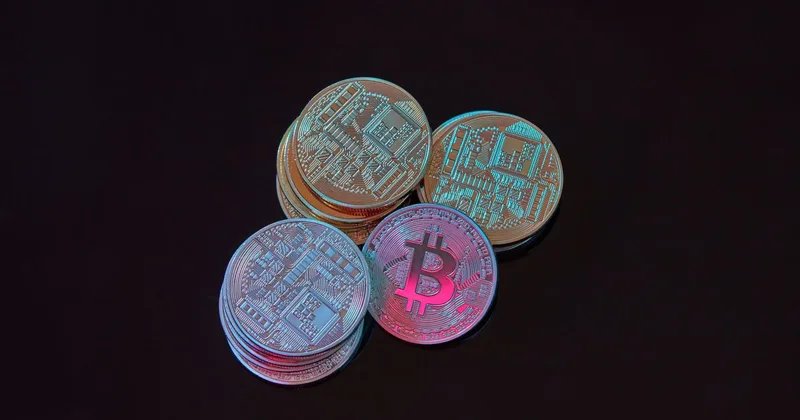
A landlocked country of under seven million people should not be a name that Bitcoin miners around the world recognize. Paraguay is, and the reason is water. Two enormous binational dams, Itaipú and Yacyretá, generate far more electricity than the country can use, and for years the surplus was sold cheap or simply spilled downriver. Miners noticed. They arrived with shipping containers full of machines and plugged into what was, for a while, some of the least expensive industrial power anywhere.
That story is still true, but it is getting more complicated by the month. Tariffs are rising, Congress has started asking who holds mining connections and where, and there is a hard expiry date on the horizon that changes the whole calculation. If you are weighing Paraguay as a place to mine, or simply trying to understand why it keeps coming up in the same breath as low taxes and cheap energy, here is the grounded version as of 2026.
Why Paraguay Became a Bitcoin Mining Magnet
The pull was never the regulation or the tax code. It was the kilowatt-hour. Itaipú alone is one of the largest hydroelectric plants on earth, and Paraguay owns half of its output while consuming only a fraction of it. The rest flows to Brazil under a decades-old treaty, often at prices Paraguay considers too low.
That surplus gave the national utility, ANDE, a strong incentive to sell power to any industry that could soak up large, steady loads. Few industries fit that description better than proof-of-work mining, which runs flat out, day and night, wherever electricity is cheapest.
For a stretch, Paraguay offered miners industrial rates that undercut most of the world. Cheap power is the single largest variable in mining economics, so even a small edge per kilowatt-hour compounds into a decisive advantage across thousands of machines. Chinese operators displaced by Beijing's 2021 mining ban, along with North American firms hunting for cheaper hosting, found a willing seller with power to spare.
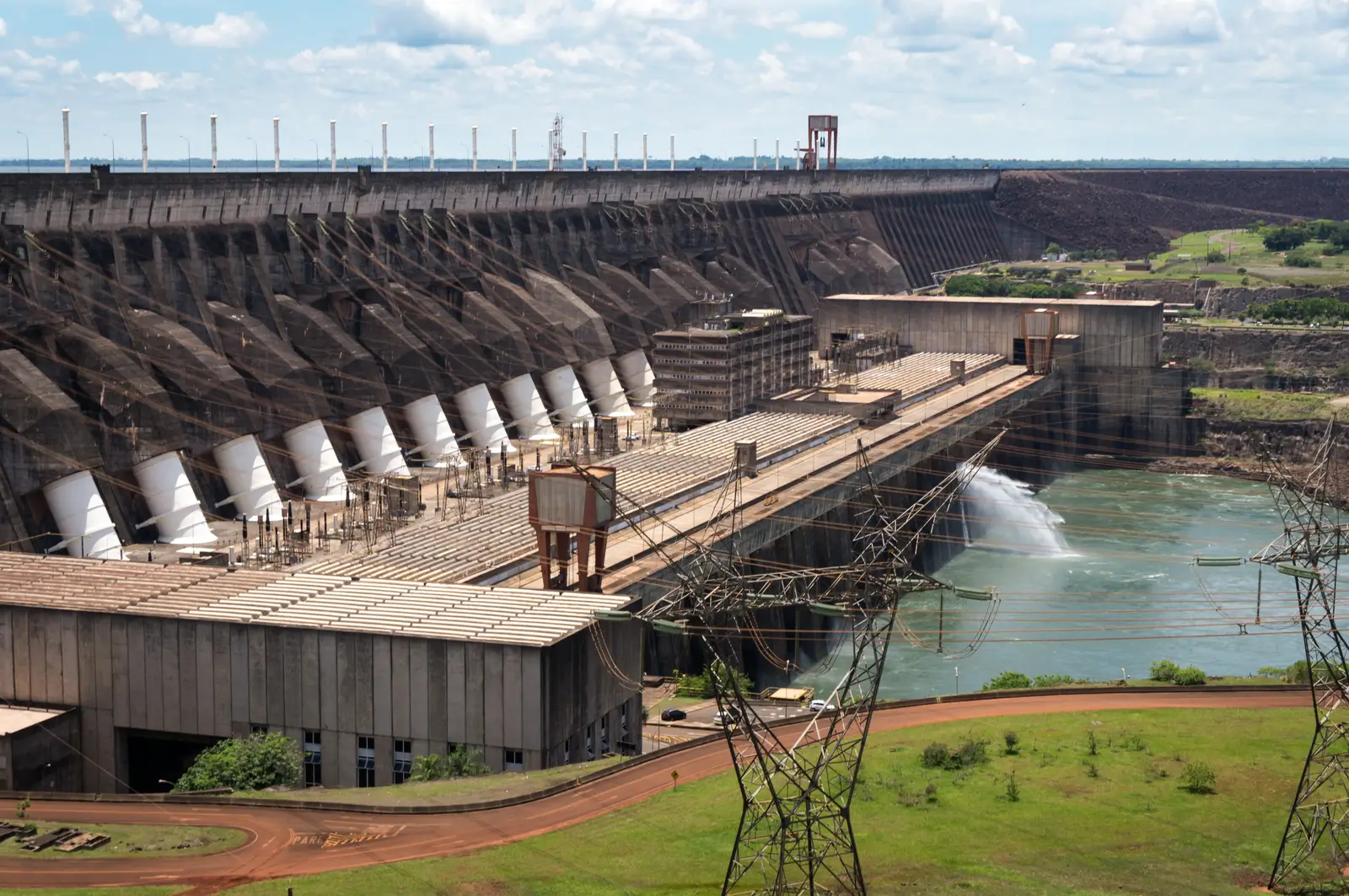
Photo: “Usina Hidroelétrica Itaipu Binacional - Itaipu Dam (17335056486)” by Deni Williams from São Paulo, Brasil, Wikimedia Commons, CC BY 2.0, scaled (WebP)
The Rules: Licensing, Registration, and an Energy-Theft Crackdown
Worth being precise here, because plenty of coverage is not: Paraguay has no dedicated crypto-mining law. A bill to regulate mining and trading cleared Congress in 2022 and was vetoed by the president, and the blunter proposal that followed two years later died too, as described below. What governs the activity instead is the ordinary stack: your ANDE electricity contract, general company and tax law, and since 2026 the crypto reporting rule.
Within that stack, legal mining runs on authorization from the Ministry of Industry and Commerce and a metered ANDE connection. On 4 December 2025 the Chamber of Deputies asked for more visibility into it, approving two pedidos de informe: information requests giving the MIC and ANDE fifteen days to hand over the full list of authorized miners and of the electrical connections enabled for them, names and locations included. Neither resolution places a new registration duty on operators.
The clandestine problem is real, and Paraguay treats it seriously. In July 2024 the Senate passed a law setting penalties of up to ten years in prison for stealing electricity to run unauthorized mining rigs. Illegal hookups had been straining local grids and, in the state's telling, stealing revenue that legitimate operators pay for.
Earlier that year lawmakers had floated something blunter still: a proposed 180-day ban on mining altogether, justified by grid-stability and energy-theft concerns. It drew fierce pushback from legislators who argued the industry brought real money into the country, and the ban was shelved.
The throughline is that Paraguay is not hostile to mining, but it is done treating it as an unregulated free-for-all. Authorization, a formal ANDE contract and a metered connection are the price of entry, and tapping power outside that system carries real criminal risk.
What the Power Actually Costs Now
Here is where the romance fades. The cheap-power advantage that built the industry is narrowing. In money rather than percentages, the medium-tension rate miners actually pay went from about $0.03 per kWh when the industry arrived to roughly $0.051, and more recently towards $0.06.
That climb did not happen in one step. The best-documented round came in mid-2024, when ANDE raised the crypto-mining tariff by roughly 9% to 16% depending on the connection; the rest of the distance from $0.03 reflects other adjustments over the years, and published figures differ by source and connection category.
The 2024 round was not arbitrary: it followed a renegotiation between Paraguay and Brazil over the price of Itaipú energy, which lifted the underlying generation tariff by about 15% to roughly nineteen dollars per kilowatt of contracted capacity per month through 2026.
When the wholesale cost of your power rises, the utility passes it along, and miners are the most visible customers to pass it to.
The effect on the ground has been a shakeout. ANDE's mining-tariff revenue keeps climbing, projected at around 350 million dollars in 2026, up from roughly 295 million in 2025 and only about 100 million in 2024. Yet the number of legal operators nearly halved over the same window, by one industry count from about 71 at the start of 2025 to roughly 41 in 2026.
Read those two numbers together and the picture is clear: the state is earning more from fewer, larger players. Rising tariffs are quietly pricing out the small and marginal miners while the well-capitalized operations with efficient machines and locked contracts absorb the increase and stay.
Moving to Paraguay with capital to deploy? Our part is the residency procedure: coordinating translations, appointments and the cédula. Whether a mining site pencils out is for ANDE, your engineers and your own advisers to judge, and for the Paraguayan tax side we can connect you with a partner tax adviser. Get in touch.
What It Costs to Mine One Bitcoin in Paraguay
The tariff percentages above are the industry's way of talking about this. The number people actually search for is what a single coin costs, so here it is, calculated rather than asserted.
Mining is a race for a fixed daily prize. The network issues 144 blocks a day at 3.125 BTC each, or 450 coins, and every machine on earth competes for them. Your share of that prize equals your share of the network's computing power, which means the electricity behind one coin depends on three things: how much power the whole network burns, how efficient your own hardware is, and what you pay per kilowatt-hour.
In mid-August 2026 the network was running at roughly 910 EH/s. At that level, a fleet of a given efficiency needs the following to earn one bitcoin:
| Hardware efficiency | Electricity per coin | At $0.051/kWh | At $0.06/kWh |
|---|---|---|---|
| 15 J/TH (current top tier) | ~728,000 kWh | ~$37,100 | ~$43,700 |
| 20 J/TH (recent, not newest) | ~971,000 kWh | ~$49,500 | ~$58,200 |
| 25 J/TH (older fleet) | ~1,213,000 kWh | ~$61,900 | ~$72,800 |
Set that against the price. Bitcoin traded around $63,000 to $65,000 through August 2026, down from roughly $93,000 earlier in the year.
Now the picture is arithmetic instead of atmosphere. Newest-generation hardware at the better tariff leaves a wide margin. The same hardware at $0.06 leaves less. Older machines at $0.06 cost more in electricity alone than the coin is worth, and no amount of cheap Paraguayan water fixes that.
The Two Mining Costs That Are Not in the Table
Two things make the real number worse, and both are specific to Paraguay.
The first is grid loss. Transmission here runs overhead rather than underground, in summer heat that can pass 40°C, and operators report roughly 8% losses at the substation. Drawing 100 MW means paying for about 108, so add 8% to every figure above. Top-tier hardware at $0.06 becomes about $47,200 a coin.
The second is capital that never reaches a machine. ANDE now requires three months of energy costs as a guarantee deposit before you connect, which for a 40 MW site is roughly $4.5 million sitting idle. Miners operate under the GCIE category for intensive industrial consumers, the classification that reset the unit economics when it arrived.
Why Paraguay's Mining Operator Count Halved
Read the table against the operator numbers and the shakeout explains itself. Going from 71 legal operators to 41 is not a story about regulation turning unwelcoming. It is what happens when the electricity cost of a coin approaches the price of the coin for anyone not running current hardware on a favorable contract.
That is also why ANDE's revenue climbed while the operator count fell. The survivors are larger, more efficient, and drawing more power each.
Recalculating the Cost of Mining Bitcoin Yourself
These figures move, so treat them as a snapshot and redo the arithmetic before committing anything. The formula is short:
kWh per coin = (network hashrate in TH/s × efficiency in J/TH × 86,400) ÷ 3,600,000 ÷ 450
Then multiply by your tariff and add your loss factor. Difficulty adjusts roughly every two weeks, the block reward halves again in 2028, and a rising hashrate lifts the cost of a coin for everyone who does not grow with it. Our reporting on ANDE's unified industrial tariff covers where the price side is heading.
The 2027 Cliff and the Competition From AI
The most important number for anyone considering an entry is not a tariff. It is a date. Every current crypto-mining contract with ANDE is set to expire on 31 December 2027, and the utility has signaled that the deadline is not up for negotiation. ANDE wants that capacity back, partly to serve growing domestic demand and traditional industry, and partly because a new and hungrier bidder has appeared: artificial intelligence.
Data centers for AI training and inference want exactly what miners wanted, large blocks of cheap, reliable power, but they promise more jobs, more prestige, and longer-term commitments than container farms of ASICs. As Paraguay courts that investment, Bitcoin mining looks less like the future of its surplus and more like a transitional tenant.
None of this means mining ends in 2027. Contracts may be renewed on new terms, and the country's power surplus is not disappearing. But planning a multi-year mining operation around infrastructure whose legal footing resets in a couple of years is a materially different bet than it was in 2021.
How Bitcoin Mining Is Taxed in Paraguay
Mining is a commercial activity, so the tax question is a business question. A Paraguayan company that mines earns income sourced in Paraguay, which means it falls under the corporate income tax (IRE) at a headline rate of 10%, plus value-added tax on relevant transactions and the usual payroll and municipal obligations. Profits paid out to the owners carry a further dividend tax (IDU) of 8% for Paraguayan tax residents and 15% for non-residents.
This is domestic-source income by nature, so Paraguay's famous territorial system, which exempts genuinely foreign income, does not make a local mining operation tax-free. The electricity, the hardware, and the hashing all happen here.
Where the territorial principle does matter is on the personal side. If you are a tax resident of Paraguay and you also hold income or assets abroad, that foreign income is generally outside the Paraguayan net. But a mining business run on Paraguayan soil is local income, taxed locally, and you should model it that way rather than assuming a 0% headline applies.
For the precise mechanics of the territorial system and how residency changes your position, our guide to Paraguay's tax system lays out the rules, and the crypto tax guide covers how holding and selling coins is treated once you live here.
One caveat overrides everything above for a specific group. US citizens and green-card holders are taxed by the IRS on their worldwide income regardless of where they live or where the mining happens. Moving your rigs to Paraguay does not change your American filing obligations, and mined coins are taxable income at receipt under US rules. If that describes you, treat Paraguayan tax as an addition to, not a replacement for, your US position, and get advice from someone qualified in US tax before you build anything.
Is Bitcoin Mining in Paraguay Still Worth It?
The honest answer depends entirely on who is asking. For a large, licensed, well-financed operator with efficient machines and a favorable contract, Paraguay can still work, at least until the 2027 reset forces a fresh negotiation. Cheap hydropower, even at the higher 2026 tariffs, remains competitive against much of the world, and the legal framework, while stricter, is navigable.
For a small operator or a newcomer imagining a few machines and hobby-scale margins, the window has largely closed. The tariff increases fell hardest on exactly that profile, which is why the operator count halved. And for the typical reader of this site, someone drawn to Paraguay by its territorial treatment of foreign income and a straightforward path to residency, mining is a separate and much more capital-intensive proposition than simply relocating. Residency in Paraguay does not require you to own a single ASIC.
If your interest is putting money to work here rather than running hardware, the calmer routes, property, farmland, or a local company, are covered in our overview of investing in Paraguay. If it is the tax residency itself you want, that is a different and simpler path entirely. Either way, the smart first step is a conversation before a purchase.
Frequently Asked Questions
How much does it cost to mine one bitcoin in Paraguay?
On electricity alone, roughly $37,000 to $44,000 with current top-tier hardware at ANDE’s $0.051 to $0.06 per kWh, based on a network hashrate near 910 EH/s in August 2026. Older machines at 25 J/TH cost $62,000 to $73,000 a coin, which is at or above the market price. Add about 8% for grid losses, and hardware, staffing and the guarantee deposit on top.
Is Bitcoin mining legal in Paraguay?
Yes, when done through the proper channels, though not because a mining-specific law authorizes it. No such law exists: the 2022 bill was vetoed and a 2024 moratorium attempt failed. Authorization runs through the Ministry of Industry and Commerce plus your ANDE connection, under general company and tax law. What is illegal, and heavily penalized, is stealing electricity for unauthorized rigs, which since July 2024 can carry up to ten years in prison. Legal, metered, licensed connections are the only safe way to operate.
How cheap is mining electricity in Paraguay now?
Cheaper than most of the world, but no longer the bargain it once was. The medium-tension rate has moved from about $0.03 per kWh when miners arrived to roughly $0.051, and more recently towards $0.06. One round of increases, roughly 9% to 16% in mid-2024, followed Paraguay's renegotiation of Itaipú power prices with Brazil. The increases squeezed smaller miners out, cutting the number of legal operators from about 71 in early 2025 to roughly 41 in 2026, even as the utility's mining revenue rose.
Do I need residency to mine bitcoin in Paraguay?
To run a compliant business you will generally operate through a Paraguayan company and comply with local licensing, which in practice means local presence and administration rather than a tourist visit. Residency is not a mining permit in itself, but it is usually part of setting up any serious operation. Our residency and cédula guide explains the process.
How is bitcoin mining income taxed in Paraguay?
As domestic business income. A Paraguayan mining company pays the 10% corporate income tax (IRE) plus VAT and standard obligations, because the income is sourced in Paraguay rather than abroad. The territorial 0% applies to genuinely foreign income, not to a mining operation running on Paraguayan power. US persons additionally owe US tax on worldwide income regardless of residency.
Disclaimer: This article is general information, not legal, tax, or investment advice. Energy tariffs, mining regulations, and contract terms in Paraguay are changing quickly and the figures here reflect 2026. Confirm the current rules with ANDE, a licensed local advisor, and, if you are a US person, a US-qualified tax professional before committing capital.
Sources
- ▹Infobae: Paraguay vetó un proyecto de ley que buscaba regular las criptomonedas como actividad industrial (2022)
- ▹Cámara de Diputados: pedidos de informe al MIC y a la ANDE sobre criptominería
- ▹Hashrate Index: The State of Bitcoin Mining in Paraguay (2026)
- ▹Rio Times: Paraguay Bitcoin mining, ANDE revenue and consolidation
- ▹TEDIC: Cryptocurrency in Paraguay, energy, regulation and controversies
- ▹CoinWarz: Bitcoin network hashrate chart
- ▹Hashrate Index: network data and weekly roundup

About the author
Yannick Schroth
Founder · Paraguay relocation support
Spends regular time in Paraguay and, with his team on the ground in Asunción, guides international nomads, entrepreneurs and investors through residency, the cédula and the RUC paperwork.
Note: this article reflects the position at the time of publication. Laws, prices and deadlines can change, so individual details may since be out of date. Check the current rules before you act on them: we answer questions about residency and our services, while the tax treatment of your own case belongs with a qualified tax adviser.