Update, 25 September 2026: the pay dispute with doctors mentioned below ended on 16 September. The Sinamed union accepted a government offer of ₲2 million more per contract, paid in three steps during 2027, and dropped the strike it had planned for 21 and 22 September. The rise therefore lands in the year this budget covers, although it was agreed after the bill reached Congress.
Paraguay's executive sent its 2027 budget to Congress on Tuesday 1 September, the date the constitution fixes for it. The document runs to ₲166.3 trillion, about US$25.75 billion, an increase of 11.2% on 2026. Finance Minister Oscar Lovera presented it. Inside are two numbers that matter more to a foreign resident than the headline: the tax burden stays flat, and the gap is closed with debt.

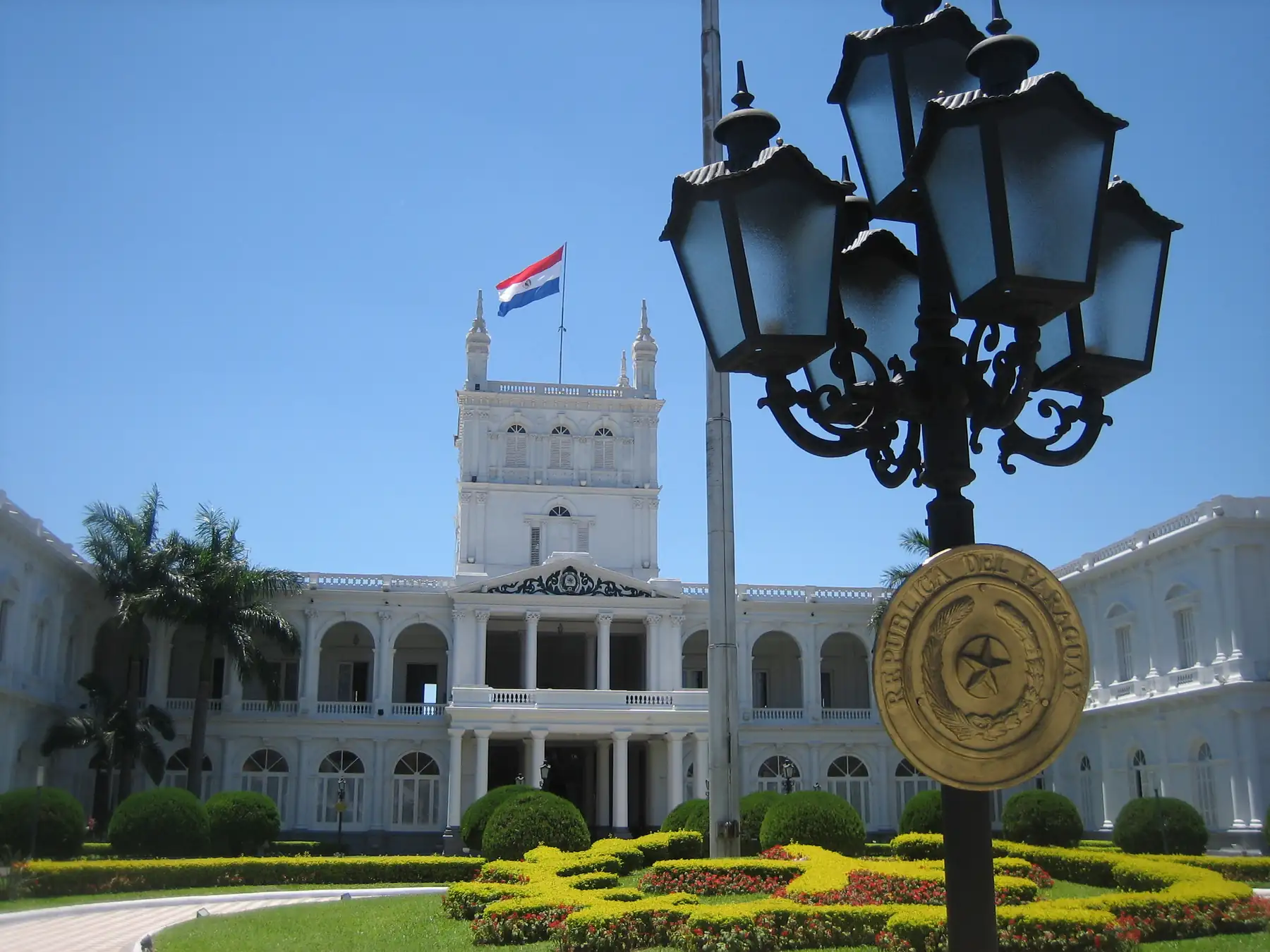
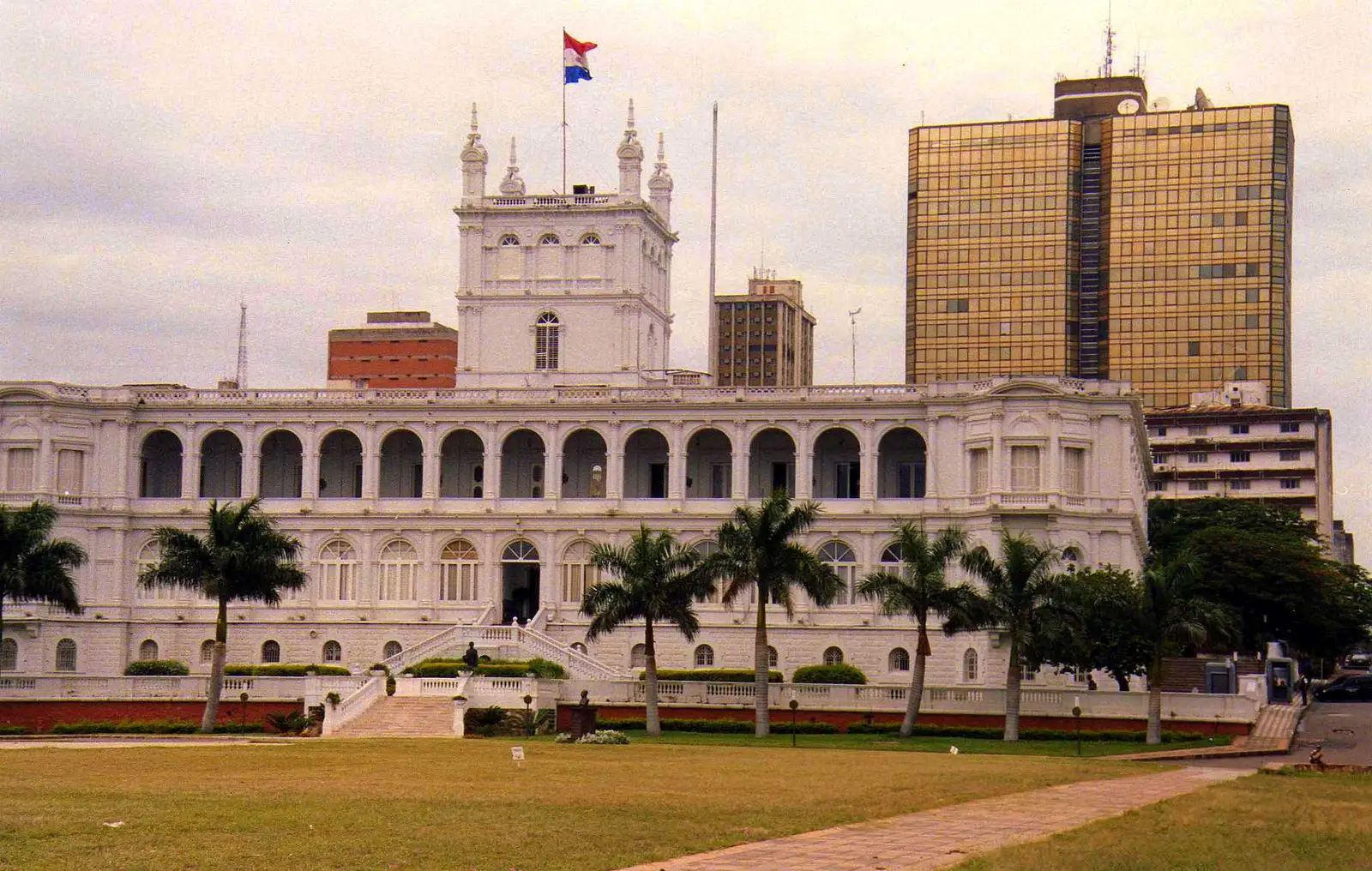
Photo: “Palacio de Lopez de noche” by Flickr (via Wikimedia Commons), Wikimedia Commons, CC BY 2.0, scaled to 1600 px (WebP)
The Two Elevens, and Why They Are Not the Same
Spending rises 11.2%. The tax burden sits at 11.2% of GDP. The coincidence is worth untangling because it invites exactly the wrong reading.
The first is growth in what the state plans to spend next year. The second, presión tributaria, is what the state collects in taxes measured against the whole economy, and the budget holds it at the level Paraguay has been at for years. One number is going up; the other is standing still. That divergence is the story.
What the Budget Contains
Just over half the total, 52.8% or ₲87.9 trillion, goes to central administration, with the remaining ₲78.4 trillion to decentralized entities. Health receives ₲18.2 trillion, education ₲10.4 trillion, and the public works ministry ₲9.2 trillion.
The political context is less tidy than the arithmetic. The budget landed amid unpaid bills to state suppliers and an unresolved pay dispute with doctors, who are not covered by the salary adjustments the document does contain.
Where the Money Is Meant to Come From
Current revenues are projected at ₲68 trillion, up 4.9%. Of that, ₲48.6 trillion is tax revenue, and tax collection is expected to grow 8.6%.
The rest of the income statement is heading the other way. Non-tax revenues fall about 5%, and royalties from Itaipú and Yacyretá drop 12.8% against the 2026 approved budget, to roughly ₲3.5 trillion. Paraguay's binational dam income has been a quiet fiscal cushion for decades. This budget assumes a thinner one.
One caution on the dollar figures, because they are easy to misread. Divide the budget's own guaraní and dollar totals and the implied exchange rate is about ₲6,450 to the dollar, noticeably weaker than the ₲6,000 median in the central bank's August survey. Dollar equivalents drawn from the budget are therefore not directly comparable with figures converted at market consensus.
The Gap, and How It Gets Financed
The projected deficit for 2027 is 3.9% of GDP. Paraguay's fiscal responsibility law sets a 1.5% ceiling, and the government's stated plan is to be back inside it by 2028.
Lovera's argument is that the headline overstates the underlying position: strip out debt management operations and the acceleration of public works, he says, and the effective deficit lands near 1.9%. Whether that framing survives contact with Congress is a separate question, and Congress is where the budget now sits.
The financing is explicit. The project seeks authorization for US$2 billion in new debt, split between US$469.9 million for financing the exercise and US$1.52 billion to cover the deficit. Bond placements rise to ₲17.4 trillion, roughly US$2.7 billion, about 70% more than in 2026, and 99% of that is to be placed internationally rather than domestically.
The Criticism Worth Hearing
Rodrigo Ibarrola, an economist at the Centro de Análisis y Difusión de la Economía Paraguaya, put the objection plainly: 2027 would be the third consecutive year without growth in the tax burden, "when the purpose of DNIT was to increase it."
That is a fair hit, and it points at a real tension. The DNIT was created by merging the tax and customs administrations precisely to collect more of what is already owed. It has raised real money doing so, as we covered when the tax take reached 11.2% of GDP. What it has not done, on this budget's figures, is lift the ratio over the past three years, because the economy grew alongside the collections. DNIT's own figures compare today's 11.2% with a twenty-year average, a different yardstick.
What This Means If You Are Moving Here
Read the document for what it does not say. There is no new tax in it, no rate increase, and nothing touching the territorial principle. Rate rises have also been turned away this year rather than debated, most recently when a senator's proposal to lift a 10% income tax to 14% was rejected within a day by the DNIT, the president of Congress and industry, before any bill was filed. For readers with foreign-source income, that is the relevant fact.
But read the financing too, because that is where the pressure sits. A 3.9% deficit closed with international bonds is a bet that growth and better collection will close the gap before the borrowing does. If that bet goes wrong, the conversation about rates starts somewhere, and it starts with the people who are easiest to tax.
Our position has not changed. The territorial system is law rather than policy preference, which makes it slow to alter, and a residency built on real presence and real substance is the version that survives a change of fiscal weather. We set out the evidence on both sides in how Paraguay's tax system works.
Worth keeping in proportion: none of this is a crisis budget. It is an expansionary one with a financing plan and a stated path back to the legal ceiling. The point is simply that the plan has a deadline, 2028, and deadlines are where fiscal promises get tested.
US citizens and green-card holders: Paraguay's budget arithmetic does not reach you. The United States taxes worldwide income on the basis of citizenship, so whatever Congress in Asunción decides about rates or deficits, your US filing obligations continue unchanged. Our guide for US persons sets out what applies.
Frequently Asked Questions
Does the 2027 budget raise taxes in Paraguay?
No. The project contains no new tax and no rate increase, and it holds the tax burden at 11.2% of GDP. Higher revenue is expected to come from collection growth of 8.6% rather than from changed rates. A budget is an annual authorization, though, and separate tax legislation can always be introduced alongside it.
What is Paraguay's projected 2027 deficit, and why does the government cite two numbers?
The headline projection is 3.9% of GDP. Finance Minister Oscar Lovera argues that excluding debt management operations and the acceleration of public works, the effective deficit is nearer 1.9%. Both figures describe the same budget; they differ in what they treat as ordinary spending. The legal ceiling under the fiscal responsibility law is 1.5%, and the government targets a return to it in 2028.
Does the 2027 budget change how Paraguay treats foreign income?
Not in this document. The territorial principle rests on the tax law rather than the annual budget, so a budget cannot alter it and this one does not try to. The treatment of your own income still depends on genuine tax residency and on where the income arises.
Following Paraguay's fiscal debate while preparing your residency application? We can walk you through the residency and cédula timeline; how fiscal changes might reach your income is a question for a tax advisor we can introduce on request. Talk to us.
Disclaimer: This is reporting on a budget bill that Congress has not yet approved. Figures come from the project as submitted and will change during debate. Nothing here is tax, legal or investment advice; confirm the current position with an official source before acting on it.
Sources
- ▹Última Hora: Proyecto prevé que presión tributaria se mantenga en 11,2%
- ▹Última Hora: PGN 2027 prevé deudas por USD 2.000 millones para calzar déficit
- ▹Última Hora: Incremento del 11,2% y sin reajuste para médicos, Ejecutivo presenta proyecto de Presupuesto 2027
- ▹El Trueno: El Ejecutivo presentó al Congreso un Presupuesto 2027 de G. 166,3 billones
- ▹Ministerio de Economía y Finanzas

About the author
Yannick Schroth
Founder · Paraguay relocation support
Spends regular time in Paraguay and, with his team on the ground in Asunción, guides international nomads, entrepreneurs and investors through residency, the cédula and the RUC paperwork.