You have budgeted rent and groceries, but the line most newcomers guess at is utilities. What does it actually cost to keep the lights, water, and internet running once you have a place in Asunción? This guide gives real monthly figures in US dollars for utilities in Paraguay as of 2026, from the electricity bill that swings with the summer heat to the water, gas, garbage, and internet charges that round out the month.
From the time I spend in Paraguay and the bills our Asunción staff see every month, the numbers are low by international standards, with one seasonal exception worth planning for.
What Utilities in Paraguay Cost Each Month
Utilities in Paraguay are inexpensive by international standards. Add up the ranges in the table below and a one-person apartment spends about $45 to $120 a month on electricity, water, gas, and garbage as of 2026, plus $35 to $70 for home internet and a mobile line, roughly $80 to $190 in all, with the sample budget further down landing near $116. A family house runs higher, mostly because air conditioning and a larger footprint push the power bill up.
The single biggest swing is electricity, and specifically air conditioning during the hot months. For most of the year your total utility spend stays near the bottom of the ranges below. From December through February, when Asunción bakes, the power line can double, to roughly $110 to $140 a month for a household running air conditioning.
Treat every figure as approximate: ANDE, ESSAP and gas distributors bill in guaraníes, and after the guaraní's roughly 23% rise against the dollar since January 2025, an unchanged bill converts into more dollars than it once did.
| Utility | Typical monthly cost in USD (2026) |
|---|---|
| Electricity (ANDE), apartment, outside summer | $25–70 |
| Electricity (ANDE), household with AC in summer | $110–140 |
| Electricity (ANDE), large house with heavy AC, peak summer | $150+ |
| Water (ESSAP or local board) | $8–20 |
| Cooking gas (refillable cylinder) | $8–20 |
| Garbage collection | $3–10 |
| Home internet (fiber) | $20–50 |
| Mobile plan | $10–25 |
Electricity from ANDE: The Biggest Utility Bill in Paraguay
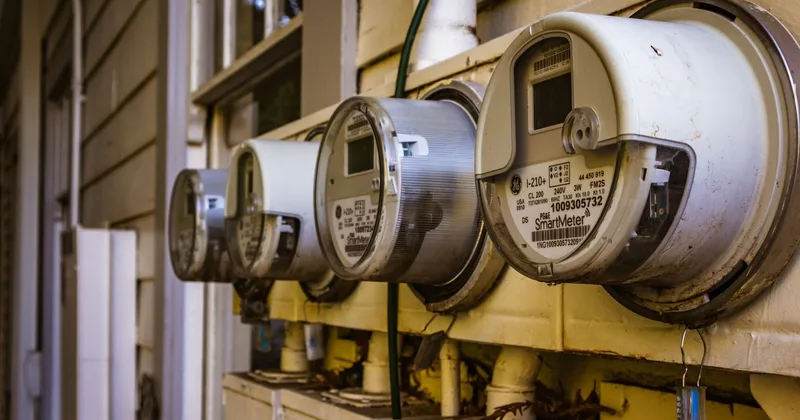
Electricity is supplied nationwide by the state utility ANDE (Administración Nacional de Electricidad), and it is one of the cheapest utilities in Paraguay thanks to the country's enormous hydropower output. Paraguay co-owns the Itaipú dam on the border with Brazil, one of the largest hydroelectric plants in the world, and generates far more clean power than it consumes. That surplus keeps the residential tariff low.
For a modest apartment with a fridge, lighting, a washing machine, and occasional cooling, the ANDE bill often lands around $25 to $50 a month outside the hot season. Run more appliances or a larger home and $50 to $80 is normal. The tariff is billed per kilowatt-hour on a rising scale, so the more you draw, the higher the per-unit rate climbs. Bills arrive monthly, and ANDE reads most meters in person, though the account is easy to track through its app.
Air Conditioning and How the Heat Drives Up Utilities in Paraguay
Here is the honest caveat every guide to utilities in Paraguay has to make.
Asunción summers are hot and humid, with December to February regularly above 35°C and stretches near 40°C. Air conditioning stops being a luxury and becomes the thing that lets you sleep. A single split unit running most of the day and night can add $40 to $90 to a monthly ANDE bill. For a typical household with air conditioning, a summer ANDE bill of about $110 to $140 is normal, and a house cooling several rooms can push the electricity line past $150 in peak summer.
This is why a family house costs noticeably more to run than an apartment. More rooms means more units, and older window-type air conditioners draw far more power than modern inverter models. If you are choosing between rentals, the type and age of the air conditioning quietly determines your summer electricity bill more than almost anything else. Budget generously for the three hot months and enjoy the low bills the rest of the year.
Water from ESSAP and Local Boards in Paraguay
Water is among the cheapest utilities in Paraguay and rarely a line you will worry about. In Asunción and the larger cities, piped water comes from ESSAP (Empresa de Servicios Sanitarios del Paraguay), the state water company. In many neighborhoods and smaller towns, supply instead comes through a local water board known as a junta de saneamiento or a private aguatería, which bills separately from ESSAP.
A typical household water bill runs approximately $8 to $20 a month as of 2026, whether from ESSAP or a local provider. The charge is modest enough that most residents pay it without much thought. Two practical notes worth knowing: pressure and reliability vary by neighborhood and provider, so many homes have a rooftop tank that fills automatically and buffers short interruptions. Tap water quality also varies, and a lot of expats drink filtered or bottled water as a precaution rather than a strict necessity.
Cooking Gas as a Utility in Paraguay
Paraguay has almost no piped natural gas network, so cooking gas arrives as a refillable cylinder, called a garrafa, rather than a metered utility. You buy or already have a steel cylinder, and when it runs low you swap it for a full one or have a delivery truck bring a refill to your door. Distributors such as Copagas, Petrobras, and others deliver across Asunción, and small neighborhood shops sell refills too.
A standard 10-kilogram cylinder refill costs roughly $8 to $20 as of 2026, and for a couple who cooks at home most days it lasts several weeks to a couple of months. Spread over a month, cooking gas is one of the smallest utilities in Paraguay. Some newer apartment buildings run a shared gas system billed through the building, and a few all-electric units skip gas entirely and cook on induction or electric stoves, folding that cost into the ANDE bill instead.
Garbage Collection and Other Municipal Utility Charges in Paraguay
Garbage collection is handled at the municipal level and is one of the smaller utilities in Paraguay. In Asunción and many municipios, waste collection is billed either as part of an annual municipal tax or through a private contractor that services your street on a fixed schedule. The monthly equivalent is small, commonly $3 to $10, and in some rentals it is already bundled into what you pay the building or the landlord.
If you rent inside a condominium or apartment tower, garbage, building water, and shared-area electricity are often folded into a monthly building fee known as expensas or gastos comunes. That single charge can range widely depending on the building's amenities, so ask what it covers before signing. A tower with a pool, gym, elevators, and 24-hour security carries higher common charges than a plain walk-up, and those shared services are effectively part of your utility footprint.
Internet and Mobile: The Connectivity Utilities in Paraguay
For remote workers, internet is the utility that matters most, and the good news is that connectivity in Asunción is fast and affordable. Fiber plans from providers such as Tigo, Personal, and Claro cost roughly $20 to $50 a month as of September 2026, and even the entry tiers of about 200 Mbps comfortably handle video calls and streaming. Coverage and reliability are strongest in the capital and larger cities, and thinner in rural areas, where fixed wireless or mobile data fills the gap.
Mobile service is cheap too. A prepaid or postpaid plan with a generous data allowance runs about $10 to $25 a month, and topping up a prepaid line is easy at any kiosk or through an app. Many newcomers arrive on a prepaid SIM in their first days and switch to a contract once they have a cédula. Together, internet and mobile rarely exceed $70 for one person, which is a large part of why remote professionals find utilities in Paraguay so manageable.
Weighing a move and wondering where these bills would land for you? In a short intro call we explain the residency process and, from the Standard package up, how the apartment search works, so you can check these ranges against real listings. Get in touch.
How Utility Bills Are Paid in Paraguay
Paying utilities in Paraguay is more flexible than most newcomers expect. Each provider issues a monthly bill with a reference number, and you have several ways to settle it. The most common is a payment kiosk or agent network such as Aquí Pago, Pronet, or Practipago, found in shops, pharmacies, and supermarkets across every neighborhood. You hand over the bill or read out the account number, pay cash, and keep the receipt.
Online options have grown quickly. ANDE, ESSAP, and the telecom providers all have apps and websites where you can view and pay bills by card, and most local bank apps let you pay utilities directly from an account. Some residents set up automatic debit so the ANDE and water bills clear without a monthly errand. Whichever method you choose, keep proof of payment, since a missed electricity bill can eventually lead to a cut in service.
In practice, the kiosk networks make paying utilities quick even without a local bank account.
Setting Up Utilities in a Rented Home in Paraguay
In a rental, the utilities are usually already connected, which spares you the hassle of new installations. The electricity and water accounts often stay in the owner's or a previous tenant's name, and your lease will specify how you pay. Two arrangements are common: you pay the provider directly against the existing account number, or you reimburse the landlord who holds the account. Clarify this before moving in, and photograph the meter readings on day one so there is no dispute about earlier consumption.
If you rent inside a building, part of your utilities may be bundled into the monthly expensas. Ask exactly what that fee covers, since building water and garbage are frequently included while your in-unit electricity is billed separately by ANDE. For a broader view of what a lease involves and what landlords expect, the guide to renting an apartment in Paraguay covers deposits, contracts, and the questions worth asking.
Where you rent also shapes the bill, and the overview of the best neighborhoods in Asunción helps match an area to your budget.
Setting Up Utilities in a Home You Own in Paraguay
When you buy or take over a home, transferring the utilities into your own name is a straightforward but in-person process. For electricity, you visit an ANDE office with your cédula and proof of ownership or your title, and the account is reassigned to you. Water works the same way through ESSAP or your local water board. If a property has never been connected, ANDE handles new connections, though that takes longer and involves an installation fee that varies with the work required.
Owners of standalone houses deal directly with each provider rather than through a building administrator, so you hold every account yourself. This is more paperwork upfront but gives you full control and visibility over each utility. Newcomers settling into their first property tend to knock these transfers out in the same early stretch as opening a bank account and registering an address; the practical checklist in your first 30 days in Paraguay sequences those errands so nothing gets missed.
Typical Monthly Utility Bills for an Apartment vs a House
Pulling the categories together, here is what a full month of utilities in Paraguay looks like for two common setups as of 2026. The apartment column assumes a one or two-bedroom unit for one person or a couple; the house column assumes a family home with more rooms and more air conditioning.
| Utility | Apartment (monthly USD) | House (monthly USD) |
|---|---|---|
| Electricity (ANDE), average across the year | $40 | $110 |
| Water (ESSAP or local board) | $12 | $18 |
| Cooking gas | $12 | $18 |
| Garbage collection | $5 | $8 |
| Home internet | $35 | $40 |
| Mobile (per line) | $12 | $12 |
| Total | ~$116 | ~$206 |
The apartment total assumes moderate air conditioning; a couple who runs cooling hard through summer will see months closer to $190 to $215, because the electricity line alone typically reaches $110 to $140. The house figure blends the cheap cooler months with the expensive hot ones, so a peak-summer bill for a large home can run higher still. Even so, these totals sit well below what utilities cost in most North American or Western European homes, and they fit comfortably within the wider cost of living in Paraguay for 2026.
Ways to Keep Utility Costs Down in Paraguay
Since electricity dominates the bill, that is where saving effort pays off most. A modern inverter air conditioner uses far less power than an old window unit, so a rental with efficient cooling is worth a slightly higher rent. Setting the thermostat around 24°C rather than 18°C, closing off unused rooms, and using ceiling fans to spread cool air all trim the summer ANDE bill without much sacrifice. Switching to LED lighting and unplugging idle appliances helps at the margins.
For the smaller utilities, keeping a spare full gas cylinder avoids emergency premium refills, and drinking filtered rather than bottled water reduces a recurring grocery cost that behaves like a utility. If you have a choice of internet providers on your street, compare fiber plans, since promotional rates and bundled mobile deals shift often. None of these moves is dramatic on its own, but together they keep utilities in Paraguay firmly in the affordable range they belong in.
Planning your move and want the paperwork handled properly? Compare the guided tiers and choose the support that fits you. View the packages.
Frequently Asked Questions About Utilities in Paraguay
How much do utilities in Paraguay cost per month?
For one person in an apartment, utilities in Paraguay add up to roughly $80 to $190 a month outside summer as of 2026, covering electricity, water, gas, garbage, internet, and mobile, with a typical month near $116 and a hard-cooled summer month nearer $190 to $215. A family house runs higher, often $180 to $260, mostly because of air conditioning and a larger space. Summer pushes the electricity share up.
Is electricity from ANDE expensive in Paraguay?
No. Electricity from ANDE is cheap by international standards, thanks to Paraguay's Itaipú hydropower surplus. Outside summer, a small home's ANDE bill often sits near $25 to $50 a month. The main exception is air conditioning in the hot season, which can double or more than double the monthly power bill.
Why do utilities in Paraguay cost more in summer?
Because of air conditioning. Asunción summers regularly exceed 35°C, and cooling a home from December through February drives the ANDE electricity bill sharply higher. A single air conditioner running day and night can add $40 to $90 a month, a household with air conditioning typically pays $110 to $140 for summer electricity, and a house with several units more, while the rest of the year stays cheap.
How is water billed among utilities in Paraguay?
Water comes from the state company ESSAP in the cities or from a local water board or private aguatería elsewhere. A typical household water bill is approximately $8 to $20 a month as of 2026, one of the smallest utilities in Paraguay. Many homes use a rooftop tank to buffer occasional pressure or supply interruptions.
How do you pay utility bills in Paraguay?
Each provider sends a monthly bill with a reference number that you can pay at kiosk networks such as Aquí Pago or Pronet, found in shops and pharmacies, using cash. You can also pay by card through provider apps and websites, or directly from a local bank app, and set up automatic debit for recurring bills.
Are utilities already set up in a rental in Paraguay?
Usually yes. In a rental, electricity and water are typically already connected, often in the owner's name, and your lease states whether you pay the provider directly or reimburse the landlord. Photograph the meter readings when you move in. In apartment buildings, water and garbage are often bundled into a monthly expensas fee.
Is there piped cooking gas among utilities in Paraguay?
Rarely. Paraguay has almost no piped natural gas network, so cooking gas comes as a refillable cylinder, a garrafa, delivered to your door. A 10-kilogram refill costs about $8 to $20 as of 2026 and lasts a couple who cooks at home several weeks. Some newer buildings run shared gas or use electric stoves instead.
Disclaimer: This article is general information. Utility tariffs and costs in Paraguay can change. Confirm current rates with each provider.

About the author
Yannick Schroth
Founder · Paraguay relocation support
Spends regular time in Paraguay and, with his team on the ground in Asunción, guides international nomads, entrepreneurs and investors through residency, the cédula and the RUC paperwork.
Note: this article reflects the position at the time of publication. Laws, prices and deadlines can change, so individual details may since be out of date. Check the current rules before you act on them: we answer questions about residency and our services, while the tax treatment of your own case belongs with a qualified tax adviser.