Paraguay is quietly enlarging one of South America's big hydroelectric plants, and the project just cleared a milestone. President Santiago Peña inspected the Aña Cuá works on 17 July 2026, where the binational Yacyretá Entity (EBY) reported the expansion at 76% overall progress. It is the kind of infrastructure story that rarely makes international headlines, yet it sits underneath much of what makes Paraguay attractive as a base: abundant, cheap, almost entirely renewable electricity.
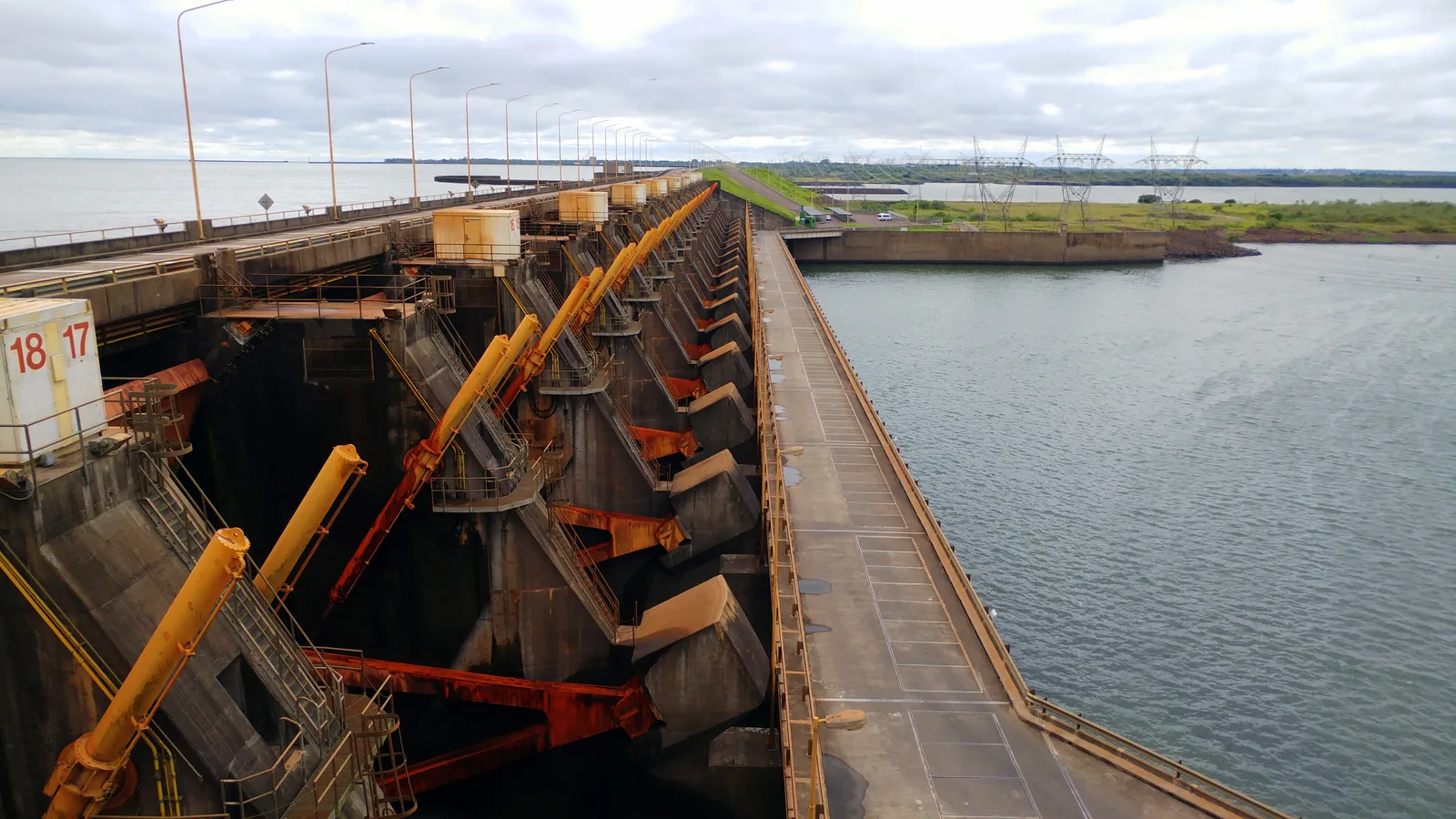
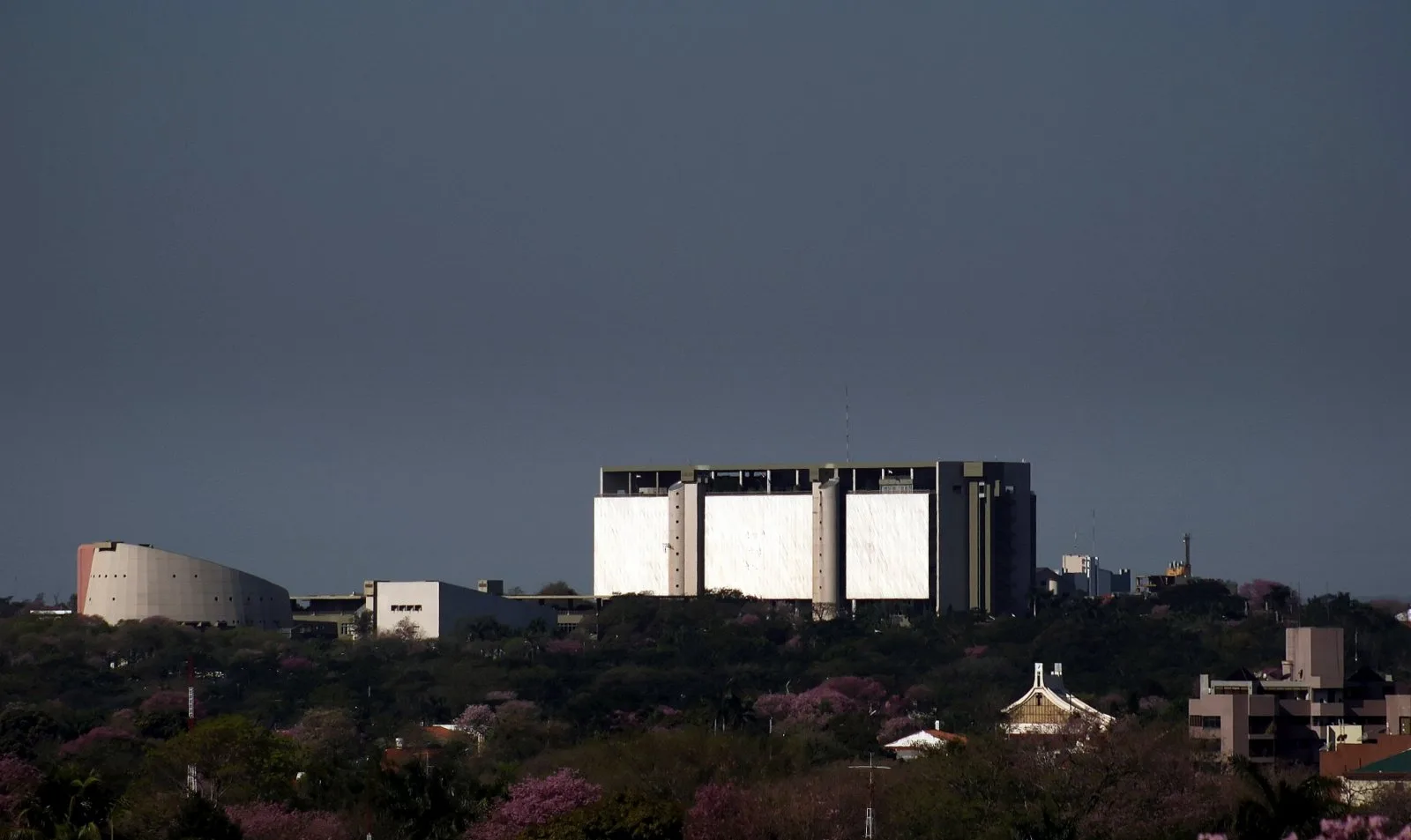
Photo: “Yacyretá dam 104252” by Cmasi, Wikimedia Commons, CC BY-SA 4.0, scaled (WebP)
What Is Being Built
The Aña Cuá project adds a new powerhouse on a secondary branch of the Paraná river, next to the existing Yacyretá dam that Paraguay shares with Argentina. Three vertical-axis Kaplan turbines will add a combined 270 megawatts of capacity, drawing on an ecological flow of about 1,500 cubic meters per second that already runs down the Aña Cuá branch. Because it uses water that is currently released without generating power, the expansion needs no new flooding.
The numbers are substantial for a country of Paraguay's size: an investment on the order of US$600 million, roughly 1,000 jobs during construction, the first turbine expected online in 2028, and full completion targeted for 2029. Together the units should lift Yacyretá's annual output by around 10%.
Why More Hydropower Matters Here
Paraguay already generates essentially all of its electricity from hydropower, mostly from Itaipú and Yacyretá with the smaller Acaray plant alongside, and it still produces more than it consumes. Adding 270 MW of clean capacity helps, but it does not reverse the trend: the government has warned the surplus could be used up by 2030 without new generation, so the expansion buys time rather than abundance.
That surplus is increasingly a magnet. It is part of what draws energy-hungry industry, data-center proposals, and crypto-mining operations to the country, and it reinforces the broader picture of a state that plans for the long term. It sits alongside the second investment-grade credit rating as another sign of an economy building the foundations that outside capital looks for.
What It Means for Expats and Investors
For an individual weighing Paraguay, a hydro expansion is context rather than a personal event, but a telling one. Cheap, reliable, clean power keeps the cost of living and the cost of doing business low, and it underwrites the data-center and industrial investment that a growing economy runs on. If you are looking at the country as a business base, our overview of investing in Paraguay covers the practical routes in.
Cheap electricity is not a tax argument, and it is worth keeping the two apart. Whether you owe Paraguayan tax on foreign earnings depends on genuine tax residency — see the territorial taxation of foreign income — never on what the grid costs. US citizens and green-card holders remain taxed by the IRS on worldwide income regardless of residency; get US-qualified advice before assuming otherwise.
Frequently Asked Questions
How big is the Aña Cuá expansion?
Three Kaplan turbines adding 270 MW of capacity, for an investment of roughly US$600 million. At 76% overall progress as of July 2026, the first unit is expected to start up in 2028 and the whole project to finish in 2029, lifting Yacyretá's annual output by about 10%.
Does the Aña Cuá expansion require flooding new land?
No. It uses the ecological flow already released down the Aña Cuá branch, about 1,500 cubic meters per second, to drive the new turbines. That is why it can add capacity without a new reservoir.
Does cheaper power change my taxes in Paraguay?
No. Energy infrastructure has no bearing on Paraguay's territorial tax system, which taxes foreign-source income at 0% in principle and depends on real tax residency. US persons remain taxed by the IRS on worldwide income wherever they live.
Wondering what cheap power means for a business you would run here? A first call covers residency and the practical steps of setting up. Grid access is a question for ANDE, and the tax treatment of the business goes to a Paraguayan accountant from our partner network. Book a call.
Disclaimer: This article is general information, not investment, legal or tax advice. Project figures and timelines change as construction proceeds. Confirm the current status with an official source before acting on it.
Sources

About the author
Yannick Schroth
Founder · Paraguay relocation support
Spends regular time in Paraguay and, with his team on the ground in Asunción, guides international nomads, entrepreneurs and investors through residency, the cédula and the RUC paperwork.