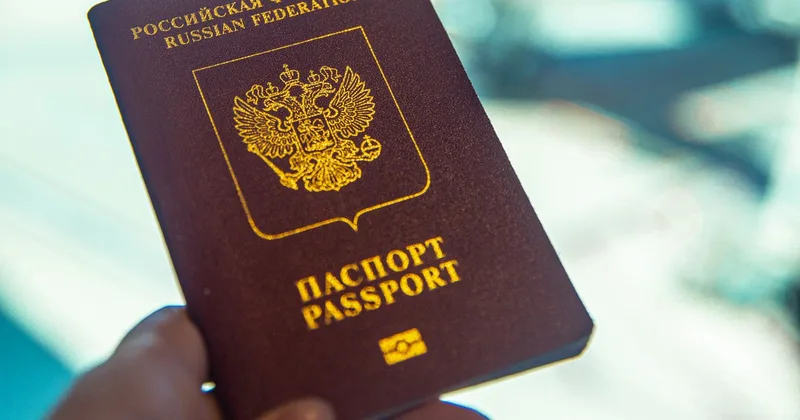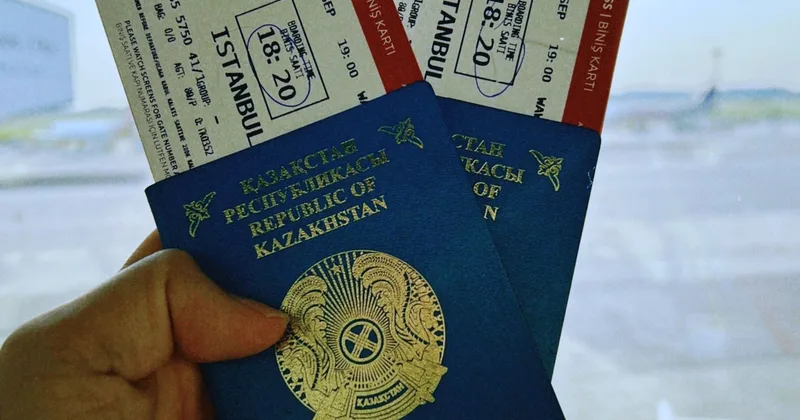
A Paraguayan passport is one of the quieter prizes in the residency world. It does not make headlines the way a Caribbean citizenship-by-investment scheme does, and here is the important part: you cannot buy it. What you can do is earn it. Live in Paraguay long enough, keep your status clean, build genuine ties, and after roughly five years of legal residency the door to Paraguay citizenship opens.
This guide covers how naturalization actually works as of 2026, what the requirements are, whether you keep your current passport, and where the Paraguayan document will and will not take you.
I have watched people treat this as a formality and then be surprised that it is a real legal process with a real timeline. So the honest version is here too: the years you have to put in, the court's knowledge exam nobody warns you about, and the difference between holding a passport and holding a fantasy about one.
What Paraguay Citizenship and a Second Passport Actually Give You
Paraguay citizenship is full legal nationality: the right to a Paraguayan passport, to vote in national elections, and to hold the strongest possible status in the country you have chosen as a base. The national qualifier is deliberate — municipal voting is open to permanent residents already, so the ballot citizenship actually adds is the presidential and congressional one.
The passport is the tangible result: a travel document backed by a stable South American republic. Whether it ends up sitting next to the one you hold today or replacing it is a separate legal question, answered further down, and for most nationalities that answer is less comfortable than the marketing around "second passports" suggests.
The practical value shows up in two places. Travel, because the Paraguayan passport carries visa-free or visa-on-arrival access to a large share of the world. And permanence, because citizenship, unlike residency, does not need renewing at a Migraciones counter, although a naturalized citizen can still lose it under Article 150, as explained below.
What Paraguay citizenship does not do, on its own, is rewrite your tax situation. Nationality and tax residency are separate questions, and I will come back to that below, because it is where the most expensive misunderstandings happen. Treat the passport as a mobility and security asset first.
The Road to Naturalization Runs Through Residency First
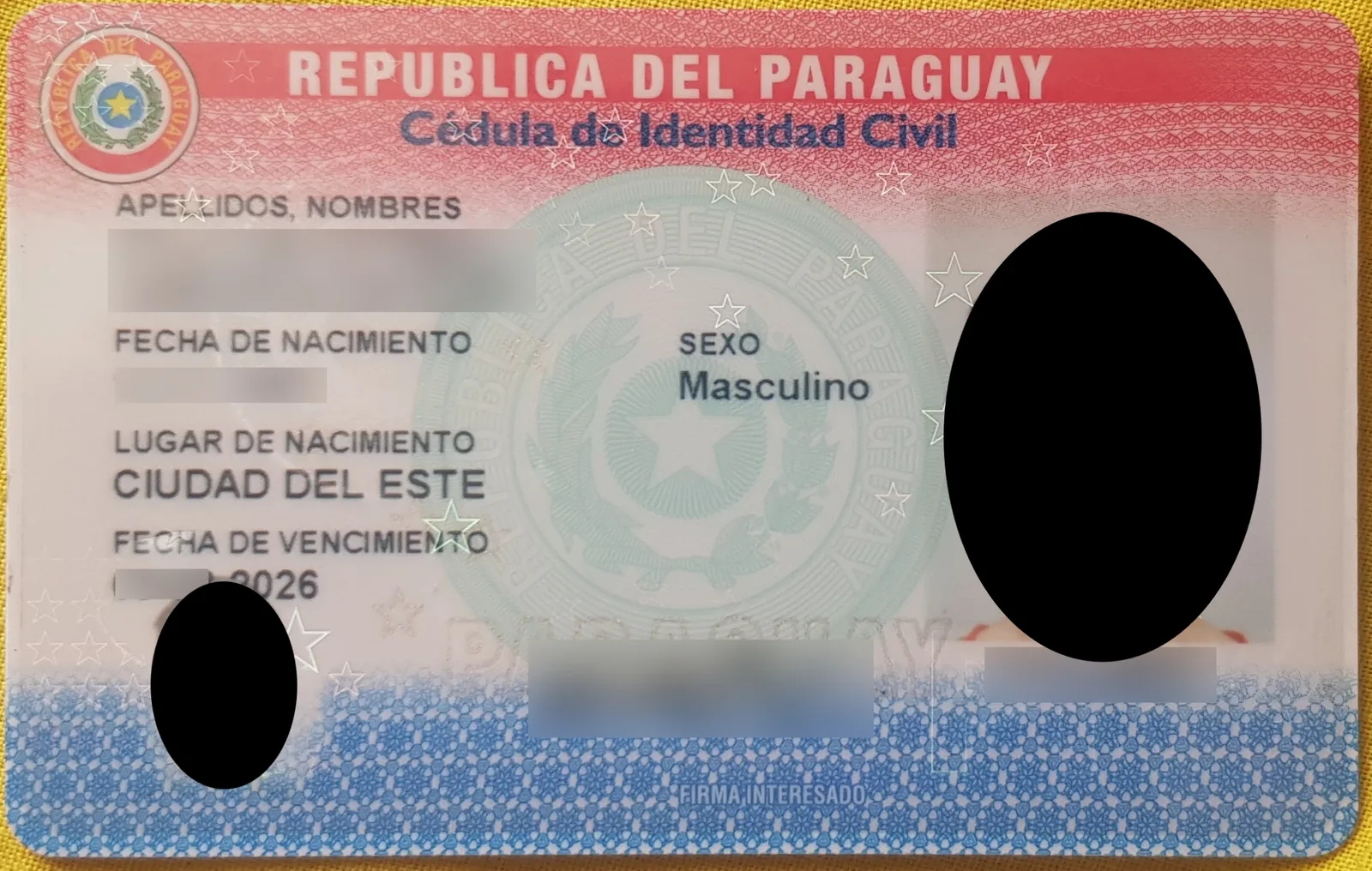
There is no shortcut that skips residency. The route to Paraguay citizenship begins with becoming a legal resident, getting your cédula, and then living as a resident for years before naturalization is even on the table. If you have not started that part, the citizenship conversation is premature, and the practical first move is the Paraguay residency and cédula process rather than the passport.
The staged model works like this in broad terms. You obtain temporary residency, file a separate application for permanent residency from its 21st month, and only after enough time as a permanent resident does the naturalization clock give you enough on the board to apply for Paraguay citizenship. Each stage is its own application with its own documents and fees, not an automatic escalator that carries you upward while you sleep.
Because every stage depends on the one before it, the quality of your early residency matters more than people expect. Gaps, lapsed status, or a cédula you let expire while living abroad all weaken the residency history that a naturalization review later examines. Build the foundation properly and Paraguay citizenship becomes a paperwork exercise years later. Build it carelessly and you may be restarting a clock you thought was already running.
How Many Years Before the Passport Is Within Reach
As of 2026, and in principle, Paraguay citizenship becomes reachable after roughly three years of permanent residency, which for most people lands at around five years in total counting from the first cédula. The exact counting depends on how your temporary and permanent stages ran and on the law in force when you apply, so treat these numbers as the shape of the timeline rather than a guaranteed date on a calendar.
That five-year figure is worth sitting with, because it is what separates Paraguay from the marketing gloss around "instant" second passports. There is no lump-sum investment that collapses the wait. The requirement is time actually lived with genuine ties, and that is precisely why the resulting nationality is treated as credible rather than as something bought at a discount. The bureaucracy is the feature, not only the friction.
None of this happens on its own. Nobody at Migraciones posts you a passport on your fifth anniversary. When you believe you have crossed the threshold, you file a naturalization application, and the review begins from there. If you are still mapping the whole journey from arrival to passport, the step-by-step move to Paraguay guide sets the earlier stages in order so the citizenship clock starts as early as it legitimately can.
Requirements for Paraguay Citizenship: Knowledge Exam, Ties, and Spanish in Practice
Naturalization is a legal process that examines whether you have integrated, not merely whether you stayed long enough. The Corte Suprema de Justicia sets a written knowledge examination under its Acordada N° 464/2007, covering Paraguay's history, geography and civics plus the basics of how the Constitution organizes the state; you need 21 of 30 points to pass. Beyond the exam, the file has to show real ties to the country, which assumes you spent your residency living here rather than parking a status from abroad.
Language is where expectations need correcting in both directions. No published rule fixes a formal Spanish level, and the A2 to B1 benchmark repeated in older guides cites no source. Yet the petition, the court file and every document in it have to be in Spanish, so English alone makes the process hard going. Conversational Spanish built over your residency years is the realistic preparation, and the exam material is something a motivated adult can study in weeks rather than months.
Ties are the softer, more consequential test. This is where your bank accounts, your lease or property, your local tax number, your actual physical presence, and your connection to the community all speak for you. Somebody who spent five years genuinely based in Paraguay clears this easily. Somebody who collected a cédula, flew home, and reappeared only to claim Paraguay citizenship will find the ties question harder to answer honestly, and naturalization reviews are designed to notice the difference.
Weighing whether Paraguay citizenship fits your plan? A short intro call explains our residency packages and the citizenship add-on; the legal assessment of your case stays with our partner lawyer. Talk it through with us.
Who Actually Grants Paraguay Citizenship, and How the File Runs
Most guides describe naturalization as an immigration matter. It is not. In Paraguay naturalization is a judicial proceeding, decided by the Corte Suprema de Justicia through its Secretaría Judicial II, and the document you end up holding is a Carta de Naturalización. Migraciones governs your residency. The court decides your nationality.
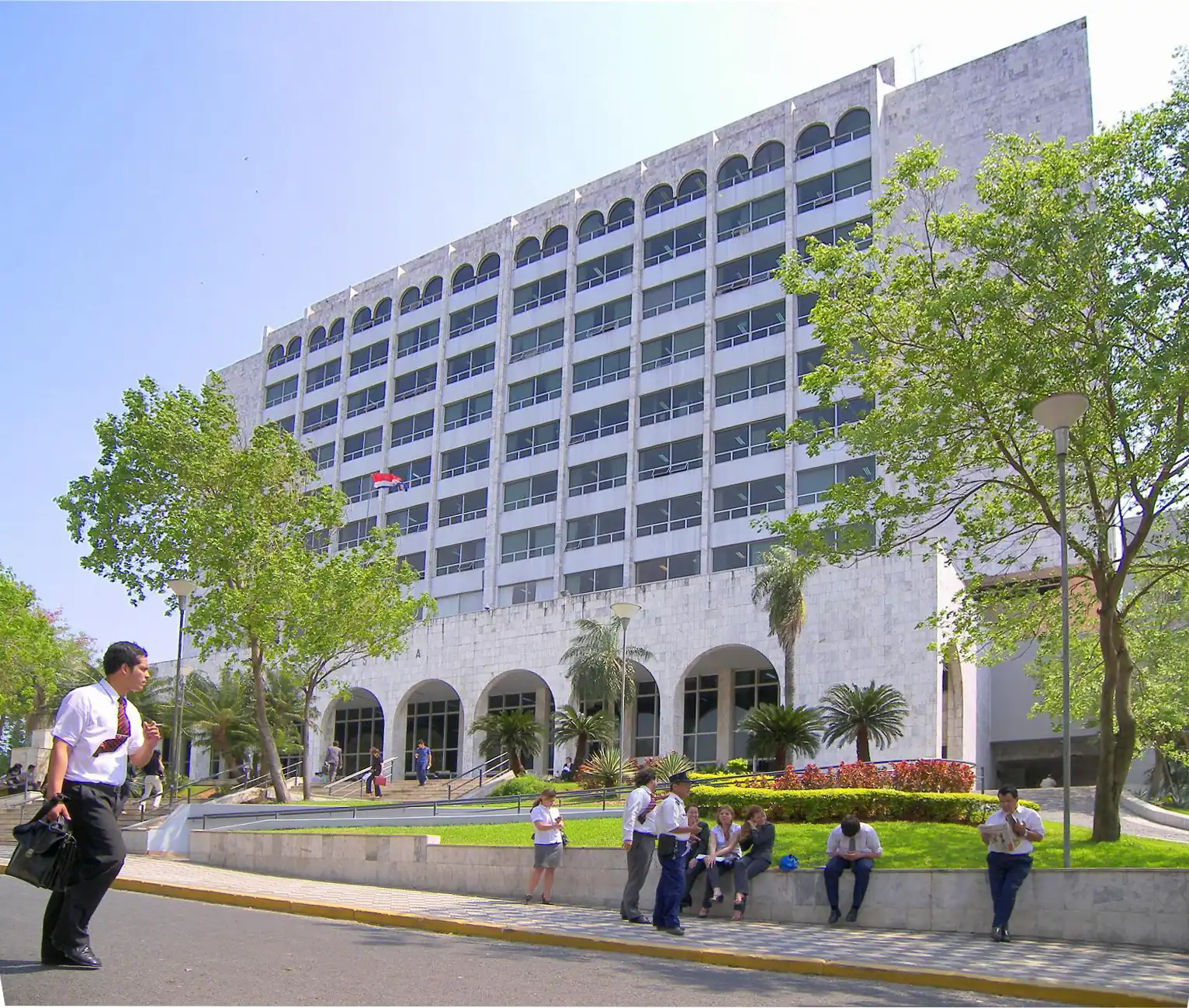
The conditions themselves come from Article 148 of the Constitution and are shorter than most people expect: legal adulthood, a minimum of three years' residence in the country, the exercise here of a profession, trade, science, art or industry, and good conduct as defined by law.
The detail that reorders plans is when the clock starts. The court counts three years of permanent residency from the date of the permanent-admission resolution, not from your first arrival, not from your cédula, and not from the day you file. A slow conversion to permanent residency pushes your citizenship date back by exactly as long as the conversion took.
The file runs to fourteen items. Alongside the obvious ones, your permanent residency card, apostilled birth certificate and police records, it asks for a work certificate, or a commercial patent if you are self-employed, or a study certificate if you are a student, plus a CV, a signed sworn declaration and a judicial fee of Gs. 43,051. The petition is lodged through a lawyer, which is why this is a legal engagement and not a form.
Two traps are worth knowing in advance. Documents in any other language have to be translated by a translator registered with the Corte Suprema, so a sworn translation done for your residency file will not automatically qualify. And while the law frames the ruling as an Acuerdo y Sentencia to be issued within sixty days, the realistic end-to-end duration is well over a year, which is why anyone quoting you a timeline in months is quoting the statute rather than the queue.
Does Marrying a Paraguayan Shorten the Path to Citizenship?
This question comes up more than almost any other, and the answer is a qualified no.
Marriage does not shorten Article 148. There is no spousal fast-track to naturalization in Paraguay, no reduced residence period for the husband or wife of a Paraguayan, and no route that converts a marriage certificate into a passport. The three years of permanent residency apply to a spouse exactly as they apply to anyone else.
What marriage changes is how quickly you reach the starting line. Under Ley 2193/2003, spouses and children of Paraguayan nationals can apply for permanent residency directly, without first passing through the temporary stage that ordinary applicants spend around two years in. Couples who married abroad can also obtain a repatriation certificate that exempts them from residency fees.
Put those two facts together and the benefit is real but differently shaped than the folklore suggests. Because the three-year clock runs from permanent admission, arriving straight at permanent residency can pull your citizenship date forward by roughly the two years a standard applicant spends in temporary status. The saving comes from the residency law, not the citizenship law.
Citizenship by Birth and by Descent: The Route That Skips All of This
Everything above concerns Article 148, the naturalization route foreigners take. The constitution keeps a separate and far shorter path in Article 146, and it is worth checking whether you or your children are already on it before spending years earning your way onto the other one.
Four groups hold Paraguayan nationality naturally rather than by grant:
- ▹Anyone born on Paraguayan soil. Paraguay applies unrestricted jus soli, so a child born in Asunción is Paraguayan from birth whatever the parents' nationality or immigration status.
- ▹Children born abroad to a Paraguayan parent who was serving the Republic at the time, the diplomatic-posting case.
- ▹Children born abroad to a Paraguayan mother or father, but only once they settle in the Republic permanently.
- ▹Infants of unknown parents found in Paraguayan territory.
The first line matters to relocating families more than it looks. A baby born here is Paraguayan immediately, and that status is protected: under Article 147 no natural Paraguayan can be stripped of nationality, though an adult may renounce it voluntarily.
The third line is where expectations usually break. Ireland, for example, lets a grandchild register at a consulate and never move; Paraguay attaches a condition that scheme does not. Descent gives you a claim you can only complete by actually living here, so a reader hoping to inherit the passport from abroad is looking at the residency route after all.
That declaration runs through a first-instance civil court rather than Migraciones, under Ley 582/95 and now Ley 7052/2023. It takes the applicant's legalized birth certificate, the Paraguayan parent's, and evidence of permanent residence. A minor declared this way ratifies the choice after turning eighteen.
Ley 7052, promulgated on 12 January 2023, regulates Articles 146, 147 and 149 and settled a question that had been genuinely murky. A natural-born Paraguayan who takes another nationality does not forfeit the Paraguayan one, which can now be given up only by express renunciation before the Supreme Court.
Read that carefully before taking comfort from it. Ley 7052 governs natural nationality only. Naturalize under Article 148, which is what this guide describes, and it does not cover you: Article 150 still applies, and voluntarily acquiring a further nationality afterwards can still cost you the Paraguayan one.
Paraguay's headline multiple-nationality law, in other words, protects the people who were born Paraguayan rather than the ones who worked for it. That asymmetry is missing from nearly every page that advertises Paraguay as a dual-citizenship jurisdiction, and it is the single most important thing a naturalizing reader should take from this section.
Does Paraguay Citizenship Let You Keep Dual Nationality?
For most applicants this is the decisive question, and the honest answer is more restrictive than many guides admit. Under Article 149 of the Constitution, Paraguay recognizes multiple nationality only where an international treaty provides for it. Spain has such a treaty with Paraguay; most countries do not, including the United States, the United Kingdom, Canada, Australia, India and Nigeria.
For nationals of those countries, naturalization is not automatically additive. Paraguay may require you to renounce your previous nationality when you naturalize, and how that is handled in a particular case is for our Paraguayan partner lawyer to judge before any petition is filed. What residency and the cédula do not do is touch your current citizenship: you can hold permanent residency here for decades and remain exactly the national you were.
The other half of the equation is what your home country allows. Some nations permit dual nationality freely, some restrict it, and a few effectively strip your original citizenship when you naturalize elsewhere. That rule lives in your country's law, not Paraguay's, so check it separately before you plan around holding two passports.

A worked example makes the cost concrete, because in the abstract it sounds like nothing. Hong Kong permanent residents who are not Chinese nationals lose the right of abode after a continuous absence of not less than 36 months, counted from when they ceased to be ordinarily resident there. Chinese nationals do not lose it through absence at all, however long they stay away.
Losing it is also not exile, which is the part the scare stories omit. The Immigration Department states that you then automatically acquire the right to land, which still lets you enter Hong Kong freely to live, study or work. It is a change of status, not a closed door.
Two things follow, and they point in opposite directions. For a reader who goes on actually living in Hong Kong, a Paraguayan second base changes nothing here at all. For a long-absent non-Chinese permanent resident, the 36-month clock and Paraguay's own three-year absence rule run independently: time away from one is not credited against the other, so satisfying one does nothing for the other.
For most of readers comparing residency countries who come to Paraguay, this is the point to slow down. Residency and a cédula already deliver most of what they came for, and naturalization is a further step that, for a national of a non-treaty country, can mean choosing between passports rather than adding one. That choice deserves a lawyer's view once the three years are close, not an assumption made on day one.
Two Ways a Naturalized Paraguayan Can Lose It Again
One clause deserves reading before you treat the passport as permanent. Article 150 provides that a naturalized Paraguayan loses that nationality through unjustified absence from the country for more than three years, declared judicially, or through the voluntary acquisition of another nationality.
This clause looks forward from the day you naturalize. Whatever was settled about your previous nationality at the time of the petition (see above), the trigger here is acquiring a further nationality afterwards, so a Paraguayan passport is a poor fit for someone who is collecting them.
The absence rule has a procedure attached, and almost nobody mentions it. If you need to be out of the country for longer than three years, you notify the competent civil and commercial court of first instance, or document the situation at the nearest Paraguayan consulate, which passes it to the court within fifteen days.
That instruction quietly assumes a consulate within reach, and in Asia that assumption often fails. In East and South Asia, Paraguay's embassies are in Taiwan, Japan, South Korea and India; further west it keeps missions in Qatar, the United Arab Emirates (opened in Abu Dhabi in 2023), Israel (opened in Jerusalem in December 2024), Lebanon and Turkey. Nothing in Hong Kong or Macao. Hong Kong's own register of 120 consular posts lists Uruguay, Argentina, Brazil, Chile, Colombia, Peru and Venezuela with Consulates-General, and no Paraguay at all.
Paraguay did have one there, from 1995 until it closed on the eve of the 1997 handover. For someone based in Hong Kong today the nearest Paraguayan mission is the embassy in Taipei, with Tokyo and Seoul further out, which turns a fifteen-day formality into a journey. Worth knowing before the three years are nearly up rather than after.
For a mobile reader this is the clause that matters most on the page. The passport is earned through presence, and it is kept the same way.
The Paraguayan Passport and Its Visa-Free Reach to 140+ Countries
The travel document is the reward most people picture, and it earns its place. As of 2026 and in principle, the Paraguayan passport offers visa-free or visa-on-arrival access to 140+ countries, a reach that puts it among the genuinely useful travel documents rather than the merely decorative ones.
Which destinations that actually covers, and the four large ones it does not, are set out in Paraguay passport visa-free countries. Passport rankings shift year to year as bilateral agreements change, so treat the number as a current approximation and verify specific destinations before you book.
That shifting is not theoretical: on 11 May 2026 Paraguay and the Philippines signed a visa-waiver agreement for ordinary passport holders. It opens the Philippines only once it enters into force, and no start date or length of stay was announced at signing, so confirm where it stands before planning a trip.
The practical footprint is what matters. The Paraguayan passport generally opens the Schengen area for short stays, the broad sweep of Latin America including fellow Mercosur members with light or no formalities, and a long list of destinations across Asia and beyond on visa-free or visa-on-arrival terms. For a globally mobile entrepreneur or nomad, that covers most of the itinerary that actually gets used in a normal year.
Worth keeping in proportion: no passport is universal, and visa-free counts are a moving target. The value of the Paraguayan passport is not that it beats every document on earth, but that it is a strong, credible travel document you can earn through residency rather than buy. For most holders that combination is the point.
The Honest Timeline and Bureaucracy Behind the Passport
Here is the reality check the glossy pitches skip. The road to Paraguay citizenship is measured in years, not weeks, and it runs through offices that move at their own pace. From arrival to a passport in hand you are realistically looking at five years of residency plus the naturalization process on top, and that process itself is a formal legal application, examined and decided rather than rubber-stamped.
Expect the naturalization stage to ask for a documented residency history, evidence of your ties, a pass in the court's knowledge exam, and patience while the Corte Suprema reviews the file. Timelines vary with the caseload and with your paperwork's completeness, and I would rather you plan for a slower, cleaner process than a fast, sloppy one that stalls. Local legal guidance genuinely helps here, because the counter-level requirements and the exact sequence evolve, and getting current advice beats relying on a two-year-old forum thread.
The upside of all this friction is legitimacy. Because Paraguay citizenship is earned through real time and real integration, it is a nationality that holds up: not a document flagged as bought, but one grounded in a residency history that actually happened. The patience is part of what makes the outcome worth having.
A Second Passport, Nomads, and the Tax Question Everyone Asks
Tax is why many readers arrive at Paraguay in the first place, so let me be precise about how citizenship interacts with it. Paraguay's territorial tax system, in principle, does not tax genuinely foreign-source income, and that benefit comes from being a tax resident, not from holding Paraguay citizenship. You can be tax-resident under Paraguayan law, as a contador will confirm for your case, years before you ever qualify for a passport, and the passport does not upgrade the tax position once you have it.
This distinction matters most for one group, and the caveat is not optional.
US citizens and green-card holders: Adding Paraguayan nationality does not remove US tax. You are taxed on worldwide income regardless of other citizenships; only renouncing US citizenship ends that, with a possible exit tax. Should Paraguay ask for a renunciation when you naturalize, do not assume a declaration made before Paraguayan authorities touches your US citizenship or US tax duties; have a lawyer check that point before you file. See our US citizens and Paraguay taxes guide.
For everyone else, the order is simple: residency and, where Paraguayan law makes you tax-resident, tax residency come first, and Paraguay citizenship comes later as a mobility and security step that does not change the tax position. Understanding that order keeps expectations honest and stops people from treating the passport as a tax instrument it was never designed to be.
What Paraguay Citizenship Cannot Do for You
Set against the upside, it is worth naming the limits plainly so nobody plans around a promise the passport does not make. Paraguay citizenship does not erase obligations to your country of origin, most sharply for US persons as noted above. It does not grant automatic residence or work rights across the entire world; it is a strong travel document, not a universal key. And it does not appear on schedule without the years of residency and the naturalization application behind it.
Citizenship also adds a duty the travel-document framing tends to skip. Under Ley 569 every Paraguayan male, naturalized included, is on the military enrolment register from 17 to 50, with active service confined to a narrow band and both exemptions and conscientious objection available. What that means in practice is set out in the guide to Paraguay military service.
It also cannot substitute for genuine presence. The whole edifice, from the first cédula to permanent residency to the naturalization review, rewards people who actually built a life in Paraguay and quietly filters out those who tried to collect a nationality at arm's length. That is a feature. It is exactly why the resulting passport carries weight.
Seen clearly, Paraguay citizenship is a patient, earnable nationality with real visa-free reach, sitting at the end of a residency path measured in years. Whether it adds to your current passport or replaces it depends on treaty law and on your home country, so that question belongs with a lawyer well before the petition. For the right person, it is a strong and honest proposition, precisely because it refuses to pretend to be instant.
Ready to start the residency that eventually leads to a Paraguayan passport? The packages carry you from the temporary filing to the cédula; the permanent-residency conversion is a separate add-on when its turn comes; for the naturalization petition we currently refer you to a lawyer. View the packages.
Frequently Asked Questions About Paraguay Citizenship
Can I get Paraguay citizenship through marriage?
Not directly. Paraguay has no spousal shortcut to naturalization, so the three years of permanent residency under Article 148 apply to a spouse like anyone else. What marriage does is remove the temporary stage: under Ley 2193/2003 spouses and children of Paraguayans go straight to permanent residency, which starts the citizenship clock roughly two years sooner.
Can I get Paraguay citizenship by descent?
Only by moving here. Article 146 gives natural nationality to a child born abroad to a Paraguayan mother or father, but conditions it on settling in the Republic permanently. There is no consulate registration that works from abroad, unlike Ireland's foreign births register. The declaration is filed with a first-instance civil court under Ley 582/95 and Ley 7052/2023.
Is a child born in Paraguay automatically a citizen?
Yes. Paraguay applies unrestricted jus soli under Article 146, so a child born on Paraguayan soil is a natural Paraguayan from birth, whatever the parents' nationality or immigration status. Article 147 then protects that status: no natural Paraguayan can be deprived of nationality, though an adult may renounce it voluntarily.
Which authority decides Paraguay citizenship applications?
The Corte Suprema de Justicia, through its Secretaría Judicial II, not Migraciones and not a ministry. Naturalization is a court case filed by a lawyer, and the resulting document is a Carta de Naturalización. The judicial fee is Gs. 43,051 and translations must come from a translator registered with the court itself.
How many years of residency do I need for naturalization in Paraguay?
As of 2026 and in principle, Paraguay citizenship becomes reachable after roughly three years of permanent residency, which usually means around five years in total counting from your first cédula. Exact counting depends on your residency stages and the law in force, so treat it as a timeline shape, not a fixed date.
Do I need to speak Spanish to get Paraguay citizenship?
No formal language level is published. What the Corte Suprema does require is a written knowledge exam on Paraguayan history, geography and civics, and the petition and every document in the file must be in Spanish. Plan on conversational Spanish built up over your residency years, since English alone makes the process hard to navigate.
Can I keep dual nationality with a Paraguayan passport?
Only in limited cases. Article 149 of the Constitution admits multiple nationality where an international treaty provides for it, as with Spain; most countries, including the US, UK, Canada and Australia, have no such treaty. On naturalization Paraguay may require you to renounce your previous nationality, and our partner lawyer clarifies how that applies to you. Ley 7052/2023 protects only Paraguayans by birth: naturalized citizens stay under Article 150, and your home country's rules apply as well.
How many countries can I visit with a Paraguay passport?
As of 2026 and in principle, the Paraguayan passport offers visa-free or visa-on-arrival access to 140+ countries, including the Schengen area for short stays and much of Latin America. Passport access changes as agreements shift year to year, so verify specific destinations before you travel rather than relying on a single headline number.
Can I buy Paraguay citizenship through investment?
No. There is no citizenship-by-investment route that skips the residency years. Paraguay citizenship is earned through legal residency, genuine ties, and naturalization, not purchased as a lump sum. That is exactly what makes the resulting passport credible rather than a document flagged internationally as simply bought.
Does a Paraguayan passport make my foreign income tax-free?
No, not by itself. The 0% treatment on genuinely foreign income comes from Paraguay tax residency under the territorial system, which you can have years before any passport. Citizenship is a mobility and security asset, not a tax instrument, and it does not change your tax position once granted.
Do US citizens still owe US tax after getting Paraguay citizenship?
Yes. Holding another nationality does not remove US worldwide taxation. US citizens and green-card holders are taxed on worldwide income regardless of any other nationality; only renouncing US citizenship ends that obligation, potentially with an exit tax. A Paraguayan passport does not change your US filing duties, and if a renunciation is requested during naturalization, a lawyer should check what it does and does not mean for your US status.
Is a second passport from Paraguay worth the wait?
For patient, globally mobile people it can be. You earn a stable nationality and a passport with strong visa-free reach, at the end of several years of genuine residency. The trade-off is time and genuine presence rather than money. For nationals of countries without a treaty, the price may also include the passport they hold now, so weigh that with a lawyer first.
Legal basis and disclaimer: This article is general information, not individual legal or immigration advice, and requirements can change. Paraguay's residency and immigration rules rest on Ley 6984/2022 (Ley de Migraciones), a statute passed by Congress, and the resolutions that apply it are published by the Dirección Nacional de Migraciones (DNM). The Hong Kong points above are the HKSAR's own rules, not Paraguay's, and are equally subject to change. Confirm the current requirements with Migraciones or a qualified adviser before you file.
Sources

About the author
Yannick Schroth
Founder · Paraguay relocation support
Spends regular time in Paraguay and, with his team on the ground in Asunción, guides international nomads, entrepreneurs and investors through residency, the cédula and the RUC paperwork.
Note: this article reflects the position at the time of publication. Laws, prices and deadlines can change, so individual details may since be out of date. Check the current rules before you act on them: we answer questions about residency and our services, while the tax treatment of your own case belongs with a qualified tax adviser.