You landed in Paraguay, filed for temporary residency, and collected the cédula. Two years on, a quieter question surfaces: what happens when that temporary status nears its end, and how do you put your stay on a lasting footing? Paraguay permanent residency is the answer, and reaching it is a deliberate application rather than an automatic renewal.
This guide walks through the application that moves you from temporary to permanent residency, filed from the 21st month of your temporary term, what the conversion asks for in documents and fees, how long it runs, the lighter presence needed to keep it, and why permanent status is the base for the path to citizenship.
I have been through the Paraguayan system and helped others through it, so what follows is the practical version, with the 2026 rule changes built in. Hold onto one framing from the start: permanent residency is a separate step you apply for, plan for, and pay for, not something that lands in your lap because two years passed.
What Paraguay Permanent Residency Actually Means
Paraguay permanent residency is the status you hold once a separate application, filed before your temporary term runs out, has been granted. Where temporary residency runs for a fixed term and then has to be extended or upgraded, permanent status is indefinite: only the carnet (the residency card) is renewed every ten years. You keep your cédula, you keep your local footprint, and you stop living on a countdown to the next renewal.
The practical difference is standing. As a permanent resident you are treated as a settled member of the community rather than someone on a temporary permit, which matters with banks, notaries, and eventually the naturalization authorities. It is also the status from which the citizenship clock is usually counted, so most people serious about a Paraguayan passport treat the permanent stage as the real milestone, not the temporary card before it.
What the permanent stage does not do, on its own, is change your tax position or erase your home country's rules. Immigration status and tax residency are separate questions, a point I return to below. Treat it as the durable legal base you build everything else on: banking, presence, tax residency, and the passport at the end.
From Temporary to Permanent Residency in Month 21
Paraguay's residency framework runs in two stages. A temporary permit lasts two years, and once it reaches its 21st month, you can apply to turn it into permanent residency. If you are not ready for that step, the alternative is an ampliación, which extends the temporary residency by another two years.
A direct permanent permit is open only to Investor Pass holders and to the spouse or child of a Paraguayan citizen under Ley 2193/2003, so everyone else plans around temporary residency first and the conversion second. Migraciones adjusts its practices, so confirm the procedural detail with the authority or your representative before you file.
If you were going to invest in Paraguay anyway, the Investor Pass is worth a look before you commit to the two-year wait. Under Resolución MIC 0283/2026 it grants permanent residency from the first filing against $70,000 in a staffed business with a pre-approved plan, $150,000 in tourism, or $200,000 in an investment property or in financial instruments. Our comparison of Investor Pass vs standard residency weighs the capital against the time saved, and our Investor Pass support covers the direct route.
The conversion is a fresh application, not a switch that flips on its own. It carries its own document set, its own fees, and its own processing queue, and nobody at Migraciones will remind you that your window has opened. Let your temporary status lapse without filing and you risk falling out of legal residency and restarting parts of the process, which also disturbs the continuity that later counts toward citizenship. Set yourself a reminder for month 21, when the filing window described below opens.
Two deadlines decide the file before a single document does, and neither is widely written up. The conversion can only be filed in a three-month window, between month 21 and month 24 of your temporary residency. File early and it is not yet open; file late and the temporary status has lapsed.
The second is about where you have been. Under Ley N° 6984/2022 you must not have been outside Paraguay for more than twelve consecutive months since the temporary card was issued. A long stretch away during the two-year wait can cost the conversion even when every certificate is in order.
The self-employed category carries a third, quieter deadline. Its proof is a RUC certificate plus the last three monthly IVA declarations, which only exist if the RUC has been active for at least four months at filing. Opening one shortly before the appointment does not work, and practitioners generally suggest six to eight months of lead time.
Note also what the resolution does not set: there is no statutory minimum amount. Figures circulating around US$1,300 a month are a practitioners' rule of thumb, not a legal threshold.
If you are still assembling the earlier stage, the step-by-step guide to Paraguay residency and the cédula covers the temporary application, apostilles, and the first cédula in detail. This article picks up where that one leaves off: the moment temporary residency is due to become permanent.
The Permanent Residency Conversion Application: Documents You Need
The conversion application leans on documents that prove you have genuinely lived as a resident, not merely filed once and disappeared. Expect to present your current cédula, your temporary-residency documentation, and up-to-date proof that you kept your status in order. A fresh police record, sometimes both a Paraguayan and a home-country certificate, is commonly requested, and anything issued abroad still needs an apostille and a sworn Spanish translation by a matriculated translator in Paraguay.
As of 2026 you should also prepare a solvency proof under Resolución 407/2026, and its form depends on your category, not on a generic bank statement. Self-employed applicants need the RUC and IVA record described above; the employees category expects IPS registration or an employment contract on file with the Ministry of Labor (MTESS), so remote staff of a foreign employer file as remote workers instead. Minors are exempt from the solvency proof, and a spouse or child files separately under the same apostille-then-translate rule.
There is a second half to that rule, and it is the half applicants underestimate. Resolución 407/2026 asks for verifiable income and for evidence of the ejercicio efectivo — the actual carrying-on of the activity you have claimed. A balance that merely sits in an account does not answer it, because the question is whether the work, the letting or the shareholding genuinely exists behind the number.
Two further points come from the same resolution. It unified the document lists under Ley 6984/2022 and the Mercosur residency agreement, so there is no longer a separate Mercosur route with lighter paperwork. And your occupation is no longer printed on the Carnet de Admisión; it stays in the Migraciones system only.
Residency in Paraguay ultimately rests on the migration law itself, Ley N° 6984/2022 (the Ley de Migraciones). Resolución 407/2026 sits beneath it as the implementing solvency rule, not a separate or competing regime, and applies to applications filed from 6 July 2026.
That resolution unified the rules and defined twelve categories of economic solvency, spanning profiles from remote workers and digital nomads to employees, the self-employed, company shareholders, property owners, retirees, and dependants. Each category has its own accepted proof, and a diploma alone is no longer enough: you now show real, documented income or funds. "No minimum investment" has never meant "no proof of means".
The recurring lesson is to gather everything before you present at the counter. The single most common cause of a wasted appointment is a certificate that is missing, expired, or translated before it was apostilled. Build the checklist against current Migraciones requirements, not last year's copy, because the 2026 changes moved several details.

Fees and the 2026 Migraciones Changes for Permanent Residency
Two 2026 changes shape the cost and paperwork of Paraguay permanent residency. Migraciones fees were updated under Resolución DNM 478/2026, and the solvency proof arrived under Resolución 407/2026. Both are recent enough that the exact figures and accepted formats are a moving target, so treat any number you read, including here, as something to verify against a current official source before you file.
The conversion carries its own government fees, separate from what you paid at the temporary stage: 25 jornales mínimos per applicant, which is ₲2,926,925 at the wage in force since 1 July 2026, about $500 at the end-of-September 2026 exchange rate.
On top of the Migraciones charges sit the cost of obtaining and apostilling any home-country documents, the sworn translations done locally, and, if you use one, a representative's fee for handling the filing. None of these is large by international standards, but they recur at each stage, so budget the permanent-residency step as its own line rather than assuming the temporary fees covered it.
Doing the conversion entirely alone is cheaper on paper and riskier in practice. A misordered apostille or an outdated police record can cost you an extra trip or a rejected file, which dwarfs any saving on fees. For a process that is bureaucratic, in Spanish, and freshly changed in 2026, guided support can help avoid repeat visits.
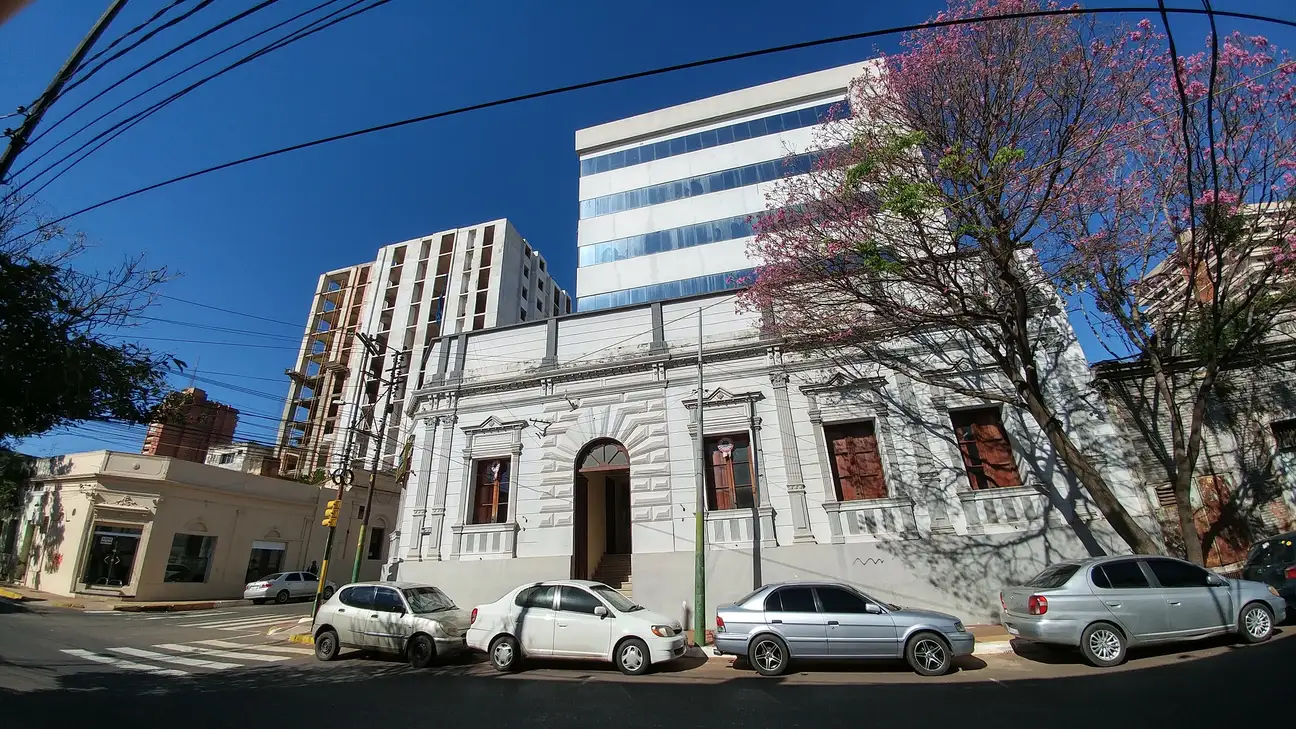
Timeline: How Long the Permanent Residency Conversion Takes
Treat the conversion as a staged timeline, not a same-day transaction. Once you file, Migraciones opens your file, runs its checks, and in due course issues the permanent-residency resolution and a new carnet; the cédula itself is then updated by the Departamento de Identificaciones of the Policía Nacional, not by Migraciones. Processing times vary with the season and the office's backlog, and the 2026 procedural changes added steps, so verify current turnaround with Migraciones rather than planning around an optimistic estimate.
The practical planning point is presence. Because the earlier stages involve in-person steps and biometrics, and because the conversion wants evidence you have actually been resident, budget real time on the ground rather than assuming you can drive the whole thing from abroad. The people for whom this goes smoothly are the ones who spent genuine time in Paraguay during their temporary years and arrive with a clean, continuous record.
Keep your paperwork current across the temporary period: cédula valid, address updated with Migraciones, any local filings done. Arriving at the permanent-residency application with tidy records makes it routine. Arriving with gaps invites questions and delay, and questions at this stage can ripple into the citizenship timeline that follows.
What Permanent Residency Gives You Beyond Temporary Status
The headline benefit of permanent residency is the end of the renewal cycle. Temporary residency lives on a clock; permanent residency is indefinite, with just the card itself, the carnet, due for renewal once a decade, so you stop scheduling your life around the next Migraciones renewal, which removes the risk that a missed deadline knocks you out of status. The one way to lose it is absence: three years or more outside Paraguay without a break, as the presence section below explains.
Beyond convenience, the permanent status strengthens your standing. Banks, notaries, landlords, and counterparties read a permanent resident as settled rather than provisional, which smooths the practical business of living and structuring your affairs locally. Your cédula continues to serve as your everyday identity document, and the settled status behind it makes the local footprint you are building look durable.
The larger prize is what this status unlocks next. It is the platform from which the naturalization clock is generally counted, and therefore the real base for a future Paraguayan passport. Permanent residency is not the destination for most of this audience; it is the stable base camp from which the two remaining goals, genuine tax residency and citizenship, become reachable.
Weighing up the permanent residency step? A short intro call explains how our permanent-residency service runs and what it costs. Get in touch.
Permanent Residency Includes a Vote, but Only at Town Hall
One right almost no relocation guide mentions: permanent residents can vote here. Article 120 of the constitution is explicit — foreigners with radicación definitiva hold the same rights in municipal elections. Ley 834/96, Article 95 goes further and makes foreign residents eligible to stand for municipal office, not merely to vote for it.
Three limits decide what that is actually worth, and all three matter.
It stops at the town hall. The electoral code's Article 122 requires foreign voters to be listed on separate rolls, drawn up for use in municipal elections only. Presidential and congressional ballots stay closed until naturalization, which is the deeper reason the citizenship path still matters.
It is not automatic. The same law's Article 2 counts you as an elector only once you are entered in the Registro Cívico Permanente, and its Article 113 makes that registration an obligation you discharge yourself. The chain runs residency, then cédula, then the electoral register, and nobody walks it on your behalf.
Five years away and it lapses. Article 114, again in the electoral code, removes anyone, national or foreign, from the register after more than five years out of the country. Read that against the presence rule in the next section: staying inside the three-year absence limit protects your immigration status, but a reserve base you rarely visit will eventually cost you the vote. Two different clocks, and only one of them is generous.
The Reduced Presence Requirement for Keeping Permanent Residency
Before the good news, one boundary: the leniency below starts only once permanent residency has actually been granted. While you are still on temporary status the twelve-month absence limit governs, so what follows is not a license to disappear during the wait. A temporary residency cancelled for absence cannot be extended afterwards; the application starts again from the beginning under Article 50 of Ley 6984/2022.
One of the quieter advantages of permanent residency is how little presence it takes to keep it alive. Where genuine tax residency rewards spending real time in the country, simply holding onto the status asks far less: as of 2026 permanent residency survives as long as no single absence reaches three years, and any entry restarts that count. That entry at least once every three years is a legal obligation under Article 54 of Ley 6984/2022, not a courtesy. The interval itself did not move in 2026; the enforcement did.
Resolución DNM 376/2026, signed on 13 May 2026, replaced the older absence rules, Resoluciones 018/2023 and 120/2023. The Dirección de Control de Permanencia now reconciles entries and exits twice a year and cancels a lapsed status by administrative decision, reporting it to the National Police, the Supreme Court and the DNIT.
If a longer absence is unavoidable, get it approved before the limit, not after. A permanent resident can obtain up to one extra year, counted from the departure on record, and has to apply no later than three months before the three-year mark; a request lodged once the limit has passed is refused and the residency cancelled. The file is a written note to the Director Nacional with copies of your carnet, cédula and passport, proof of ties to Paraguay and a fee of two jornales.
Ties can be shown with a property title or a lease, a certificate from a Paraguayan bank or finance company, a certificate for an EAS or other company, your RUC, or a family member who holds residency here. The Dirección de Control de Permanencia reports within ten business days, and an approval names the date by which you must be back. Silence counts as a refusal: without a resolution within 60 calendar days, the request is treated as rejected.
Should the status be cancelled anyway, you fall back to tourist status, with 30 days to leave or to apply for a residency again. A former permanent resident can recover the category within three years of the cancellation, after first taking a short-term (espontánea or ocasional) residency and staying in the country while it runs; the recovered card keeps the number of your cédula.
For all that procedure, the underlying rule stays light, and that is what makes Paraguay attractive as a second residency to hold in reserve. You can keep the status warm with an occasional visit even in years when your life takes you elsewhere, without surrendering the legal base you spent two years building. It is a genuinely low-maintenance permanent residency compared with countries that demand near-continuous physical presence.
A caution worth stating plainly: the presence that keeps permanent residency alive is not the presence that earns tax residency. Staying just inside the three-year absence limit protects your immigration status but does nothing for a 0% tax claim, which depends on Paraguayan tax law, a real base in Paraguay and a contador's assessment of your case. Do not confuse the two thresholds.
How Permanent Residency Feeds the Path to Paraguay Citizenship
For many readers permanent residency is a means to an end, and that end is the passport. It is typically the base from which the citizenship clock is counted, and Paraguay's naturalization rules set a minimum period of residency before you can petition. As of 2026 that minimum sits at roughly three years, counted in practice from your settled permanent status, though the exact counting and requirements depend on current law and your circumstances.
Naturalization runs through a legal process that generally weighs your residency history, your ties to the country, and basic integration, so continuity matters. The cleaner and more continuous your permanent-residency record, the more straightforward the citizenship petition tends to be. It is worth taking local legal advice on timing, because the details evolve and a poorly timed application wastes months. The dedicated guide to Paraguayan citizenship and naturalization covers that stage in full.
Before counting on citizenship, know how Paraguay treats other nationalities. Its Constitution, in Article 149, accepts dual nationality only where a treaty between the two states allows it, as one with Spain does, and nothing of the kind exists with most countries, including the US, UK, Canada and Australia. On naturalization Paraguay may ask you to give up your earlier citizenship; the partner lawyer we work with checks how that would be handled in your situation.
Residency and the cédula themselves leave your current citizenship untouched. And naturalized citizens stay under Article 150 of the Constitution: a naturalized Paraguayan who later takes on a further nationality can lose the Paraguayan one.
Permanent Residency, the Cédula, and Genuine Tax Residency
People conflate them constantly, so it bears repeating: permanent residency and the cédula are your immigration status, not your tax status. Paraguay's territorial treatment of foreign-source income depends on tax residency, which Paraguayan law governs and a contador confirms for your case, not the plastic card in your wallet. The permanent status is the platform; the tax benefit is a separate build, set out in the guide to Paraguay tax residency and 0% territorial tax.
This is also why the reduced presence that keeps permanent residency alive will not, by itself, deliver a defensible 0% position. If tax is your goal, the RUC has to stay active with its filings current, and your departure from your home country has to hold up under that country's own rules, a reality the move to Paraguay walkthrough treats in practical terms. Permanent residency makes that life durable and low-friction; it does not substitute for it.
US citizens and green-card holders: neither Paraguay permanent residency nor eventual Paraguayan citizenship removes your US tax obligations. The United States taxes its citizens and green-card holders on worldwide income regardless of where they live, and only renouncing citizenship ends that, potentially with an exit tax. The FEIE helps only partially. Take US-qualified advice before assuming Paraguay changes your filing.
Common Mistakes When Converting to Paraguay Permanent Residency
The recurring errors are avoidable. Letting temporary residency lapse before filing the conversion, then discovering too late that permanent residency was never automatic. Translating a document before apostilling it, so the apostille itself never gets validated. Turning up with a police record too old for the office to accept. Overlooking the 2026 solvency proof or the updated Migraciones fees because a year-old guide did not mention them.
The subtler mistake is treating the permanent stage as the finish line for goals it does not actually complete. People convert to permanent status, fly home, keep their old life fully intact, and then wonder why the tax benefit never materialized, or why their thin residency record slows the citizenship petition. The status ends the renewal treadmill and strengthens your standing, but tax residency remains a separate question under Paraguayan law, and naturalization still asks for a continuous record on top of it.
Get the sequence right, verify the 2026 requirements before you file, keep your record continuous, and the conversion is entirely manageable. It is bureaucratic, not mysterious, and it is the step that turns a temporary stay into a durable base.
Planning the conversion to permanent residency? Our packages end at the cédula, so the month-21 filing is a separate service at $2,100, with the Migraciones fee and the sworn translations included and only your apostilles on top. See the permanent residency service.
Frequently Asked Questions About Paraguay Permanent Residency
How long must I hold temporary residency in Paraguay before converting?
Two years is the life of a temporary permit, and the conversion window covers months 21 to 24 of it. Before month 21 the application cannot yet be filed, and after month 24 the temporary status has lapsed, so note both dates on the day your temporary card is issued.
Is the conversion to Paraguay permanent residency automatic?
No. Converting to permanent residency is a separate application with its own documents, fees, and processing queue, not an automatic upgrade when your temporary term ends. Nobody at Migraciones flips the switch for you, so calendar the conversion and file it before your temporary status lapses to avoid falling out of legal residency.
What documents does the Paraguayan permanent residency conversion require?
Expect your current cédula, your temporary-residency paperwork, an up-to-date police record, and a 2026 solvency proof under Resolución 407/2026. Anything issued abroad must be apostilled and sworn-translated into Spanish in Paraguay. Gather everything against current Migraciones requirements before your appointment, since the 2026 changes moved several details.
How much presence keeps my Paraguay permanent residency valid?
Very little. As of 2026 permanent residency lapses only once a continuous absence reaches three years, counted from your last departure, and since Resolución DNM 376/2026 Migraciones checks entry and exit records twice a year and cancels a lapsed status on its own. A planned longer stay abroad can be authorized for up to one extra year if you apply at least three months ahead. None of this bears on tax residency, which Paraguayan tax law governs on its own terms.
Does Paraguay permanent residency lead to citizenship?
Yes, permanent residency is typically the base from which the naturalization clock is counted. Article 148 of the Constitution sets the bar at a three-year run of permanent status before a citizenship petition can go in. A continuous permanent-residency record makes the eventual citizenship petition more straightforward.
What did Paraguay's 2026 rules change for the residency conversion?
Two changes matter. A solvency proof was introduced under Resolución 407/2026, and Migraciones fees were updated under Resolución DNM 478/2026. Both are recent, so exact figures and accepted document formats are a moving target. Verify current amounts and requirements against an official source before filing your permanent residency conversion.
Is there a Paraguay independent means or rentista visa?
No, and the search term is worth correcting because it comes from other countries' systems. Costa Rica and Panama run named rentista programs with a fixed monthly income threshold; Paraguay does not. There is one residency route, and Resolución DNM 407/2026 sets twelve solvency categories within it rather than a separate visa for people living on their own capital.
Someone with no employer and no local business usually qualifies under one of three of them: property owner, shareholder or partner, or retiree or pensioner. Which one fits decides the paperwork, so it is worth settling before you file rather than at the counter.
Two routes sit outside that structure. The Investor Pass grants permanent residency directly against a qualifying investment under a different instrument, Resolución MIC 0283/2026, and a Paraguayan's spouse or children may skip the temporary stage under Ley 2193/2003. Mercosur nationals also have a temporary residency of their own under the Mercosur Residency Agreement, with a lower fee of 20 jornales.
Does Paraguay permanent residency make me tax-free?
Not by itself. Permanent residency and the cédula are immigration status; the 0% applies to foreign-source income of someone who is tax-resident here, a status a Paraguayan contador can confirm under the law. Money earned for work you carry out from a home in Paraguay may be classed as domestic income even when the client or company sits abroad, and a licensed accountant in Paraguay should classify it before you count on 0%.
Can US citizens get Paraguay permanent residency?
Yes, US citizens can obtain Paraguay permanent residency like other applicants. But neither residency nor eventual Paraguayan citizenship removes US tax obligations: the United States taxes citizens and green-card holders on worldwide income regardless of residence. Only renouncing citizenship ends that, potentially with an exit tax. Take US-qualified advice first.
Sources for the Permanent Residency Voting Rules
- ▹Constitution of Paraguay, Article 120 — foreigners with radicación definitiva in municipal elections
- ▹Ley 834/96, the Paraguayan Electoral Code — Articles 2, 95, 113, 114 and 122
- ▹Ley 834/96 at the Biblioteca y Archivo Central del Congreso Nacional
Legal basis and disclaimer: This article is general information, not individual legal or immigration advice, and requirements can change. Paraguay's residency and immigration rules rest on Ley 6984/2022, a statute passed by Congress, and on Resoluciones DNM 376/2026 (absence and its authorization), 407/2026 and 478/2026, which apply it and are published by the Dirección Nacional de Migraciones (DNM). Electoral rights rest on the constitution and Ley 834/96, administered by the Tribunal Superior de Justicia Electoral. Confirm the current requirements with Migraciones or a qualified adviser before you file.

About the author
Yannick Schroth
Founder · Paraguay relocation support
Spends regular time in Paraguay and, with his team on the ground in Asunción, guides international nomads, entrepreneurs and investors through residency, the cédula and the RUC paperwork.
Note: this article reflects the position at the time of publication. Laws, prices and deadlines can change, so individual details may since be out of date. Check the current rules before you act on them: we answer questions about residency and our services, while the tax treatment of your own case belongs with a qualified tax adviser.