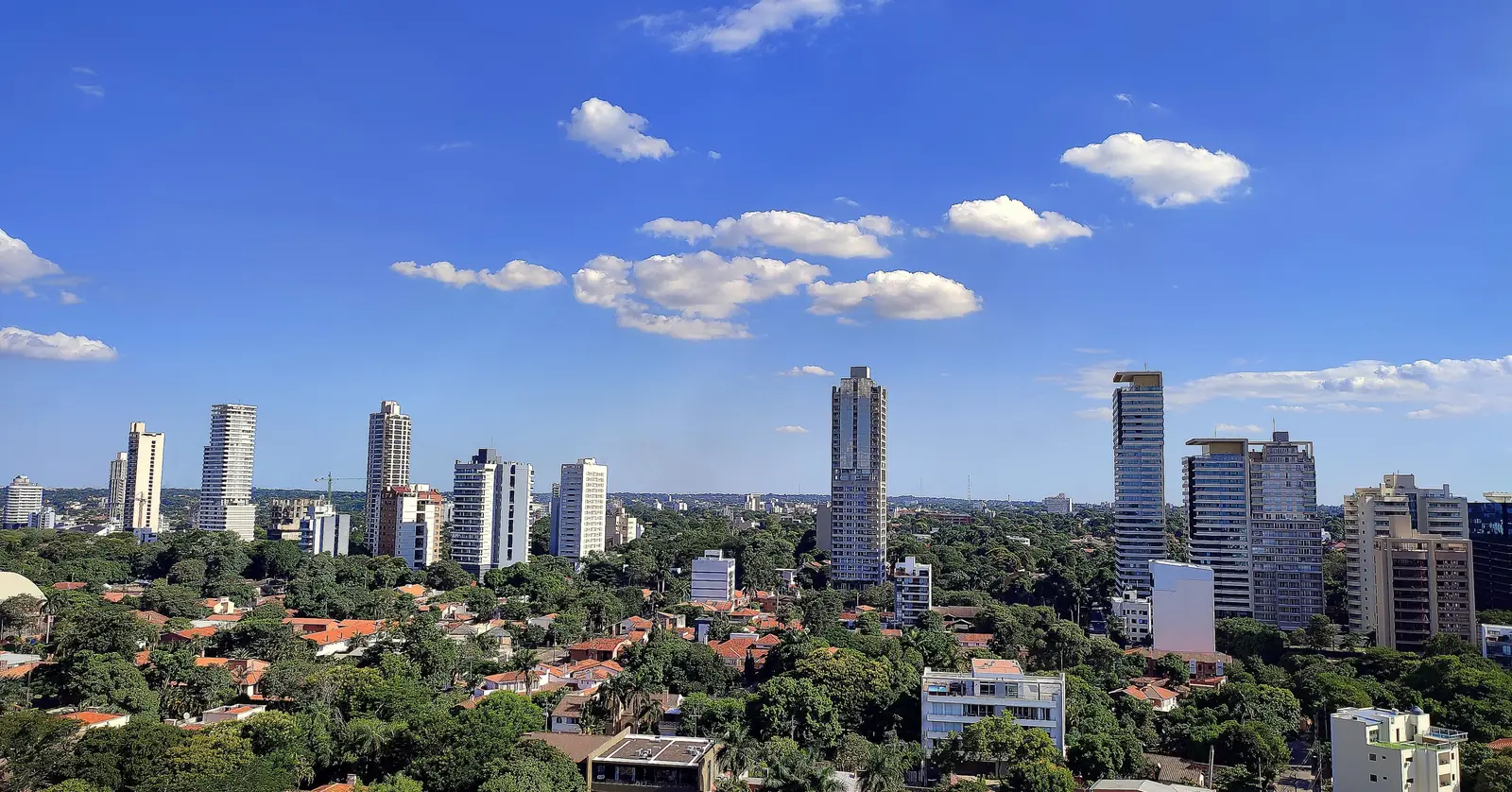
Picture two buyers in Asunción, each spending $200,000. One moves into a three-bedroom apartment in Villa Morra. The other buys two smaller units across town and lets them out. Only the second has a route to residency through real estate: under the Paraguay Investor Pass, that rented property can lead straight to permanent status, skipping the two years most foreigners spend on a temporary card. The first buyer, for all the money spent, starts at the bottom like everyone else.
The difference comes from one sentence in Resolución MIC N° 0283/2026 of 21 April 2026, which keeps property bought purely for yourself or your family out of the program. This guide stays with that one category: the evidence SUACE asks for, the points the text leaves open, how a foreigner buys in Paraguay, what the purchase and the rent cost in tax, and how the deed and the residency file fit together. All four categories side by side are in our Paraguay Investor Pass guide.
Why Your Own Home Does Not Count for Residency Through Real Estate
The definition sits in Annex I, Article 1 e) of the resolution. A real-estate investment means at least $200,000 used to acquire, develop or exploit property, or real rights over property, with the aim of generating income, appreciation or productive use. The next line is the one that matters: "Esta inversión no incluye las adquisiciones para uso exclusivamente personal o familiar." No business plan and no jobs are required for this category (Article 6), which is what makes it attractive in the first place.
In practice, your home and your Investor Pass property are two separate things. If you want to live in Paraguay and reach residency through an investment, you rent or buy where you live outside the $200,000, and that sum goes into something you let or hold for growth. A clean rental apartment is the case the text plainly covers.
Mixed cases are harder. The resolution accepts appreciation as a goal and excludes only exclusively private use, but it never says where the line falls. A holiday house you occupy a few weeks a year and rent out the rest of the time may or may not pass. Settle that kind of question before signing, not after.
Demand is there regardless. In the first half of 2026, Paraguay issued 140 investor certificates, most of them in the productive category and many still under the previous rule. Of the 18 that went to the three categories created in April, 15 were real estate, according to Vice Minister Eduardo Gustale as reported by the business portal InfoNegocios.
The Evidence SUACE Wants for the Real-Estate Route
The certificate at the center of the program is the Constancia de Inversionista Extranjero (CIE). SUACE, a directorate of the Ministry of Industry and Commerce (MIC), issues it to individuals only, and with it you then apply to Migraciones for permanent residency. For property, the file stands or falls on two documents.
Property evidence: a registered deed, or a notarized contract with 30% paid
Article 6.1 accepts exactly two forms of proof, and both run through the escribano, Paraguay's notary:
- ▹an escritura pública transferring ownership that is already registered (debidamente inscripta), or
- ▹a private purchase contract with signatures certified by a notary, on which at least 30% of the amount declared as the total investment has been paid.
Whichever you use may be no more than 180 calendar days old when you file. Buy early and apply late, and your evidence can expire before SUACE sees it, so the purchase and the application belong in one timeline.
A worked example of the contract route: at exactly $200,000, at least $60,000 must have been paid. At the end-of-September 2026 rate of about PYG 5,870 per dollar, the total is PYG 1,174,000,000 and the down payment PYG 352,200,000. The threshold is measured in dollars or the guaraní equivalent at the official rate on the day you apply, so a price set in guaraníes just above the line can drop below it if the exchange rate moves. Leave a margin.
Buying off-plan as an Investor Pass property
The resolution also recognizes investments still en proceso de ejecución (Annex I, Article 1 h). That brings developer sales off the plan into play, provided the contract carries notarized signatures and the 30% has been paid. The balance stays a contractual obligation toward the seller. What remains unclear is whether a simple reservation agreement is enough: the text asks for a purchase contract, and not every reservation is one.
Price, valuation and buying more than one unit
SUACE counts the declared amount, meaning the price in the deed or contract. The resolution asks for no valuation (tasación). That is our reading of a text that says nothing on the point; Article 2 lets SUACE carry out an exhaustive review, and whether a valuation gets requested in practice has not been documented. Because the definition speaks of bienes inmuebles in the plural, we read it as allowing several units to reach $200,000 together.
Open Points on the Real-Estate Route: Resale, Mortgages and Couples
The resolution sets no holding period for this category and no reporting duty either. That separates it from financial instruments, which must stay invested for two years and be reported every year. A quick resale is not automatically consequence-free, though.
Oversight exists. SUACE checks its certificates every month and passes them to Migraciones. A SUACE information sheet from the era of the previous rule said the ministry would report breaches of the sworn declaration so that Migraciones could revoke the residency under Article 55 of the migration law, Ley 6984/2022. Neither the resolution nor the law contains a rule that a sale costs you the status. Holding the property as a real investment keeps you on the line the text draws.
The wording leaves two more questions open. It does not say whether a property partly paid with a bank loan counts, since it looks only at the declared amount and, on the contract route, the 30% paid. It is also unclear what happens when the purchase lies more than 180 days before the application, for example whether a fresh registry extract would do.
Couples should be careful. A note in the productive category requires each of several investors in one project to meet the minimum individually. Whether that also binds a couple buying one $200,000 apartment together, the resolution does not say. Spouses and children are not included automatically on the current reading and apply through the general route, though that point has not been settled either.
Buying Property in Paraguay as a Foreigner
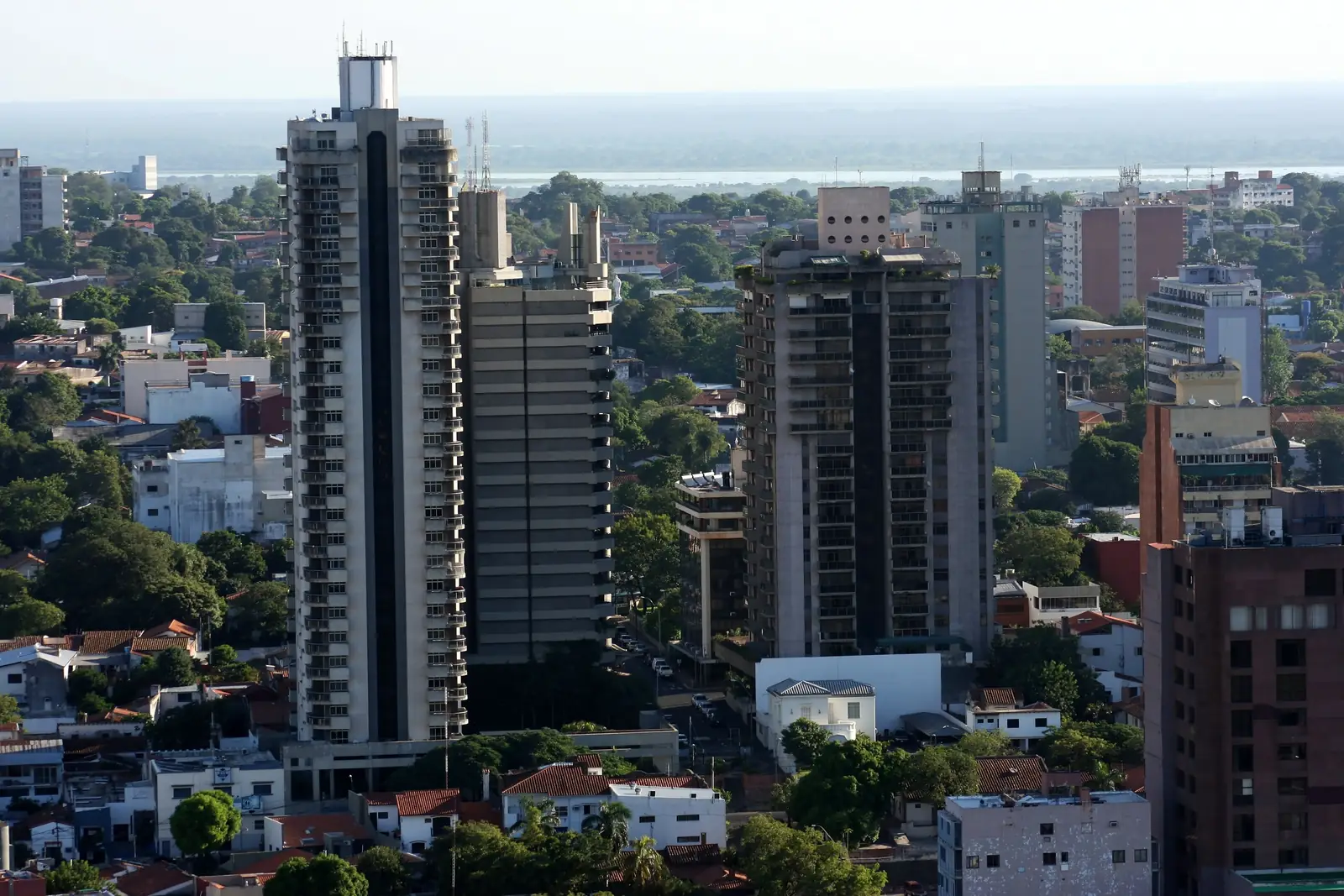
You need neither residency nor a cédula to buy. Under Article 2 of Ley 117/91, foreign investors enjoy "las mismas garantías, derechos y obligaciones" as domestic ones, and living in the country is not a precondition. A passport is enough identification. Many escribanos also ask for a RUC tax number, which they can arrange, but no legal duty for buyers to hold one has been documented.
The border security zone under Ley 2532/2005 is narrower than its reputation. The ban inside the 50-kilometer strip along the frontiers covers only nationals of the neighboring countries, Argentina, Brazil and Bolivia, and only rural land. Urban property, even in border cities such as Encarnación or Ciudad del Este, falls outside it.
The purchase itself runs in four steps:
- ▹Boleto de compraventa: the private preliminary contract with a deposit. If it is meant to serve as Investor Pass evidence, it needs certified signatures and at least 30% paid.
- ▹Checks by the escribano and a lawyer: a registry extract on ownership and encumbrances (certificado de condición de dominio), a cadastral certificate and proof that no municipal charges are outstanding. In Asunción the notary may not execute the deed without that proof (Ley 881/81, Article 180).
- ▹Escritura pública before the escribano: the municipal transfer tax, and where applicable the seller's withholding, are paid at signing.
- ▹Registration with the Dirección General de los Registros Públicos. Only the registered deed satisfies the first form of Investor Pass evidence.
Practitioners quote 30 to 60 business days for these steps; there is no official figure. If you plan to file with the registered deed, build the registration time into your schedule. Neighborhood prices, yields and common buying mistakes are covered at length in our guide to buying property in Paraguay.
Taxes and Fees on a Paraguay Property Purchase
| Item | Rate | Basis |
|---|---|---|
| Municipal transfer tax at purchase | 0.2% of the transaction value, 0.3% in Asunción, at least on the fiscal value | Ley 620/76, Ley 881/81 |
| Escribano fee | Statutory scale, 0.75% in the band above PYG 200 million | Ley 1307/1987 |
| IVA on the purchase | 5%, only when the seller is IVA-registered (developer, company) | Article 90, Ley 6380/2019 |
| Registry fee | Not reliably established; ask the escribano | open |
| Annual property tax (impuesto inmobiliario) | 1% of the fiscal value | Ley 125/91 |
| Rental income | 8% IRP-RGC, optionally on a flat 50% of the rent | DNIT |
| Later sale | 8% IRP-RGC on the gain, or an effective flat 2.4% of the price withheld by the notary | DNIT, RG 42/2020 |
On a $200,000 property, PYG 1,174,000,000, the transfer tax in Asunción comes to PYG 3,522,000 at 0.3%, about $600. Outside the capital it is PYG 2,348,000 at 0.2%, about $400. Who pays it is a matter for the contract. For the notary fee, it is unclear whether the 0.75% applies only to the top band or to the whole amount, so have the escribano name the figure in writing before the preliminary contract.
Developers usually include IVA in the price of a new unit; how exactly it is assessed has not been fully settled. The impuesto inmobiliario is often mistaken for a transfer tax, but it is the municipality's annual charge on the cadastral fiscal value. How that bill is calculated is explained in our article on property tax in Paraguay.
Rent from a Paraguayan property is Paraguayan-source income, so the territorial principle does not shelter it. Individuals pay 8% IRP-RGC, the income tax on capital income and gains, either on the rent minus documented costs or on a flat 50% of the rent. With the flat option, that works out to 4% of gross rent (8% × 50%).
US citizens and green-card holders: rent from a Paraguayan apartment is still reportable to the IRS, along with any gain on a later sale, because the United States taxes worldwide income on the basis of citizenship. Holding Paraguayan property and accounts can add FBAR and FATCA reporting. Paraguay residency does not change any of this; see our US citizens and Paraguay taxes guide and a US-qualified adviser.
Buying a rental and want the residency to come with it? We search with you for a property that fits the real-estate category, then coordinate the title check, the escribano and the residency file through to the cédula. Details on our property search and our Investor Pass support.
From Purchase to Cédula: the Real-Estate Route Step by Step
Two moments require you in Paraguay. The CIE application asks for proof that you have entered the country, such as the entry stamp or a Migraciones certificate of your crossings, plus a certificate from INTERPOL Paraguay. The cédula is issued in person as well. However digital the authorities describe the process, it does not start from abroad.
- ▹Enter Paraguay and obtain the INTERPOL Paraguay certificate.
- ▹Choose and check the property, from the first viewing to the registry extract.
- ▹Create the evidence: the notarized contract with at least 30% paid, or the registered deed. The 180 days run from the date of those documents.
- ▹Assemble the file: the application form (a sworn declaration in itself), your passport, an apostilled criminal-record certificate from your home country, a sworn declaration on the origin of the funds under the rules of SEPRELAD, the anti-money-laundering secretariat, and the purchase evidence. Foreign documents need an apostille and a Spanish translation.
- ▹CIE at SUACE: filed through the electronic form. SUACE decides within at most five business days of a complete file; the clock stops while it asks for anything missing.
- ▹Permanent residency at Migraciones: filed with the CIE in the inversionista category through the SUACE window, adding among other things an apostilled birth certificate and proof of civil status.
- ▹Cédula: issued by the Departamento de Identificaciones of the Policía Nacional, in person.
Migraciones works to no statutory deadline, and there is no official figure for the total time to the cédula. Its fees for permanent residency, including the certificado de radicación, have been PYG 3,161,079 since 1 July 2026, about $539. Whether Migraciones also asks CIE holders for the solvency proof under Resolución DNM 407/2026 is unresolved.
Permanent residency also starts the naturalization clock: the Poder Judicial counts three years from the resolution granting permanent status. On paper that allows an application about three years later instead of roughly five on the standard route, provided the other requirements are met. The status lapses after more than three years abroad without a justified reason (Article 54, Ley 6984/2022). The timing of both routes is set side by side in Investor Pass vs standard residency.
How We Help With a Property Purchase for the Investor Pass
With our property search, the residency goal shapes the brief from day one: an investment property rather than a home, a budget with a cushion above $200,000, and the evidence route that suits your timing. With our partners on the ground we draw up a shortlist, go to the viewings with you, coordinate a lawyer's review of the title and accompany you to the escribano. The price is quoted on request; the purchase price and third-party costs such as the lawyer, notary and registry are paid by you directly.
For the Investor Pass itself, we then coordinate the CIE application, the Migraciones filing and the appointments through to the cédula, in English with us and in Spanish with our partners. We do not forecast yields or price growth, and legal or tax advice is outside our role. The lawyer and the escribano handle the legal review, and partner tax advisers handle the tax side.
Frequently Asked Questions About Residency Through Real Estate in Paraguay
Does a partly rented holiday home in Paraguay qualify for the Investor Pass?
That is open. Resolución MIC 0283/2026 excludes only purchases for exclusively personal or family use and accepts income or appreciation as the aim. Where mixed use crosses the line, it does not say. Only a pure investment property is clearly covered.
Can an off-plan apartment in Paraguay be used for the Investor Pass?
Yes, through the contract route: the purchase contract with the developer needs notarized signatures, and at least 30% of the declared total must be paid. The resolution expressly admits investments still being carried out. Whether a bare reservation agreement is enough has not been clarified.
Can an Investor Pass property in Paraguay be sold after permanent residency is granted?
The resolution sets no minimum holding period for real estate, unlike the two years for financial instruments. SUACE does monitor certificates monthly and reports them to Migraciones, and whether an early sale would be treated as a breach of the sworn declaration is not regulated. Have a lawyer look at it before you sell.
Can spouses both get the Investor Pass through one jointly owned property?
The per-investor minimum is spelled out only for the productive category, where each applicant must meet it alone. For real estate the text is silent. To stay on the safe side, budget $200,000 per person.
How high is the transfer tax on a property purchase in Asunción?
In Asunción the municipal transfer tax is 0.3% of the transaction value (Ley 881/81); in other municipalities it is 0.2% (Ley 620/76). The base is at least the fiscal value. On $200,000 that is about PYG 3.5 million in the capital, roughly $600.
Is rental income from a Paraguay Investor Pass property tax-free?
No. Rent from a property in Paraguay is Paraguayan-source income, and the territorial exemption covers only income that arises abroad. Individuals pay 8% IRP-RGC, optionally on a flat 50% of the rent.
Looking for a rental property that can also carry your residency? Write to us and we will go through your budget, your timeline and the evidence route in a free first call, before you sign any contract.
Disclaimer: This article reflects the position in October 2026 and is general information, not individual legal, tax or investment advice. MIC and SUACE decide on the investor certificate and Migraciones on the residency; minimum amounts and evidence rules can change. Buying property is an investment with risks, and nobody can guarantee rental income or price growth.

About the author
Yannick Schroth
Founder · Paraguay relocation advisor
Lives in Asunción and guides international nomads, entrepreneurs and investors through residency, the cédula and the RUC paperwork in Paraguay.
Note: this article reflects the position at the time of publication. Laws, prices and deadlines can change, so individual details may since be out of date. Check the current rules before you act on them: we answer questions about residency and our services, while the tax treatment of your own case belongs with a qualified tax adviser.