You found an apartment in Asunción or a plot in the interior, the price looks absurdly low next to what you left behind, and now you want to know the part nobody advertises: can a foreigner actually own it, and how does the transfer really work? Buying property in Paraguay is genuinely open to foreigners, and the process is more straightforward than in many countries, but it runs on a notary-and-deed system that behaves nothing like a US closing or a European Grundbuch transfer.
This guide walks through the whole sequence as it stands in 2026: who can buy, the escritura and the escribano, the title checks that protect you, the taxes and closing costs, why almost every deal is cash, what property actually costs in US dollars, and whether a purchase can support your residency.
Can Foreigners Buy Property in Paraguay in 2026?
Yes. Foreigners can generally buy property in Paraguay on the same legal footing as citizens, holding full freehold title in their own name, with no requirement to be a resident, hold a cedula, or use a local partner. This is one of the country's quiet advantages: many Latin American neighbors restrict or complicate foreign ownership, while Paraguay treats a foreign buyer's title much like a national's. You can own an apartment, a house, farmland, or commercial space outright.
There is one meaningful exception, covered in detail below: rural land within a border security zone carries restrictions on foreign ownership. For the typical buyer looking at a city apartment or a plot away from the frontier, that limit never comes into play. Everything else in this guide assumes a standard, unrestricted purchase, which is what the overwhelming majority of foreign buyers are doing when buying property in Paraguay.
What Freehold Ownership in Paraguay Actually Means
Title in Paraguay is freehold ownership recorded against a specific parcel, identified by its finca number and padrón (cadastral) reference in the public property registry. When you complete a purchase, ownership transfers to you through a public deed and is then registered under your name against that finca. You hold it indefinitely, can sell it, rent it out, or pass it on.
What you do not get is the fast, database-driven certainty of a fully digital land registry. Paraguay's system is reliable but paper-anchored and notary-centered, so the burden of verifying that a title is clean falls on you and your professionals before signing, not on an insurer afterward. There is no widespread title-insurance market as in the United States. That single difference is why due diligence, described further down, matters more here than the low prices might tempt you to assume.
The Legal Steps to a Paraguay Real-Estate Purchase
The mechanics of buying property in Paraguay follow a recognizable arc, even if the details differ from what you know. As of 2026, a typical unrestricted purchase moves through these stages:
- ▹Agree terms and sign a reservation or preliminary contract. Once you and the seller agree on price, you usually sign a private contrato de compraventa or reservation agreement and pay a deposit, often around 10 percent, to take the property off the market.
- ▹Commission title due diligence. Your lawyer or escribano pulls the registry records, confirms the seller's ownership, and checks for liens, mortgages, or disputes before any large money moves.
- ▹Prepare your identification for the deed. A non-resident foreign buyer can be named on the deed with a valid passport; residency, a cédula and a RUC are not preconditions for the purchase. Expect questions about the source of your funds, and ask your escribano early whether your plans, such as buying through a company or letting the property out, will call for a tax registration later.
- ▹Sign the escritura before the escribano. The public deed is prepared, both parties sign before the notary, and the balance of the price is paid, typically by certified funds or bank transfer.
- ▹Register the deed. The escribano lodges the signed escritura with the public registry so the title is formally recorded in your name.
The elapsed time from agreed offer to registered title is commonly a few weeks to a couple of months, depending on how quickly documents come together and how busy the registry is. None of this requires you to be physically present for every step; a properly drafted power of attorney lets a trusted local professional act for you, which is common for overseas buyers. How that authority is signed, apostilled and translated is set out in the guide to a Paraguay power of attorney.
The Escritura: Paraguay's Deed-and-Notary System
The heart of buying property in Paraguay is the escritura pública, the public deed, executed before an escribano (notary). The escribano is not a formality who rubber-stamps a contract you negotiated elsewhere. In the Latin civil-law tradition, the notary is a licensed legal official who drafts the deed, verifies the identities and capacity of both parties, confirms the property description against the registry, and gives the transaction its public legal force.
You, as buyer, generally choose the escribano, and it is worth choosing one who is experienced with foreign buyers and, ideally, comfortable in your language or working alongside your lawyer. The deed states the parties, the precise parcel with its finca and padrón, the agreed price, and the declarations required by law. Both sides sign in the notary's presence, and only then does the escribano proceed to register the transfer.
Because the escribano carries real legal responsibility for the deed, a competent one is your first line of protection, not merely a cost line at closing.
Title Due Diligence and Lien Checks in Paraguay
This is the step no foreign buyer should ever skip. Before you pay the balance for any property in Paraguay, your professional must obtain a current certificado de condiciones de dominio from the public registry, which shows who legally owns the finca and whether it carries mortgages, embargoes, liens, or annotations. A clean certificate confirms the seller can actually convey clear title.
Good due diligence also confirms the parcel's boundaries and cadastral data match the deed, checks that property taxes are paid up to date, and, for undeveloped or rural land, verifies there are no overlapping claims or informal occupants. Paraguay has historically seen title irregularities on some rural parcels, so farmland and interior plots deserve extra scrutiny compared with a titled apartment in a modern Asunción building. Budget for a lawyer as well as the escribano when the property is anything other than a straightforward urban unit.
Skipping the registry check to save a modest fee is the single most expensive mistake a foreign buyer makes when buying property in Paraguay.
Border-Zone Restrictions for Foreign Buyers in Paraguay
The one real limit on foreign ownership concerns rural land in the border security zone, the 50-kilometer strip along Paraguay's international frontiers set by Ley 2532/05. As of 2026, nationals of neighboring countries (Argentina, Brazil and Bolivia), and companies they control, cannot own rural property within this band, a rule rooted in national-security legislation rather than any general hostility to foreign buyers.
For most readers this is academic, because the rule covers rural property and not urban property: a city apartment or house in Asunción, Ciudad del Este or Encarnación is outside it. Rural plots nearby are another matter. All three cities sit on international borders, and much of the Central department lies within 50 kilometers of Argentina, so a farm or country lot around them can fall inside the band.
Still, if you are eyeing farmland or an estancia in the interior, tell your escribano early so the parcel's location relative to the border zone is confirmed before you commit. It is exactly the kind of restriction that a proper title review surfaces before signing.
Taxes and Closing Costs on a Paraguay Purchase
Closing costs for buying property in Paraguay are modest by international standards, which is part of the appeal. As an approximate guide as of 2026, expect the total transaction costs to land in the range of a few percent of the purchase price, made up of IVA where the seller charges it, a municipal transfer tax, registry inscription, and the escribano's fee.
The figure buyers often hear, "about 1.5 percent", is not a national transfer tax. It matches IVA: the sale of real estate carries the reduced 5% rate, which, as local sources describe it, is applied to 30% of the value, roughly 1.5% of the price. That charge generally arises only when the seller is a company, such as a developer selling new units; a private owner selling a home does not add it, even one registered for IVA through other work.
There is no national real-estate transfer tax. What the municipality charges is a transfer tax of 0.2% of the transaction value, or 0.3% in Asunción, assessed on at least the fiscal value (Ley 620/76 and Ley 881/81). On a $200,000 apartment in the capital that is roughly $600. The escribano's fee follows a statutory scale under Ley 1307/1987, with 0.75% in the band above PYG 200 million, and how the bands combine is worth having in writing before you sign.
The registry inscription fee could not be pinned down reliably from published sources, so ask your escribano for it alongside the notary fee. Who carries which item is partly custom and partly negotiation, so write it into the preliminary contract. Treat every figure here as indicative and confirm the current amounts with your escribano.
US persons: If you are a US citizen or green-card holder, the IRS taxes your worldwide income and requires reporting of foreign assets, so rental income from a Paraguay property, and in some cases the holding itself, must still be reported at home. Paraguay residency does not change that. See the US citizens and Paraguay taxes guide and a US-qualified adviser.
Ongoing ownership then carries an annual municipal impuesto inmobiliario (real-estate tax), which is famously low relative to North America or Europe. If you let the property, the rent is Paraguayan-source income: individuals pay 8% IRP-RGC on it, either on the rent minus documented costs or on a flat 50% of the rent, which works out to 4% of the gross. Your day-to-day running costs sit alongside the wider picture in the guide to the cost of living in Paraguay.
Want someone on the ground for the search itself? Our property search is a hands-on purchase service, quoted on request: a search brief, a shortlist, accompanied viewings, a lawyer's title check and the escribano appointment. It is separate from the free referral help in all three residency packages, which puts you in touch with trusted local contacts. The tax on a specific deal stays a question for your escribano or a partner tax adviser we can introduce.
Financing Reality: Why Buying Property in Paraguay Is Mostly Cash
Here is the expectation to reset before you start. Mortgage financing for foreigners buying property in Paraguay is limited, expensive, and slow, so the practical reality is that the great majority of purchases, especially by newcomers, are done in cash. Local banks do offer mortgages, but they favor established residents with local income and a credit history, carry higher interest rates than many foreign buyers are used to, and rarely lend readily to someone who arrived recently on a tourist entry.
Plan, therefore, to fund the purchase with your own capital rather than assuming you can leverage it locally. This shapes how you move money: you will typically need to transfer funds into Paraguay through the banking system, which is far smoother once you hold a local account. Opening one early is worth doing, and the process is covered in the guide to opening a bank account in Paraguay.
Some buyers do arrange seller financing directly with a developer or vendor, particularly on new-build apartments, but that is a private negotiation rather than a reliable market you can count on.
Typical Property Prices in Paraguay in US Dollars
Prices are the reason most people start looking, and buying property in Paraguay remains inexpensive next to comparable countries, though "cheap" varies enormously by location and type. The figures below are approximate and as of 2026; the market moves, and asking prices in prime new towers have risen in recent years.
| Property type and location | Approximate price (USD, 2026) |
|---|---|
| Modern one-bedroom apartment, good Asunción area | $80,000–140,000 |
| Two- to three-bedroom apartment, prime tower | $150,000–300,000+ |
| House with yard, desirable Asunción suburb | $180,000–450,000+ |
| Apartment or house in a smaller city (Encarnación, Ciudad del Este) | often 20–40% below capital prices |
| Rural land per hectare, interior | highly variable, from a few thousand USD |
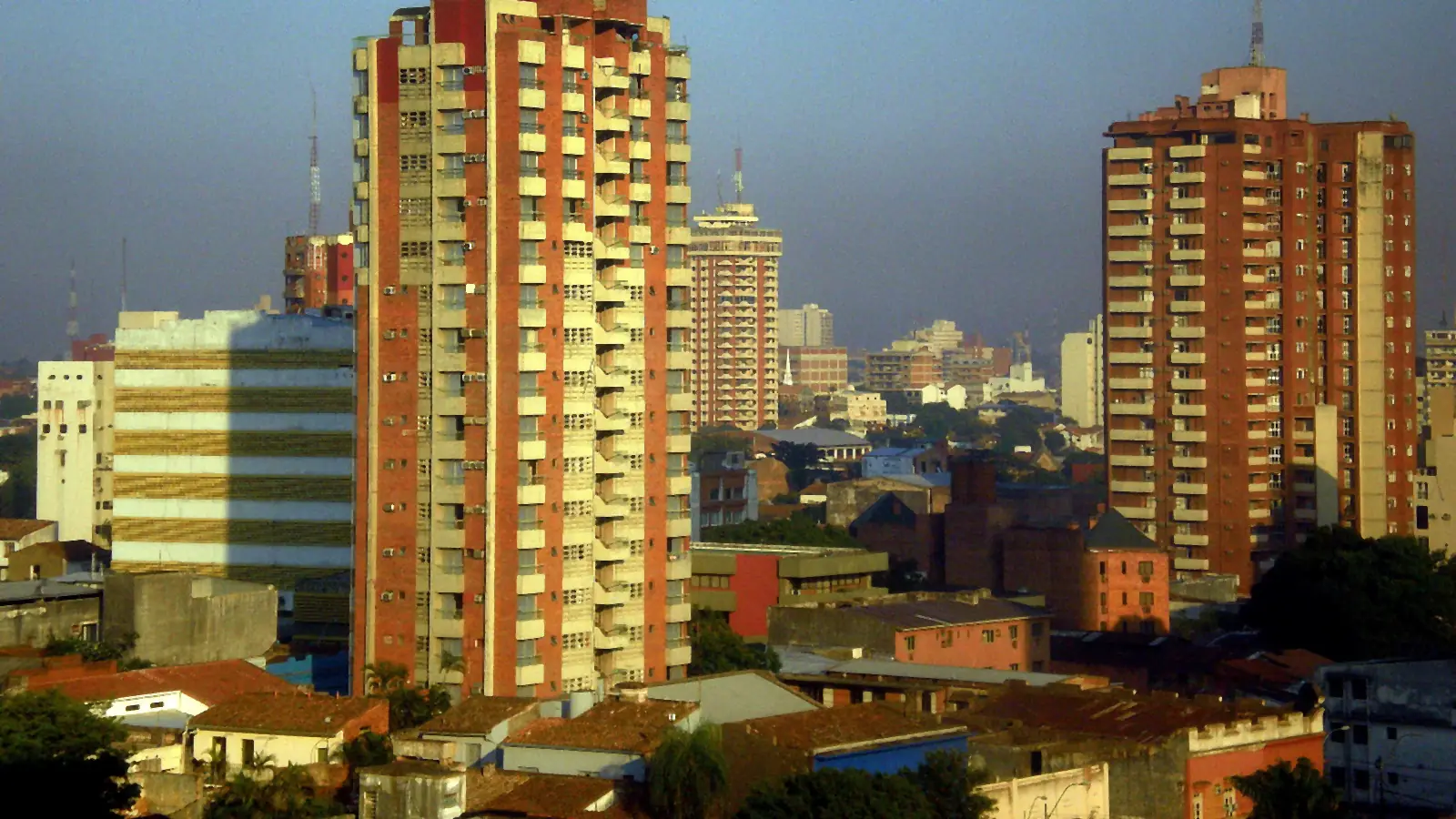
Within the capital, the neighborhood drives the number as much as the size does, so it pays to understand which barrios command a premium and which offer value before you shortlist anything. The guide to the best neighborhoods in Asunción breaks down where the money goes. Newer high-specification towers in Villa Morra or Las Mercedes sit at the top of the urban range, while older stock and less central areas cost markedly less.
Does Buying Property in Paraguay Qualify for Residency or the Investor Pass?
For many readers this is the real question behind the search, and since April 2026 the answer can be yes. Under Resolución MIC 0283/2026, the real-estate category of the Investor Pass starts at $200,000 and leads straight to permanent residency, skipping the temporary stage that everyone else holds until they can apply for permanence from its 21st month. One condition weighs more than the figure: purchases for exclusively personal or family use are excluded, so the apartment you plan to live in does not qualify you on its own.
The evidence is more flexible than many expect. A registered deed works, and so does a notarized purchase contract on which at least 30% has been paid, which brings off-plan units into reach; either document may be no older than 180 days when you apply. You also have to enter Paraguay before the investor certificate is issued. How a purchase turns into a residency file is worked through in Paraguay residency through real estate.
Real estate is one of four categories, alongside financial instruments from $200,000, tourism from $150,000 with a business plan, and a productive project from $70,000 with a pre-approved business plan and at least five formal jobs. The cheapest of those is the most demanding in practice, which matters if you would rather put money into a business of your own.
Two caveats matter. First, no purchase is automatically a residency ticket: the investor certificate from SUACE has its own documents and checks, and the property has to fit the category. Second, you do not need to buy anything to obtain ordinary Paraguayan residency, which most people reach through the far cheaper standard route. If residency is the goal and property is secondary, weigh both deliberately; Investor Pass vs standard residency sets the two side by side, and our Investor Pass support covers the filing.
Buy property because you want the property; treat the residency benefit as a bonus, not the reason.
Ready to plan a purchase and residency together? Each package spells out the support, the trips, and the total price. See pricing.
Frequently Asked Questions About Buying Real Estate in Paraguay
Can foreigners legally buy property in Paraguay?
Yes. Foreigners can generally buy property in Paraguay with full freehold title in their own name, without being residents or using a local partner. The only significant limit bars nationals of neighboring countries from owning rural land within 50 kilometers of the border. Standard city apartments and houses, and most interior plots, are freely open to foreign buyers.
What is the escritura in a Paraguay purchase?
The escritura is the public deed that transfers ownership, executed before an escribano (notary). The escribano drafts it, verifies both parties and the property, and registers the transfer with the public registry. It is the legal core of buying property in Paraguay, giving the transaction its official force rather than a private contract alone.
How much are closing costs when buying property in Paraguay?
Closing costs for buying property in Paraguay are modest, typically a few percent of the purchase price as of 2026. The main items are IVA of roughly 1.5% of the price when the seller is a company such as a developer (a private individual selling a property does not charge it), a municipal transfer tax of 0.2%, or 0.3% in Asunción, registry inscription, and the escribano's fee on a statutory scale. There is no national transfer tax. Confirm current amounts with your escribano, since fee scales change over time.
Can a foreigner get a mortgage in Paraguay?
Rarely on good terms. Financing for foreigners buying property in Paraguay is limited, carries higher interest, and favors established residents with local income. Most foreign purchases are cash. Some developers offer seller financing on new-build apartments, but you should plan to fund the purchase with your own capital.
How do I verify the title before I buy in Paraguay?
Have your lawyer or escribano obtain a current registry certificate (certificado de condiciones de dominio) for the finca. It confirms ownership and reveals any mortgages, liens, or embargoes. Verify boundaries, cadastral data, and that property taxes are paid. Rural and undeveloped land deserves extra scrutiny before any money changes hands.
Does buying property in Paraguay give me residency?
It can, and directly at the permanent level. Under Resolución MIC 0283/2026, the Investor Pass real-estate category starts at $200,000 and skips temporary residency, but the property must be an investment rather than your own or your family's home. A notarized contract with 30% paid is accepted as evidence. Ordinary residency requires no purchase at all and costs far less.
How long does the purchase take in Paraguay?
From an agreed offer to a registered title, the process usually takes a few weeks to a couple of months as of 2026, depending on how fast documents come together and registry workload. You need not be present for every step; a power of attorney lets a trusted local professional handle the escritura and registration on your behalf.
What should foreigners weigh before buying property in Paraguay?
That is a personal judgment, and no return can be promised. Prices and ownership taxes are low and the market lacks the liquidity and transparency of larger economies. Do proper title due diligence, buy in a sound location, and treat it as a medium- to long-term hold rather than a quick flip.
Legal basis and disclaimer: This article is general information, not individual legal, tax, or investment advice, and rules change. The annual impuesto inmobiliario rests on Ley 125/91 (about 1% of fiscal value, 0.5% for rural holdings under 5 hectares) and is municipal, like the transfer tax on a sale. IVA and income taxes follow Ley 6380/2019 under the DNIT. Confirm current rules and title details with a Paraguayan notary or qualified adviser before you buy. Worth reading beside this: the Paraguay chapter of PwC's Worldwide Tax Summaries.

About the author
Yannick Schroth
Founder · Paraguay relocation support
Spends regular time in Paraguay and, with his team on the ground in Asunción, guides international nomads, entrepreneurs and investors through residency, the cédula and the RUC paperwork.
Note: this article reflects the position at the time of publication. Laws, prices and deadlines can change, so individual details may since be out of date. Check the current rules before you act on them: we answer questions about residency and our services, while the tax treatment of your own case belongs with a qualified tax adviser.