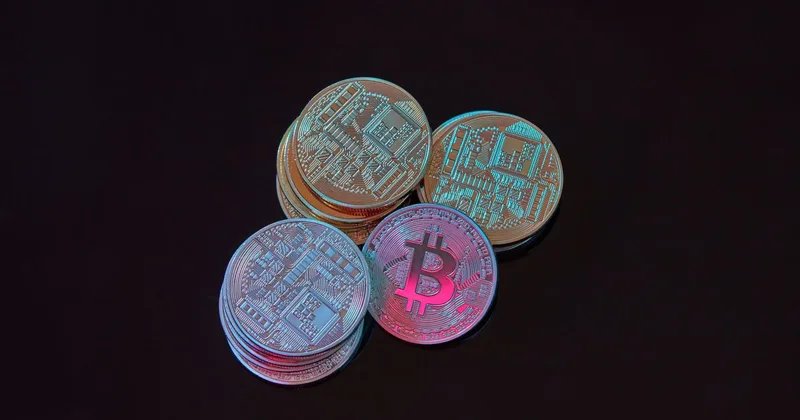
Search for Bitcoin and Paraguay and two pictures come up side by side. One shows warehouses full of mining rigs running on hydroelectric power. The other shows a central bank telling the public that crypto is risky and not money. Both are accurate, and neither is the whole story.
This overview sets out where things stand in 2026: what the law says about owning crypto, which authorities are involved (the central bank, the anti-money-laundering secretariat and the tax administration), what banks will ask you, how mining is regulated, and why the tax treatment of crypto gains is still an open question.
Note. Status as of October 2026, based on public sources linked in the text. This article is general information and does not replace legal or tax advice.
Crypto in Paraguay at a Glance
| Topic | Status in 2026 |
|---|---|
| Owning and trading crypto | Allowed, not prohibited |
| Legal tender | No, crypto has no curso legal |
| Dedicated crypto law | None; a 2022 bill was vetoed |
| Anti-money-laundering supervision | SEPRELAD; crypto service providers are obligated reporting entities |
| Tax reporting duty | DNIT General Resolution 47/2026, above USD 5,000 a year |
| Mining | Under an ANDE contract in designated zones; power theft punishable by up to 10 years in prison |
| Income tax on gains | Not settled; classified case by case |
Legal Status of Crypto in Paraguay
What the Central Bank (BCP) Says
The Banco Central del Paraguay has warned the public about crypto several times, most recently in March 2025 through its securities superintendency. Its position: crypto assets are neither registered nor authorized by the BCP, they have no legal tender status in Paraguay and no state backing, their value rests only on the confidence of users, and a total loss is possible (HOY, March 7, 2025).
A warning is not a ban. Buying, holding and selling Bitcoin is legal in Paraguay, but you do it at your own risk, and the only legal tender remains the guaraní.
No Dedicated Crypto Law
Paraguay has no comprehensive statute for crypto assets. A 2022 bill would have recognized mining as an industrial activity and capped its electricity tariff. President Mario Abdo Benítez vetoed it in August 2022, citing among other things the high power consumption set against limited added value (Infobae, August 30, 2022). Since then, individual agencies have regulated specific parts of the field.
Anti-Money-Laundering Rules: SEPRELAD and Crypto Providers
Paraguay's anti-money-laundering secretariat, the Secretaría de Prevención de Lavado de Dinero o Bienes (SEPRELAD), issued Resolution 8/2020 on January 15, 2020. It made every individual or company that mines, exchanges, transfers, holds in custody or administers virtual assets an obligated reporting entity (sujeto obligado) (SEPRELAD Resolution 8/2020).
These virtual asset service providers (Proveedores de Servicios de Activos Virtuales, PSAV) must register and, under Resolution 314/2021, run a prevention system with a risk assessment and customer due diligence (summary by the law firm Livieres Guggiari).
For a private user, the practical effect is simple. Expect identity verification with any provider, and expect to document where the money came from once amounts get larger.
The DNIT Crypto Reporting Duty Since 2026
The newest layer comes from the tax administration. DNIT General Resolution 47/2026, dated March 10, 2026, requires an annual informative return, the Declaración Jurada Informativa de Criptoactivos, from two groups:
- ▹Operators of crypto platforms active in the country.
- ▹Individuals and companies resident or established in Paraguay that transact in crypto assets, once their transaction volume for the year exceeds USD 5,000.
The return is due in the third month after the fiscal year closes. The first reporting year is 2026, so the first returns go in during 2027 through the DNIT's Marangatú system.
The data requested includes the date, type and quantity of the crypto asset, its value in US dollars, the transaction hash, the sending and receiving addresses, and the type of wallet. Filing late costs a fine of 1,000,000 guaraníes (full text of Resolution 47/2026, ABC Color, August 12, 2026).
Keep one distinction in mind: the USD 5,000 threshold triggers a reporting duty, not a tax. Whether tax is owed on the reported transactions is a separate question, covered further down.
The practical consequence is about records. Start a complete log of your transactions from the day you arrive, because reconstructing a year of wallet history after the fact is close to impossible.

Banks, Exchanges and Cashing Out to Fiat
Because the BCP has not authorized crypto assets, Paraguayan banks treat proceeds from crypto with care. Banks are themselves obligated reporting entities under the anti-money-laundering law, Ley 1.015/97, so a sizable incoming transfer from a crypto sale will usually prompt questions about the origin of funds.
What helps is paperwork that tells a continuous story: exchange statements, purchase confirmations and your wallet history, ideally showing the path from the original purchase to the transfer into your Paraguayan bank account.
Many users in Paraguay trade on international platforms and withdraw in US dollars. The usual routes for moving money into the country, and their costs, are set out in our guide to money transfers to Paraguay.
Paying With Bitcoin in Daily Life
Since crypto is not legal tender, no merchant has to accept it. A handful of shops, cafés and service providers, mostly in Asunción, take Bitcoin, and a few Bitcoin ATMs operate in the capital.
Rent, groceries, government fees and utility bills, however, are paid in guaraníes or US dollars. Plan your budget in fiat; the cost of living in Paraguay gives realistic figures to work from.

Bitcoin Mining in Paraguay and the Itaipú Power Supply
Almost all of Paraguay's electricity comes from hydropower, above all the binational dams of Itaipú (shared with Brazil) and Yacyretá (shared with Argentina). Under the 1973 Itaipú treaty each country is entitled to half of the output (Global Energy Monitor). Because Paraguay has used less than its share, mining operations set up in the country.
Legal Crypto Mining Under the ANDE Special Tariff
The legal basis is Decree 7.824/22 of September 2022. It created a customer group at the state utility ANDE, the Grupo de Consumo Intensivo Especial, for crypto mining, blockchain and data centers, with separate tariffs for connections at 220 kV, 66 kV and 23 kV. According to ANDE, mining is allowed only in designated zones served by dedicated lines that do not affect supply to households (ABC Color, August 13, 2025).
In June 2024, ANDE Resolution P/N° 49238 raised that tariff by 9 to 16 percent, which the utility attributed to higher purchase costs from Itaipú (La Nación, July 3, 2024).
In 2026, operators pay roughly USD 44 per megawatt-hour. According to ANDE, the current contracts end on December 31, 2027 and cannot be extended, while the industry is pushing for a further ten years to 2037 (ABC Color, September 3, 2026). Miners also count as obligated reporting entities of SEPRELAD under Resolution 8/2020.
The longer story of the sector is in our article on Bitcoin mining in Paraguay; household power prices are a different matter, covered under utility costs in Paraguay.
Enforcement Against Illegal Bitcoin Mining
Alongside the tariff regime, the state went after operators who tapped the grid illegally. President Santiago Peña signed Ley 7300 on July 19, 2024. It raises the maximum penalty for stealing electricity for crypto mining to 10 years in prison and allows the equipment to be confiscated, held by ANDE and later sold.
ANDE reported that more than 10,000 mining devices had been seized by then. The government stressed that the aim was not to criminalize legal mining (swissinfo/EFE, July 2024).
Crypto Tax in Paraguay: What Is Still Open
The Territorial Principle and Its Limits
Paraguay taxes on the territorial principle, meaning it reaches income from Paraguayan sources. How the Paraguayan tax system applies to gains from crypto trading is not settled. In particular, the location of the exchange does not by itself decide whether a gain is foreign-source. Trading that you carry out while living in Paraguay can be treated as Paraguayan-source income.
The reporting duty under Resolution 47/2026 does not create a tax. It does, however, give the DNIT data it can use to review transactions and spot inconsistencies, so a position you cannot explain becomes visible.
Paraguay Tax Rates That Could Apply
If income is classified as Paraguayan-source, the ordinary taxes apply. Personal income tax (IRP) runs at 8, 9 and 10 percent, with brackets at 50 million and 150 million guaraníes of annual net income. Business income tax (IRE) is 10 percent. Dividend tax (IDU) is 8 percent for residents and 15 percent for non-residents.
Which of these, if any, reaches a given crypto gain depends on the facts: how often you trade, from where, through which entity, and whether a local business is involved. A Paraguayan contador classifies the individual case, and he can also handle your annual filing with a RUC.
Tax Residency Is a Question of Paraguayan Law
Holding a cédula is not the same as being a tax resident; the difference is explained in immigration vs tax residency. Whether you count as tax-resident in Paraguay, and from what date, follows from Ley 6380/2019, and a Paraguayan contador is the right person to confirm it for your situation.
US citizens and green-card holders: The United States taxes its citizens and green-card holders on worldwide income, crypto gains included, wherever they live. Paraguayan residency does not change that, and every taxable disposal still has to be reported to the IRS. Our page for US citizens on Paraguay and taxes sets out the basics; your specific position is for a US-qualified tax professional.
Home-Country Tax Is a Separate Question
Moving to Paraguay and deregistering at home does not by itself end your tax liability there. Each country applies its own residency tests, and some have exit rules for unrealized gains; our overview of how tax residency ends explains the general mechanics. Whether and when your old country stops taxing your crypto is a question for a tax adviser in that country. This article makes no statement about it.
Exchanges abroad also share account data with tax authorities under international information exchange, which is one more reason to keep your records complete in both directions.
Frequently Asked Questions About Crypto in Paraguay
Is Bitcoin legal in Paraguay?
Yes. Owning, buying and selling Bitcoin is not prohibited in Paraguay. The central bank (BCP) has not authorized crypto assets, though, and they are neither legal tender nor backed by the state.
Above what amount do I have to report crypto transactions to the DNIT?
Under DNIT General Resolution 47/2026, individuals resident in Paraguay report their crypto transactions once their yearly volume exceeds USD 5,000. The first reporting year is 2026, the return is due in the third month after the year ends, and filing late costs 1,000,000 guaraníes.
Is the DNIT crypto return a new tax?
No. It is an informative return. It does not set any tax, but it gives the DNIT transaction data it can use to check filings.
Are crypto gains taxable in Paraguay?
That is not settled. Paraguay taxes Paraguayan-source income, and the location of the exchange alone does not decide the source; trading from within Paraguay can count as local. A Paraguayan contador should classify your individual case.
Can I pay with Bitcoin in everyday life in Paraguay?
Only occasionally. Some businesses, mostly in Asunción, accept Bitcoin, but none are required to. Rent, shopping and government fees are paid in guaraníes or US dollars.
Is Bitcoin mining allowed in Paraguay?
Yes, with an ANDE contract under the special tariff for intensive consumers and in the designated zones. Mining through illegal connections can lead to up to 10 years in prison under Ley 7300 of 2024. The special contracts run until the end of 2027.
Will a Paraguayan bank ask where money from a crypto sale came from?
You should expect it. Banks are obligated reporting entities under the anti-money-laundering law and check the origin of larger incoming funds. Exchange statements and wallet history make the answer straightforward.
Do US citizens living in Paraguay still owe US tax on crypto?
Yes. US citizens and green-card holders remain taxable in the United States on worldwide income, including crypto gains, regardless of residency. A US-qualified tax professional can explain the filing obligations.
Conclusion on Crypto in Paraguay
Paraguay tolerates crypto but regulates it only in parts. The central bank warns and does not authorize it, SEPRELAD supervises service providers and miners, and since 2026 the DNIT requires an informative return above USD 5,000 a year. Mining runs on hydropower, but the special contracts end in 2027. If you move to Paraguay with crypto holdings, document everything from the start and have the tax classification settled by qualified professionals in Paraguay and at home.
Planning your move to Paraguay? Our work is the immigration side: we coordinate your documents and appointments and accompany you on the ground through to your cédula. Tax questions stay with a contador in Paraguay and a tax professional in your home country. Book an intro call.
Legal basis and disclaimer: This article is general information, not legal, tax or financial advice, and the rules described can change. Tax matters are administered by the Dirección Nacional de Ingresos Tributarios (DNIT); anti-money-laundering rules by SEPRELAD. Confirm your own position with a licensed professional before acting.

About the author
Yannick Schroth
Founder · Paraguay relocation support
Spends regular time in Paraguay and, with his team on the ground in Asunción, guides international nomads, entrepreneurs and investors through residency, the cédula and the RUC paperwork.
Note: this article reflects the position at the time of publication. Laws, prices and deadlines can change, so individual details may since be out of date. Check the current rules before you act on them: we answer questions about residency and our services, while the tax treatment of your own case belongs with a qualified tax adviser.