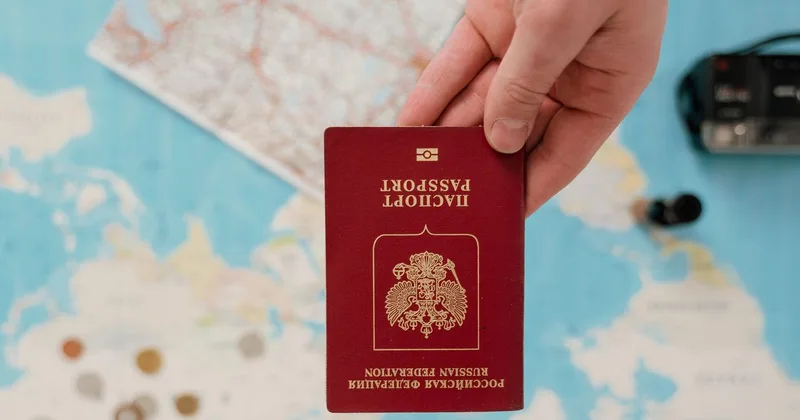
You built your income in dollars, or you are trying to, and the naira keeps eroding whatever you hold in Nigeria. Paraguay residency for Nigerians solves two problems that rarely show up together in one country: it can let genuinely foreign-source income sit at 0% tax in principle, and it opens a path toward a Paraguayan passport that travels far more freely than a Nigerian one.
This is not a "buy citizenship" pitch. It is a description of what Paraguay's tax system and residency timeline actually deliver, and who it genuinely suits. We will also be honest about the one thing that makes Nigeria different from most nationalities reading this: you need a visa before any of this can start.
Why Nigerians Want a Second Residency Right Now
Ask most Nigerians moving abroad why, and tax is rarely the only answer. Foreign-exchange scarcity and repeated naira devaluation make it hard to hold or move value at all. Personal reasons differ, and this article does not weigh them; it sets out what Paraguay's rules actually provide.
A second residency works as a hedge against much of that at once. It gives you a legal right to live somewhere with a stable, dollar-friendly economy and a place to hold and grow US-dollar earnings, without touching your Nigerian citizenship. Citizenship is a later and separate decision, with a catch covered below.
How Paraguay Taxes Foreign Income, Explained Honestly
Paraguay's income tax follows the territorial principle. That means Paraguay generally does not tax foreign-source income earned by its residents, only income actually sourced inside the country. For a Nigerian holding investments abroad, or owning a business that operates outside Paraguay, that foreign income can sit outside Paraguay's tax net. Freelancing or running an online business from a laptop in Asunción is less clear-cut: the authorities can regard that work as done in Paraguay and tax it through IRP or IRE, where rates run from 8 to 10 percent.
The word that matters here is "genuine." This benefit requires Paraguayan tax residency, a question of Paraguayan law that a contador clarifies, not a cédula sitting in a drawer. A US LLC or similar entity can simplify banking and client payments, but it cannot relocate the work itself, so ask a tax professional in Paraguay to sort your income into the right category first. Our detailed Paraguay tax residency guide walks through exactly what "genuine residency" and "proper structuring" mean in practice.
It is equally important to say what this is not. Local Paraguayan-sourced income is taxed normally, and Nigerians should separately check their own home-country tax obligations, since Paraguay residency does not automatically erase any Nigerian filing requirements. A qualified tax adviser familiar with both systems is worth the fee before you restructure anything.
One group needs a separate warning: Nigerians who also hold US citizenship or a US green card. The United States taxes them on worldwide income regardless of where they live, so for them the 0% described here does not apply to the US side at all.
The Passport Upgrade: Why Mobility Matters So Much for Nigerians
For many Nigerians, the tax treatment matters, but the passport is the part that changes daily life. The Nigerian passport ranks among the weaker travel documents globally for visa-free access, turning routine business trips or family visits into a visa-application project every single time.
A Paraguayan passport is a different proposition. Reach it, roughly five years after starting residency, two years temporary plus three permanent, and you gain visa-free or visa-on-arrival access to 140-plus countries. That is not a marginal improvement, it is a structural change in how freely you and your family can move for business, education, or simply a holiday.
The catch is dual nationality. Paraguay's Constitution (Article 149) admits it only under an international treaty, and there is none with Nigeria, so on naturalization Paraguay may require you to renounce Nigerian citizenship. How that is handled in your own case is a question our partner lawyer in Paraguay answers before anyone files. Until then, residency and a cédula change nothing about the Nigerian passport you hold.
Curious what your own timeline to residency, and eventually citizenship, looks like? Book a free intro call and we will explain how the visa and residency steps run in Paraguay and how long each stage takes.

Who Actually Benefits From Paraguay Residency as a Nigerian
This works best for Nigerians with income that already crosses borders: investors, owners of companies operating abroad, exporters, online business owners and remote consultants whose earnings do not depend on being physically present in Nigeria. Investment returns from abroad are where the 0% applies most cleanly. Consulting done from Paraguay may be taxed there at around 8-10%, and the option of naturalizing later sits on top of that.
It suits less well someone whose entire income is locally sourced and non-portable, since the tax benefit only applies to foreign-source earnings once you are properly resident. It also is not a fit for anyone hoping to skip the actual relocation, since a life you have built in the country is what tax residency there is about, and a local contador confirms where you stand.
Families weigh this differently than solo entrepreneurs, often prioritizing the passport and the calmer, lower-cost lifestyle over the tax angle alone. Our cost of living guide for 2026 shows that a comfortable single lifestyle in Asunción runs roughly $1,200 to $1,700 a month, which changes the math for a whole household, not just one income earner.
How Nigerians Compare Paraguay With Other Low-Tax Options
Paraguay is not the only country offering low or zero tax on foreign income, and it is worth comparing before committing years of your life to any single jurisdiction. Our roundup of the comparison of residency countries sets Paraguay against several competing options on cost, accessibility, and stability.
Where Paraguay tends to win for Nigerians specifically is the combination: no large investment minimum on the standard residency route, a genuinely low cost of living, and a path to citizenship after about five years, with a passport that outperforms the Nigerian one on visa-free access. Few competing jurisdictions offer all three at once, although for a Nigerian the passport step may mean giving up the old one, as explained above.
The Visa Step Nigerians Cannot Skip
Here is the detail that separates Nigeria from most nationalities reading generic Paraguay residency guides. Nigeria is on Paraguay's visa-required list, meaning you cannot simply arrive and start the residency process. The entry visa has to be secured first, with the right documentation, before residency filing even becomes possible.
We coordinate the visa and the residency together as one process, since Nigerians cannot enter visa-free. Our companion guide on Paraguay residency for visa-required nationalities covers exactly how that sequencing works and what to prepare in advance.
Being fully honest: no provider can guarantee entry. The final call at the border always belongs to the individual Migraciones officer on duty. What a complete, consistent visa file does is remove the avoidable reasons an application gets delayed or refused, which meaningfully improves the odds without pretending to eliminate all risk.
Frequently Asked Questions About Paraguay Residency for Nigerians
Does Paraguay tax Nigerians' foreign income?
Dividends, interest and gains on assets held abroad are generally not taxed for Nigerians who have become Paraguay tax residents. Fees for services you deliver from your Paraguayan home are different and may be taxed locally, whether the client is abroad or the invoice carries a US LLC's name. Confirm your own situation with a qualified adviser.
How long does it take a Nigerian to get Paraguay residency?
Roughly two years of temporary residency, with no minimum number of days but at least one entry a year and never more than twelve consecutive months abroad, then permanent residency, where an entry at least every three years is mandatory. Because Nigeria requires an entry visa first, Nigerians should also budget extra time upfront for that visa step before the residency clock even starts.
Do Nigerians need a visa before applying for Paraguay residency?
Yes. Nigeria is on Paraguay's visa-required list, so a Nigerian must obtain an entry visa before residency paperwork can begin. This is the key difference from applicants coming from visa-exempt countries, and it is why a coordinated visa-plus-residency service matters for Nigerian applicants specifically.
How does a Paraguayan passport compare to a Nigerian one for travel?
Significantly better for visa-free access. The Nigerian passport ranks among the weaker documents globally for visa-free travel, while a Paraguayan passport, reachable in roughly five years, opens visa-free or visa-on-arrival entry to 140-plus countries. Keep in mind that Paraguay and Nigeria have no dual-nationality treaty, so naturalizing may require giving up the Nigerian passport; a lawyer should confirm that for your case.
Is there an investment minimum for Paraguay residency?
No, the standard residency route has no large mandatory investment, which is a major reason Nigerians and other nationalities consider it accessible compared with several competing second-residency programs. Requirements instead focus on documentation, background checks, and a genuine, demonstrable presence pattern over time.
What does Paraguay residency cost for Nigerians overall?
Costs vary because the visa step is nationality-specific, so we price the full package on request. Living costs are more predictable: a comfortable single lifestyle in Asunción runs roughly $1,200 to $1,700 a month in US dollars, a useful benchmark for budgeting the move itself.
Can Paraguay residency guarantee my visa gets approved?
No. The Paraguayan consulate rules on the visa, border staff from Migraciones rule on admission, and no legitimate provider can promise either outcome. Careful, complete visa documentation materially improves your chances by removing avoidable reasons for delay or refusal, but it cannot remove that final human decision.
Which Nigerians get the most out of Paraguay residency?
Nigerians with portable income, online businesses, remote work, freelancing, or investments, get the most from the combination of low Paraguayan tax, 0% in principle on foreign investment income and around 8-10% on work done locally, and the longer-term option of naturalizing. Those with entirely local, non-portable Nigerian income benefit less from the tax side, though residency itself can still matter to them.
Legal basis and disclaimer: This article is general information, not individual legal or immigration advice, and requirements can change. Paraguay's residency and immigration rules rest on Ley 6984/2022, the Ley de Migraciones, a statute passed by Congress, and the resolutions that apply it are published by the Dirección Nacional de Migraciones (DNM). Confirm the current requirements with Migraciones or a qualified adviser before you file.

About the author
Yannick Schroth
Founder · Paraguay relocation support
Spends regular time in Paraguay and, with his team on the ground in Asunción, guides international nomads, entrepreneurs and investors through residency, the cédula and the RUC paperwork.
Note: this article reflects the position at the time of publication. Laws, prices and deadlines can change, so individual details may since be out of date. Check the current rules before you act on them: we answer questions about residency and our services, while the tax treatment of your own case belongs with a qualified tax adviser.