Stay in Asunción for a few weeks and you start running into people who stopped passing through and built something here instead: a company, a café, a school. How they got there tells you more about arriving in Paraguay than any relocation checklist can. That is why we are launching a new interview series, Founders in Asunción.
Part 1 features Sam Goetz, founder of the Fluido Spanish school in Villa Morra. He landed in 2025 as an American digital nomad, spent his first weeks feeling anything but at home, and in February 2026 opened the school he had been looking for and could not find.
Transparency note: Fluido belongs to our partner network. We recommend the school because we think it is good; there is no discount through us and no commission for us. Sam answered our questions in writing, in English, in September 2026. His answers appear in his own words, lightly edited for spelling and grammar. We adapted one question for this English edition.
Sam Goetz at a glance:
- ▹From: New Jersey, USA
- ▹Before Paraguay: founder of the music software company Stemmer, last based in Philadelphia
- ▹In Paraguay: since 2025, after three months at a Spanish school in Peru
- ▹Founded: Fluido, February 2026, in Villa Morra (Asunción)
- ▹Concept: in-person Spanish only, in groups of four at most
Founders in Asunción: How Sam Goetz Ended Up in Paraguay
You grew up in New Jersey and were running a software business as a digital nomad. Why Paraguay, of all places? What did you know about the country before you landed?
After college, I started a music software business called Stemmer and moved to Philadelphia, Pennsylvania. That business started to make a profit after three years, but not enough to support me. But I was getting tired of living with three housemates, so I decided to take a break from the hustle and go on an adventure in April 2025.
I almost chose East Asia, but decided on Latin America because I felt that if I'm going to go on an adventure, I ought to at least participate in the culture and language, and I already knew a bit of Spanish. I first went to Peru and had a great time. I enrolled full time in a world-class Spanish school there that became my home base.
It was amazing, and I became addicted to learning Spanish. I went to class for four to six hours per day, studied, and did homework. But then my three-month visa ran out, and I had to choose another country.
It was a process of elimination. I didn't want to feel like I was "going back home" towards the US, so I avoided heading north towards Central America. I almost chose Colombia, but it didn't seem too safe. Argentina sounded a bit pricey. I heard that Chile had a really strong accent, which scared me.
My friend said, "Sam, let's go to Paraguay. Wouldn't it be cool to go somewhere where few tourists go?" I said, "No way." But then I realized: it's very safe, it's very affordable, and although there aren't many tourist attractions, I thought maybe that would make it a good place to lock in and get some work done on my software business.
You've said your first months here were harder than expected and that you "did not feel at home." What exactly was hard, and when did that start to change?
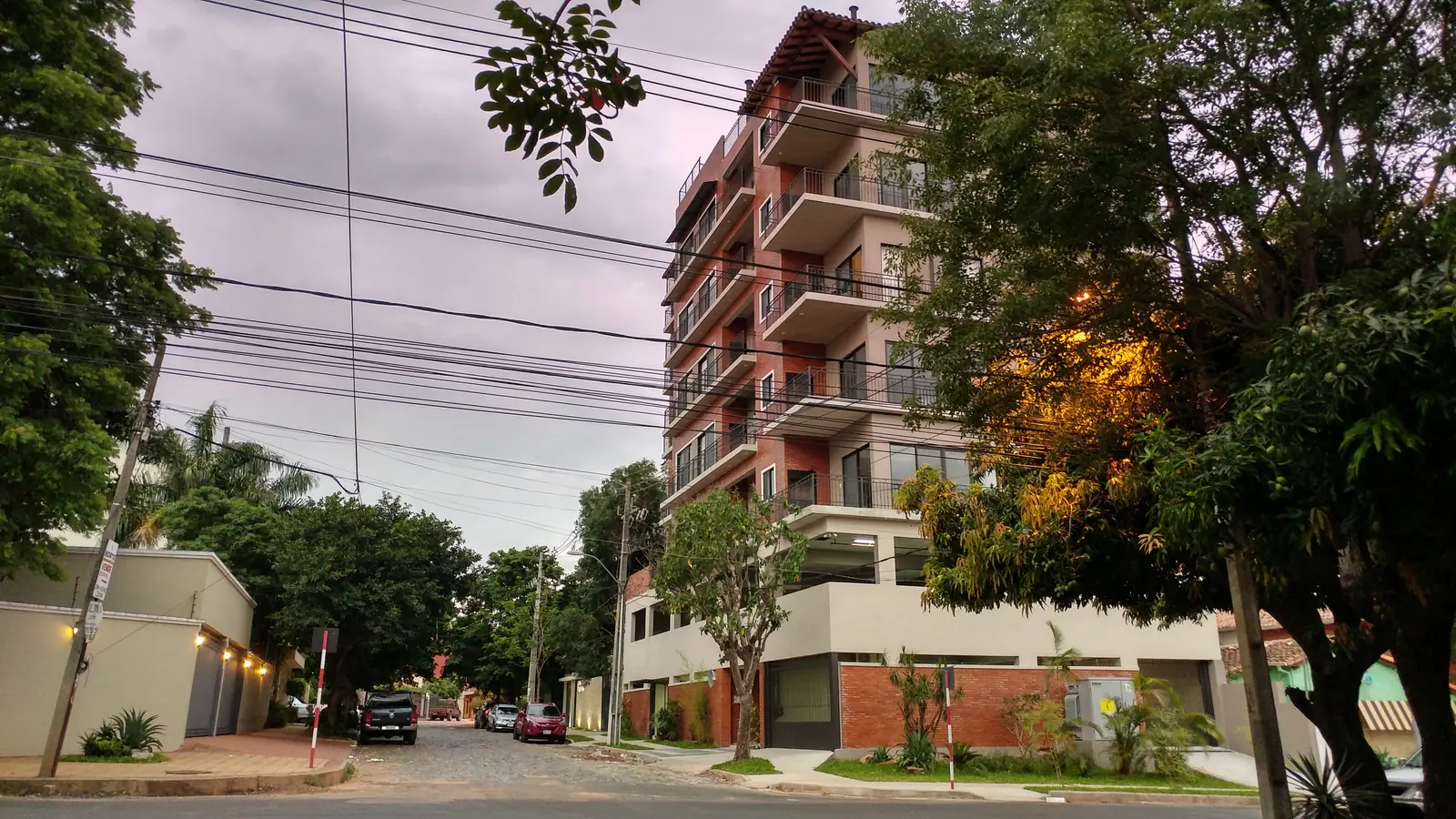
I lacked a structured social routine in Asunción. I landed here and couldn't believe how calm it was. Trees everywhere, even growing in the middle of some roads. Like many coming from Lima who land at 6 a.m., I slept the first day. Then I woke up, and it seemed like I was in the middle of the suburbs (I was staying in the We Villa Morra building, in Recoleta).
This was nice, but after a few days, I was struggling. All I did was wake up late in my Airbnb, do work in my Airbnb, get lunch, and go back to work in my Airbnb. I didn't have the social routine that was handed to me on a golden platter by the school I went to in Lima, Peru.
You tried several Spanish schools before starting your own. What was missing?
I wanted to improve my Spanish, but more importantly, I needed somewhere to belong. I needed the accountability of a routine. I wanted to feel at home in an intensive Spanish school, like I did in Peru. I wanted professional teachers, small group classes, and a structured curriculum. I wanted to wake up and go to school with my peers. I tried three schools here, but I couldn't find this experience.
You were already building products like Stemmer. At what point did you decide a physical language school was the thing to build, and what did the people around you say?
Never in a million years did I expect I would open a Spanish school in Paraguay. My Spanish teachers in high school would never believe this either! It was my worst subject. But I was honestly so frustrated with my lifestyle here. At the same time, I saw how many expats were moving here. I realized this was truly the opportunity of a lifetime, and given that I'm the customer as well, it would suit me well to start this business.
I flew back to the US to get my immigration documents. People's mouths would drop when they asked me how my trip to South America was: "Good, I'm going back to open a Spanish school in Paraguay." They would usually look at me with shock, and then ask me: "Don't they already speak Spanish in Paraguay?"
My friends who run software businesses couldn't fathom why I would go into brick and mortar: "Is that really scalable?"
Building Fluido: Starting a Spanish School in Asunción
Fluido opened in February 2026, first in a café and then in a house in Villa Morra. What did the first weeks look like? How did you find your first students?
That first week was the hardest that I've ever worked in my life. I had actually premarketed Fluido with blogging and YouTube videos. So before we had even opened, people were reaching out to try our classes. This really pulled the business out of me quickly. Even though I wanted to give a world-class experience right away, we had to start in a café because the students were ready.
I scrambled to rent a place, and finally had our house rented and ready for our second week of class.
What was it like to set up a business in Paraguay as a foreigner: registering, renting, hiring, dealing with the bureaucracy? What surprised you, positively or negatively?
Not fun, but I have to admit that this would be a challenge and bureaucracy in any country. It's extra hard here as a new foreigner for sure. Want to rent a place, but you have no tax history here? Get ready to pay 6 to 12 months up front.
I utilize several teams of professionals to help me with registering business needs, hiring, and bureaucracy.
What is surprising is that it's actually very easy and free to open a Paraguayan EAS business. That's like an LLC. There's a modern website to do it on. During my process, I've ended up registering two different EAS entities, each with less and less help. If I ever open another one, I'll do it on my own.
I actually first tried to do this all on my own, and even applied for residency without a lawyer or agency. I was too afraid of getting ripped off. I regret that. Had I sought help from an expert about my goals, I could have opened Fluido months earlier.
Editor's note: how an EAS is registered, and when a US LLC or another Paraguayan company type is the better fit, is laid out in our Paraguay company formation guide.
You describe your hiring as "unreasonably selective": thousands of applicants, very few hires. What do you look for in a teacher that a degree alone doesn't show? And why did you start your own teacher training program?
Our teachers make our students feel seen and heard in class. They need to be "with" the students, not up with the TV and whiteboard. It's hard to explain, but it's a rare trait that you can feel. Before hiring a new teacher, we have several demo classes, and we ask ourselves: "Would I return to class tomorrow if this was my teacher?"
At first, we only hired teachers who had experience teaching Spanish to foreigners. But we ran out of candidates that met our standards. However, we did get many world-class English teachers who applied. So we realized that we could train the best English teachers how to teach Spanish. That's what launched our 36-hour Teacher Training Program.
Your groups have a maximum of four students, and you teach in person only. Why not scale with bigger groups or online classes?
I have one mission: make expats feel at home in Paraguay. I want to provide them a regular social routine, and that involves coming to school and joining our community. Online classes don't serve our mission.
When I was learning Spanish in Peru, I found that once a class reached five students, my experience really deteriorated. I didn't get enough attention during class. But four students was fine.
What would you do differently if you started Fluido again today?
I would have found a local expert (a law firm or an immigration agency) and explained to them that I wanted to open a business as fast as possible, instead of trying to figure it out myself.
The biggest learning I've had since starting Fluido is: "Find the expert."
Sam's rule holds for residency and the cédula as well. If you would rather not decode Paraguay's immigration process by trial and error, a free intro call is where we work out which route suits you. After that we walk you through the documents, the translations that are done in Paraguay, and each appointment at Migraciones.
Learning Spanish in Paraguay: Voseo, Guaraní and Finding Your Pace
Fluido teaches Latin American Spanish with a Paraguayan flavor, including "vos" instead of "tú." How different is Paraguayan Spanish from what people learn in apps or in Spain?
When I was early in my own journey of learning Spanish, I was very concerned about what country I would be learning in, because I didn't want to "waste" time learning an inconvenient dialect or accent. With my current perspective, it's all the same language. Any country you choose will have slightly different vocab for things, just like how Americans call "french fries" what the British call "chips." But learning English in the UK would still give you complete fluency in the US.
Some countries in Latin America use "tú" and others use "vos" when saying "you" informally. Fortunately, the verb conjugations are very similar, and often identical. In Paraguay, we use "vos." At Fluido, we tend to use "vos," but sometimes include "tú" as needed.
Learning Spanish anywhere in Latin America will be easier than Spanish in Spain, because we don't use or teach the "vosotros" conjugations.
Learning Spanish on apps is still the same Spanish somebody would learn at Fluido. But it's likely that the Mexican Spanish that apps may utilize has some different vocab words than what's used in Paraguay. But that's okay.
What about Guaraní and Jopara? How much does a newcomer need, and do you touch on it in class?
Newcomers don't need any Guaraní or Jopara; however, they will impress locals and maybe make them laugh if they learn a few phrases.
By default, we won't teach Guaraní in class, so that we don't overwhelm our students by learning two languages at once. But if students ask, they will learn some.
That being said, some Guaraní is unavoidable. For example, the word for "popcorn" varies in every Latino country. In Paraguay, the Guaraní word pororó is used.
You say most people reach real fluency in two to six months if they study seriously. What separates the students who get there from the ones who don't?
Here are traits of the students who learn the fastest:
- ▹They make an effort to speak Spanish with locals. Could be anybody, even their taxi drivers.
- ▹They courageously try to speak Spanish, despite the fear of making errors.
- ▹They do homework and study.
- ▹They are not concerned with rushing the process to reach an arbitrary level in a given time range.
A lot of our readers are in their 40s, 50s or 60s. Is it harder to learn Spanish at that age, and what advice do you give older learners?
I have noticed that our younger students tend to learn faster. Most of our students are in their 40s or 50s. My advice to them, and to all learners, is to not be hard on themselves if they don't learn as quickly as they were hoping. Learning Spanish involves rewiring your brain. It may be a bit painful, but that's literally the growth taking place. Also, I recommend that they go out of their comfort zone and try to make conversations with locals in Spanish.
Your students come from many different countries. Do you notice typical strengths or mistakes depending on where learners come from?
Many of our current students are German or Swiss. All of them have already learned at least one other language (often English), and it seems that already having conquered another language gives mental fortitude. They believe in themselves.
What's the minimum level of Spanish you would recommend for someone who wants to live here, handle everyday life and deal with authorities?
There are levels to Paraguay. You could stay in the expat bubble and never learn Spanish, but that leaves so many experiences on the table. Paraguay has a rich culture and friendly locals who are eager to share their world with you: in their language.
The Paraguay Spanish guide on this site picks up where Sam's answer ends, with a realistic timeline, the Paraguayan quirks worth knowing early, and the starter phrases that earn their keep in the first weeks.
More Than a Language School: Community for Expats in Asunción
Your mission is to "make expats feel at home in Paraguay." Beyond classes you run salsa, volunteering and social events. What does a typical week at Fluido look like for a student?
One of our students made a great YouTube video showing a week in the life of a Fluido student: a week at Fluido (YouTube).
A week for students in our morning classes looks like this:
- ▹Wake up, walk or Uber to school, and enjoy some freshly ground and locally roasted coffee from Totem Tostadores at 8:50 a.m.
- ▹Talk to some of your classmates while waiting for class to start.
- ▹At 9 a.m., head to class. Time will fly by with your world-class teacher and fun classmates, and then it will be time for your 11 a.m. break.
- ▹Take a 20-minute break: play some ping pong, get some fresh air, buy a snack from the café down the street.
- ▹After class, you might get lunch with one of your classmates at 1 p.m.
- ▹Maybe we're hosting an asado barbecue on Friday, so you come by at 8 p.m. We cook up a ton of food, and you enjoy many hours before heading home.
- ▹Like many of our students, maybe you made friends with your classmates, and you all head out for drinks on Saturday night.
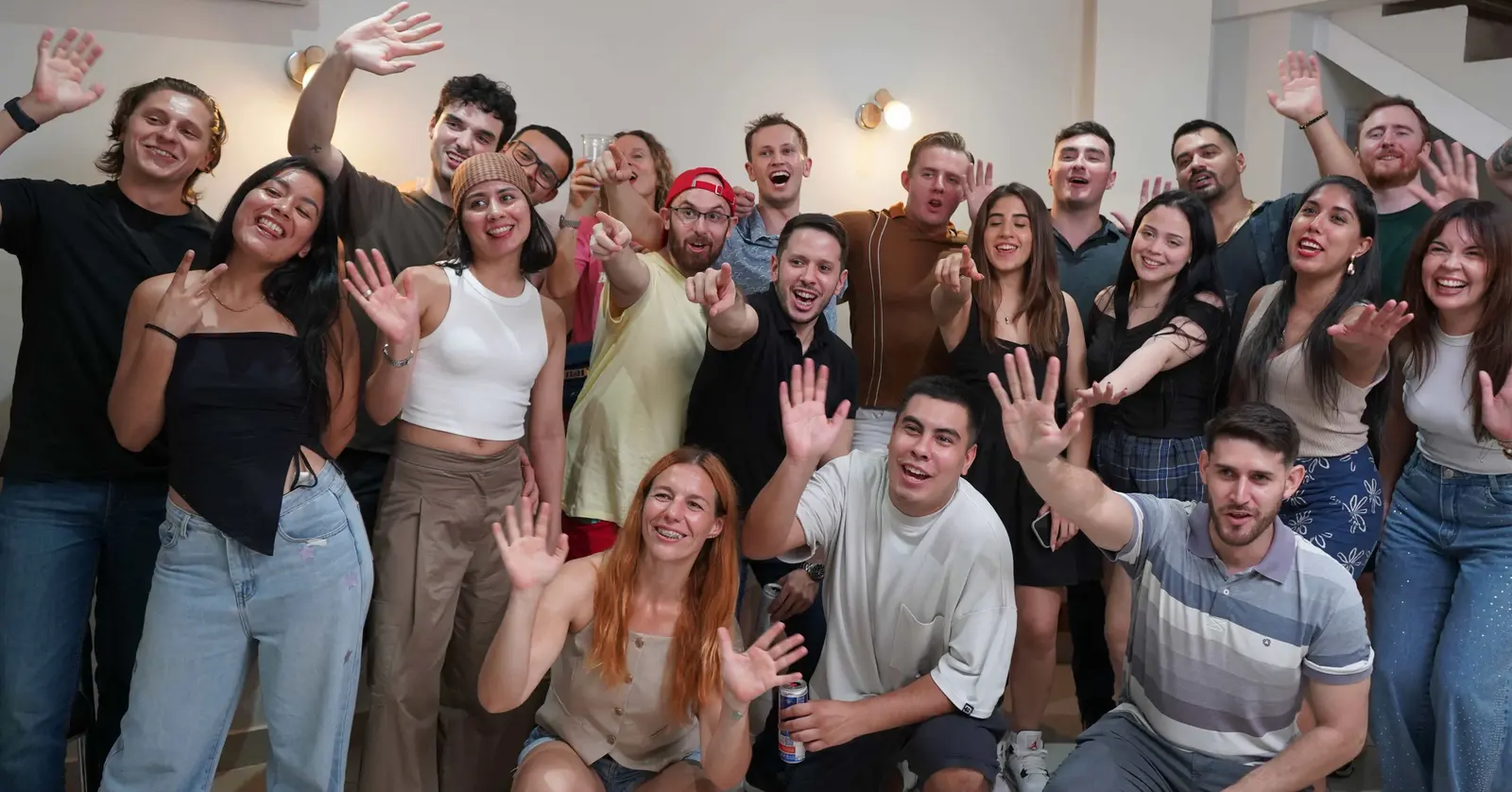
I know I've succeeded in my mission when I see students make friends and hang out with each other outside of school. This brings me great fulfillment. It's the experience that I had wanted here, and what I'm proud to have created.
In September 2026 you launched a homestay program with local families. What made you start it, and what kind of student is it right for?
Some of our students don't get to practice enough Spanish outside of school. If they could spend a week or two with a local family, their learning would accelerate, and of course they would literally feel at home.
Some of our students who are only in Paraguay for a short stay ask us for this. Many expats who already have a long-term lease are less likely to be a fit.
We've announced the program and have demand from students, but are still looking for families. A challenge is that we need the families to be within walking distance of Fluido, so that limits the candidate pool.
You have written about the social groups expats form in Asunción. Which of them would you recommend to someone who just arrived, and which trap should they avoid?
The best starting point is the meetups organized by the Asunción Times. They can be found through their Facebook group, Digital Nomads & Expats in Asunción. It may take some time to find your way into their WhatsApp group, because it's often full. You'll meet many locals at these events as well.
Trap to avoid: constantly complaining about what Paraguay lacks. It's easy to compare Paraguay to our home countries, especially when surrounded by other foreigners. But if you get into the habit of this, locals get tired of hearing it. Expats are generally very welcomed into Paraguay, and we should keep it that way.
Coworking meetups, language exchanges and the online groups where newcomers find each other are mapped in our overview of the expat community in Paraguay.
Life in Asunción: What Sam Goetz Loves and What Still Frustrates Him
What do you love about living in Asunción, and what still frustrates you?
I love how relaxed Paraguayans are. I've adopted some of that culture. When I host events like asados and ping pong tournaments, instead of planning a lot, I just announce it, plan a little bit and vibe out. They always go well.
It's challenging to find documented rules for various processes, like government permits for our business, tax regulations, and even just opening a bank account or trying to get a credit card.
What do people underestimate most when they move to Paraguay?
Honestly, I've seen many expats underestimate the need to speak Spanish. People sometimes realize this at the airport and message us: "I desperately need to learn Spanish." Of course, you can survive without Spanish here, but it would be like living in a bubble.
If a friend told you tomorrow, "I'm moving to Asunción next month," what are the first three things you would tell them?
- ▹Don't try to save money by living in a location far from the action, like Luque. You'll just spend extra money on Ubers and Bolts.
- ▹If you like your beef medium-rare, you have to be very clear about that. The culture here is well-done beef. If you're ordering steak at a restaurant and want it medium-rare, say "a punto."
- ▹Bolts are usually cheaper and faster than Ubers, but definitely less safe because they don't vet their drivers or vehicles as much.
Where do you see Fluido, and yourself, in three years?
I see Fluido full with 100 students per week, in a larger house. We like to be in a house instead of an office, because it's a warmer vibe and literally fits our mission of helping expats feel at home in Paraguay.
At that point, I see myself either doubling down on Paraguay and starting more businesses here, or expanding Fluido to other cities in the region.
Quick Fire: Sam Goetz on Paraguay in One Line
- ▹Favorite Paraguayan food: Mbejú Caprese
- ▹Favorite Paraguayan word or expression: Nderakóre
- ▹Best neighborhood in Asunción for newcomers: Villa Morra, because it's the most centralized
- ▹One place every newcomer should visit: the bars at Paseo Carmelitas (after 11 p.m.)
- ▹Tereré or mate? Tereré
Founders in Asunción: Where the Series Goes Next
What stands out in Sam's account is how quickly the loneliness lifted once his days had a shape: somewhere to be at nine in the morning, and people who noticed when he was not there. The next parts of Founders in Asunción follow other people who built a business in Paraguay, and we will ask them the same things we asked Sam: how they started, where they went wrong, and what they would change.
Planning where to live before you land? The Asunción neighborhood comparison sets Villa Morra, Carmelitas, Recoleta and the rest side by side on rent, walkability and daily routine. The school itself is at Fluido Spanish.
Would you rather have company on the road to residency than go it alone? Tell us your timeline and we will map out the residency and cédula paperwork with you, so that once you arrive your energy goes where Sam's students put theirs: settling in, learning the language, meeting people.

About the author
Yannick Schroth
Founder · Paraguay relocation advisor
Lives in Asunción and guides international nomads, entrepreneurs and investors through residency, the cédula and the RUC paperwork in Paraguay.
Note: this article reflects the position at the time of publication. Laws, prices and deadlines can change, so individual details may since be out of date. Check the current rules before you act on them: we answer questions about residency and our services, while the tax treatment of your own case belongs with a qualified tax adviser.