Search "Paraguay" and you get a scatter of headlines: a landlocked country nobody can quite place on a map, a currency called the guaraní, and, somewhere in the mix, a tax system that draws digital nomads and retirees alike. This Paraguay country guide pulls those threads into one place. By the end, you will know where Paraguay sits, how big it is, who lives there, what daily life costs, and which of our deeper guides to read next depending on what you actually came here to figure out.
Where Is Paraguay?
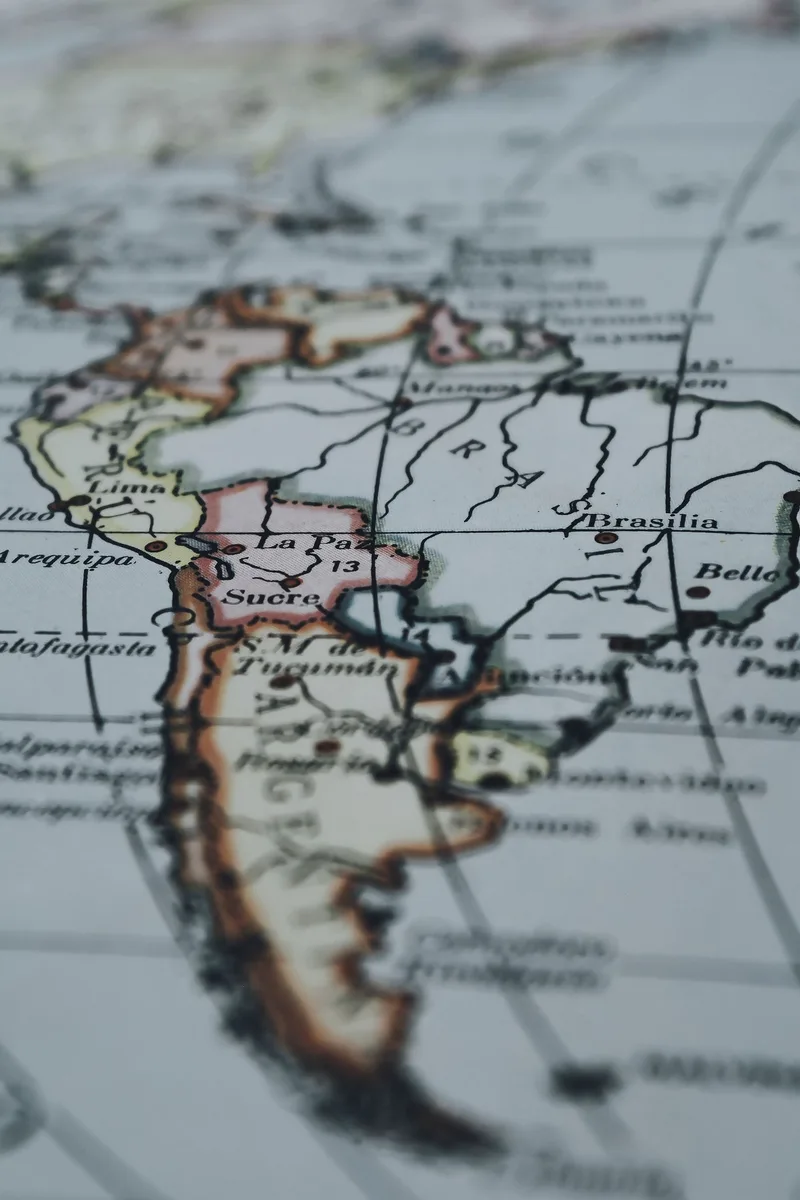
Paraguay sits in the center of South America, landlocked between Argentina to the south and west, Brazil to the east, and Bolivia to the north. No coastline touches it, which surprises people who assume every South American country has a beach somewhere. Instead, the Paraguay and Paraná rivers function as its lifelines, carrying river traffic to Atlantic ports through Argentina.
The country splits into two distinct regions along the Paraguay River. Eastern Paraguay, home to most of the population, is green, hilly, and agricultural. The Chaco to the west is a vast, sparsely populated semi-arid plain that stretches toward Bolivia. That split explains a lot about the country: dense, humid farmland on one side, frontier ranching country on the other.
Asunción and Paraguay's Main Cities
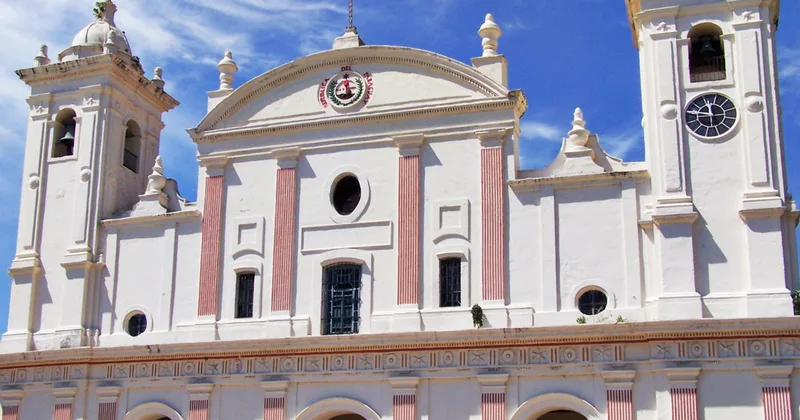
The capital is Asunción, a riverside city of colonial streets, modern towers, and a rapidly growing metro area that houses more than two million people once you count the surrounding department of Central (about 2.35 million in the 2022 census). It sits on the eastern bank of the Paraguay River and functions as the country's political, financial, and cultural hub.
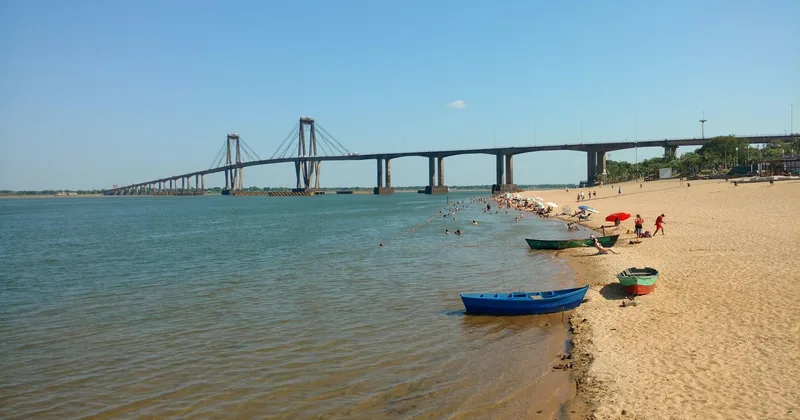
Beyond the capital, a handful of cities matter for anyone researching where to live. Ciudad del Este, on the Brazilian border, is a commercial and trade center built around cross-border shopping and the nearby Itaipú dam. Encarnación, the center of the south on the Argentine border, has reinvented itself as a riverside city with a genuine beach culture during the summer months and cooler winters than the capital.
Smaller cities like Villarrica and Concepción carry more traditional, small-town character. Our comparison of cities in Paraguay sets twelve of them side by side.
Paraguay's Population and Demographics in 2026
As of 2026, Paraguay's population is approximately 6.1 million people, based on the 2022 national census figure of 6,109,903. That number will have moved somewhat by the time you read this, since Paraguay's population has grown steadily for decades. The census office (INE, the Instituto Nacional de Estadística) publishes updated estimates periodically, and official sources are the place to check for the current figure rather than relying on any single article.
Most Paraguayans are mestizo, a mix of Spanish colonial and Guaraní Indigenous heritage, and that mixed identity runs deeper here than in most of Latin America. More than a third of the population lives in Asunción or the surrounding Central department, while the rest is spread across smaller cities and rural farming communities. The country skews young by regional standards, though like much of Latin America it is gradually aging.
Paraguay's Size and Geography
Paraguay covers approximately 406,752 square kilometers, a bit smaller than California or roughly the size of Germany plus Austria combined. That area splits unevenly: the Chaco region takes up about 60% of the territory but holds only a small fraction of the population, while the eastern region packs in the vast majority of people onto the remaining land.
Rivers dominate the geography more than mountains do. The Paraguay River bisects the country north to south, and the Paraná River forms much of the eastern border with Brazil and Argentina. Along the Paraná sits Itaipú, one of the largest hydroelectric dams on Earth, a joint project with Brazil that shapes both the landscape and the economy. There are no significant mountain ranges, and the highest points barely clear a few hundred meters.
What Language Do They Speak in Paraguay?
Paraguay has two official languages: Spanish and Guaraní. That bilingual status is unusual in the Americas, where Indigenous languages have mostly been pushed to minority status. In Paraguay, Guaraní is spoken by a majority of the population, often blended with Spanish into an everyday hybrid locals call jopara.
For a newcomer, the practical reality is simpler than the linguistics suggest. Spanish handles every official interaction, every contract, every business transaction, and nearly every conversation you will have as a foreigner. Guaraní matters more for cultural fluency than daily survival, though picking up a few words earns real goodwill. If language is central to your planning, our guide on moving to Paraguay step by step covers where Spanish ability actually matters for paperwork and settling in.
Paraguay's Currency: The Guaraní
The national currency is the Paraguayan guaraní (PYG), named after the same Indigenous people and language. It trades in the thousands per US dollar, so day-to-day prices in guaraníes look large to newcomers doing mental math for the first time. Most expats and long-term residents track prices in USD anyway, since incomes, savings, and many rental agreements for foreigners are quoted or benchmarked in dollars.
Cash remains common for everyday purchases, though card payments and digital transfers have expanded quickly in Asunción and other cities over the past several years. Currency exchange is straightforward at banks and licensed casas de cambio. The guaraní has not been standing still, though: it has strengthened by roughly 23% against the US dollar since January 2025, to around ₲6,000 per dollar by mid-August 2026, so a budget earned in dollars stretches less far than older guides suggest.
Paraguay's Climate: What to Expect Year-Round
Paraguay has a subtropical climate, with hot, humid summers from December through February and mild, shorter winters from June through August. Asunción regularly hits the mid-90s Fahrenheit (mid-30s Celsius) in peak summer, and heat, not cold, is the adjustment most newcomers actually struggle with. Winters are mild by comparison, occasionally dipping toward freezing overnight in the coldest snaps but rarely staying there.
Rainfall is generous and fairly evenly distributed, supporting the agriculture that anchors much of the economy. Humidity is the real story for daily comfort, since it makes summer heat feel heavier than the raw temperature suggests. For a full month-by-month breakdown of what to pack and when to visit, see our dedicated guide to Paraguay's climate and weather.
Paraguay's Economy: Growth, Agriculture, and Itaipú
Paraguay's economy has quietly outperformed regional expectations. Growth reached approximately 6.6% in 2025, among the fastest in Latin America, and two of the three major agencies now rate the country investment grade: Moody's at Baa3 since July 2024 and S&P at BBB- since December 2025, while Fitch still sits one notch below at BB+. That combination of growth and improved credit standing has drawn more attention from investors and relocating professionals than at any point in recent memory.
Agriculture remains the backbone: Paraguay is a major global exporter of soy, beef, and other commodities, and farmland productivity underpins much of rural income. Hydropower is the other pillar. Itaipú alone generates enormous surplus electricity, most of which is exported to Brazil, giving Paraguay some of the cheapest domestic electricity prices in the region. As always, treat specific growth figures as approximate and check current data from the central bank or IMF for the latest release, since these numbers update every quarter.
Paraguay's Government and Political Stability
Paraguay is a presidential democracy with a directly elected president, a bicameral congress, and regular elections. President Santiago Peña has been in office since August 2023, leading a government that has generally prioritized fiscal discipline and foreign investment, which lines up with the credit-rating improvements mentioned above.
The country has had a stable, if imperfect, democratic run since the end of the Stroessner dictatorship in 1989. Institutions function, elections happen on schedule, and the political system, while it has real issues with corruption perception rankings, does not carry the acute instability seen in some neighboring countries in recent decades. For newcomers, that translates into predictable rules and a functioning, if sometimes slow, bureaucracy.
Curious whether Paraguay could work as your base? A short call covers the residency route, the trips and the timeline. How tax law treats your own case is a matter for licensed professionals, and we are glad to connect you with advisers in Paraguay. Talk to us.
Is Paraguay Safe? A First Look
Paraguay is generally regarded as one of the calmer countries in the region on personal safety, especially outside a handful of border and trafficking-adjacent areas near Ciudad del Este. Violent crime rates are lower than in Brazil or parts of Argentina, and expats commonly report feeling comfortable walking in central Asunción neighborhoods during the day and early evening.
That said, safety is not uniform, and basic precautions around petty theft, secure housing, and situational awareness apply here as anywhere in Latin America. Our dedicated breakdown on whether Paraguay is safe goes neighborhood by neighborhood and covers the honest caveats alongside the reassurance.
Cost of Living in Paraguay: What to Expect in USD
Cost of living is one of Paraguay's strongest draws, and it runs meaningfully lower than in the US, Canada, the UK, or most of Western Europe. A comfortable single-person budget in Asunción, covering a modern one-bedroom, food, transport, utilities, private health cover and a normal social life, commonly lands somewhere between $1,200 and $1,700 a month depending on neighborhood and lifestyle, with couples and families scaling up from there.
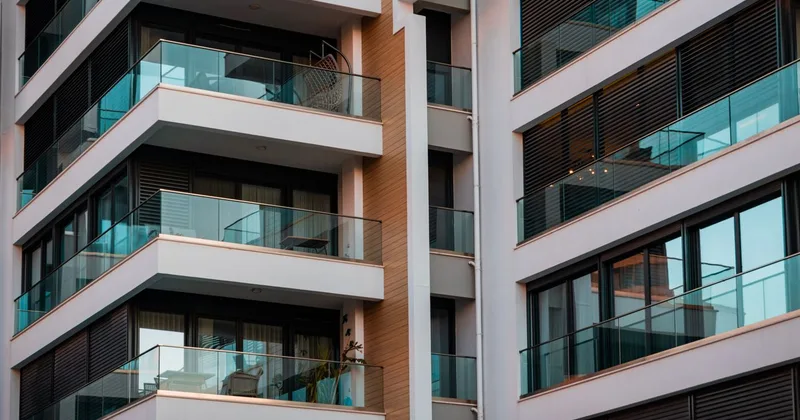
Rent is usually the biggest lever: a modern one-bedroom apartment in a good Asunción neighborhood typically runs $500 to $900, while smaller cities and rural areas cost noticeably less. Eating out, domestic help, and local transport are all inexpensive by Western standards, though imported goods and electronics carry a real premium. For exact numbers across categories, see our detailed cost of living in Paraguay 2026 breakdown.
What Everyday Life in Paraguay Actually Looks Like
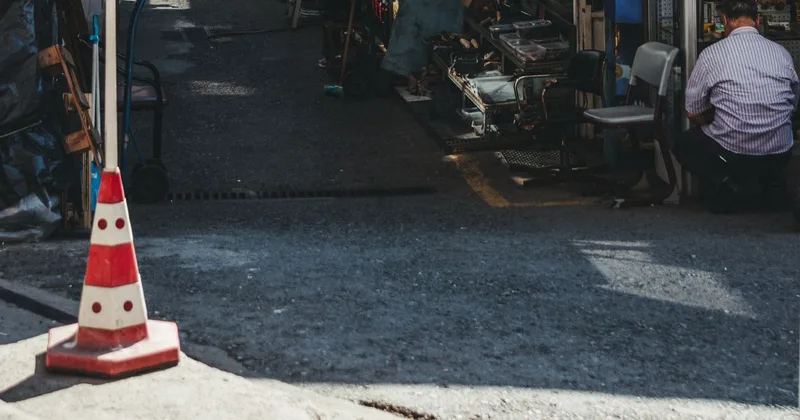
Daily life in Paraguay runs at a noticeably slower pace than in most Western countries, with family gatherings, long lunches, and the shared ritual of drinking tereré filling ordinary afternoons. Shops and offices often close for a midday break in hotter regions, and punctuality bends more than it does further north. None of this is disorganization; it is simply a different set of priorities, with relationships weighted more heavily than schedules. Our guide to living in Paraguay follows those routines through a normal week.
Infrastructure is functional rather than flashy. Asunción has reliable internet, modern supermarkets, and a growing expat community, while smaller towns feel more rural and closer to traditional Paraguayan life. Public transport exists but is limited, so most residents, foreign or local, end up driving or using ride-hailing apps to get around comfortably.
Why People Move to Paraguay: Residency and Taxes
People relocate to Paraguay for a mix of reasons: an accessible residency process, a low cost of living, and a genuinely relaxed pace of life. Paraguay has a territorial tax system: Paraguay-sourced income is taxed locally, including work you physically perform in Paraguay, while foreign-sourced income is generally not taxed there.
That structure sounds simple, but it depends heavily on your citizenship and where your income actually originates, so treat any "0%" headline as a starting point rather than a final answer. Remote work is the usual misreading: work physically carried out from a home in Paraguay may be treated as locally sourced income, whichever country the client is in. US citizens and green-card holders are taxed on worldwide income regardless of where they live, so Paraguay residency alone does not exempt them.
See our guide for US citizens on Paraguay taxes before assuming anything applies to you. For everyone else, our full explainer on Paraguay's 0% tax residency walks through how the territorial system actually works in practice.
Thinking about where Paraguay might fit into your plans? See how our guided residency packages work for a clear, fixed cost. View the packages.
Frequently Asked Questions About Paraguay
Where is Paraguay located?
Paraguay is a landlocked country in central South America, bordered by Argentina, Brazil, and Bolivia. It has no coastline, but the Paraguay and Paraná rivers give it access to Atlantic shipping routes through Argentina. The capital, Asunción, sits on the Paraguay River in the country's southwest.
Is Paraguay a safe country to visit or live in?
Paraguay is generally considered one of the calmer countries in the region, with lower violent crime rates than Brazil or parts of Argentina. Central Asunción and most residential neighborhoods feel comfortable day to day. Standard precautions around petty theft and secure housing still apply, as they would anywhere in Latin America.
Is Paraguay an expensive country to live in?
No. Paraguay's cost of living runs well below the US, Canada, and most of Western Europe. A comfortable monthly budget in Asunción often falls between $1,200 and $1,700 for a single person, with rent typically the largest expense category by far.
What language do people speak in Paraguay?
Paraguay has two official languages: Spanish and Guaraní. Spanish covers all official and business interactions, while Guaraní remains widely spoken, especially in informal and family settings. Newcomers can function entirely in Spanish, though a few Guaraní words are always appreciated.
Is Paraguay a good place to live for foreigners?
Many foreigners find Paraguay appealing for its low cost of living, accessible residency process, and relaxed pace of life. The trade-offs include a smaller expat infrastructure than Mexico or Costa Rica and a genuinely different, slower business culture. Whether it suits you depends heavily on what you are prioritizing.
What is Paraguay's population as of 2026?
Paraguay's population is approximately 6.1 million people, based on the 2022 census figure of 6,109,903. Official statistics update periodically, so check the national statistics office (INE) for the most current figure rather than relying on any single source.
What currency is used in Paraguay?
Paraguay uses the guaraní (PYG) as its national currency. Prices in guaraníes look large due to the exchange rate, so many residents and expats track costs in US dollars instead, particularly for rent and larger purchases.
Why do people move to Paraguay?
People move to Paraguay for its low cost of living, relatively simple residency process, and territorial tax system, which generally does not tax foreign-sourced income. Retirees, remote workers, and families also cite the calm pace of life and family-oriented culture as draws.
Disclaimer: This article is general information. Figures for Paraguay change over time. Check current official sources before relying on any number.

About the author
Yannick Schroth
Founder · Paraguay relocation support
Spends regular time in Paraguay and, with his team on the ground in Asunción, guides international nomads, entrepreneurs and investors through residency, the cédula and the RUC paperwork.
Note: this article reflects the position at the time of publication. Laws, prices and deadlines can change, so individual details may since be out of date. Check the current rules before you act on them: we answer questions about residency and our services, while the tax treatment of your own case belongs with a qualified tax adviser.