Institutional money tends to arrive before the crowd does. On 27 July 2026, the World Bank Group's Board of Executive Directors approved a new Country Partnership Framework for Paraguay, the strategy document that governs how the institution engages with a country. It runs from 2027 to 2034 and anticipates mobilizing at least USD 2 billion in its first implementation phase.
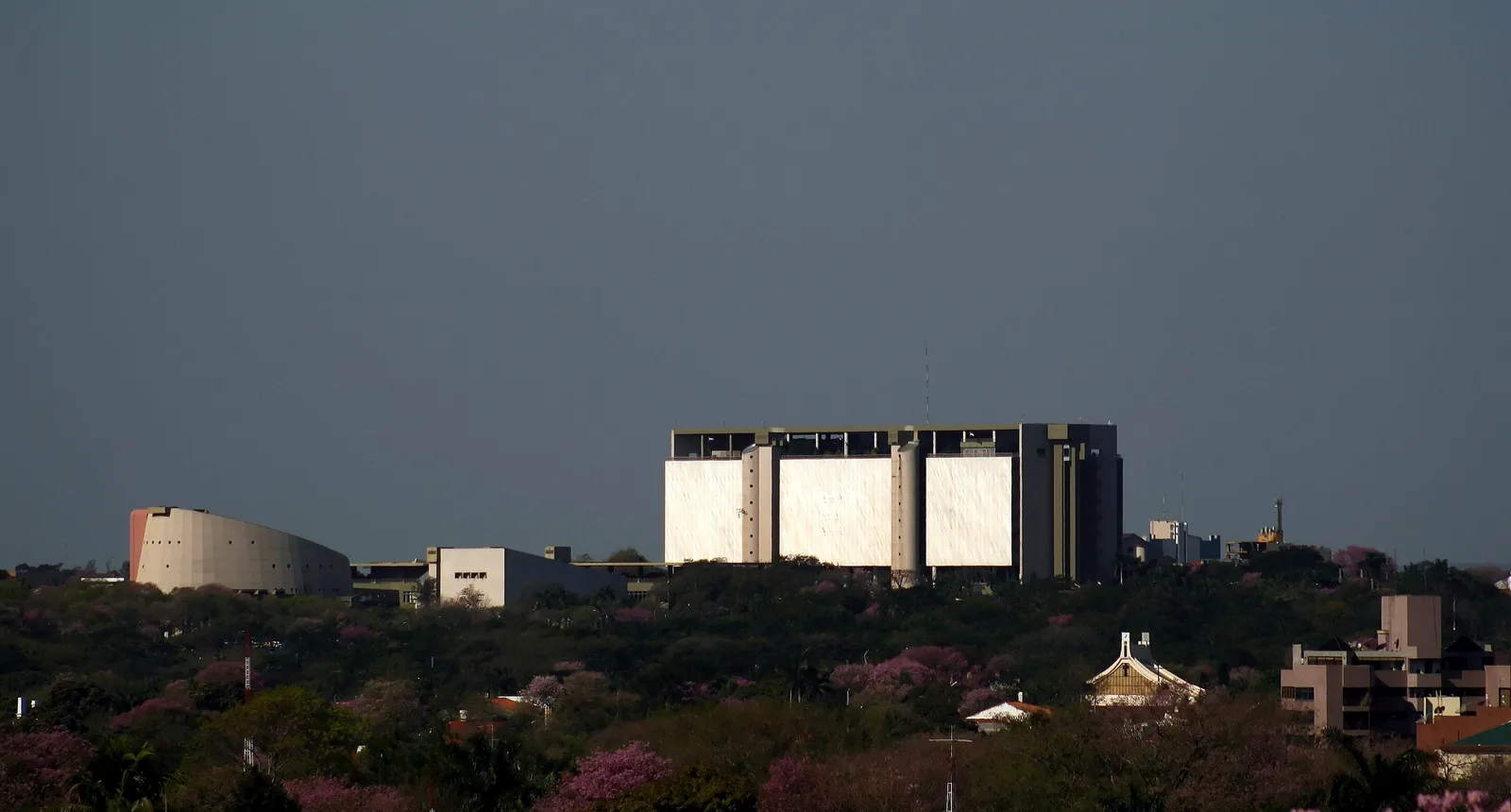
Photo: “Banco Central del Paraguay 4567 filtered” by Cmasi, Wikimedia Commons, CC BY-SA 4.0, scaled (WebP)
What Was Approved
A Country Partnership Framework is not a single loan. It is the multi-year plan that sets which sectors the World Bank Group will work in and what instruments it will use, and it is agreed jointly with the government rather than imposed.
Three arms of the group act together here. The IBRD lends to the state, the IFC finances private-sector projects, and MIGA issues guarantees that insure investors against political risk. The framework combines those with technical assistance and advisory work. Its stated aim is a transition toward a more competitive, resilient, private-sector-led economy that produces better jobs.
The named priorities are unglamorous and specific: connectivity and logistics, energy infrastructure, climate resilience, and human capital through health and education. For a landlocked country whose exports move by river and road, logistics is not a footnote.
The Existing Exposure
The USD 2 billion is a forward projection, so it is worth anchoring against what the group already has on the ground. MIGA currently carries USD 113.4 million in financial-sector guarantees for Paraguay, and the IFC runs a portfolio of roughly USD 467 million across six private-sector projects.
That matters for reading the number honestly. A framework describes intent over eight years and depends on projects actually reaching approval, so treat USD 2 billion as a ceiling being aimed at rather than money already committed.
How This Reads From the Outside
For anyone weighing Paraguay as a base, the useful signal is not the headline figure. It is that a second major multilateral has independently underwritten the country's direction, following the Inter-American Development Bank's own USD 2.7 billion financing package. Layer on the investment-grade rating confirmed earlier this year and a pattern emerges: institutions that are paid to be skeptical are lengthening their horizons here.
That is a stability argument, not a tax argument. Nothing in this framework changes Paraguay's territorial system, and it would be a mistake to read development financing as a signal about tax policy in either direction. What it does affect is the boring infrastructure that determines whether living here is pleasant: power reliability, roads, hospitals, schools. Our guide to investing in Paraguay covers where that translates into actual opportunity, and the tax system overview sets out what has and has not changed.
US citizens and green-card holders: the United States taxes worldwide income based on citizenship, so no development in Paraguay alters your filing position. Residency here does not exempt you; only renunciation does, and that has its own exit-tax consequences.
Frequently Asked Questions About the Partnership Framework
Is the World Bank's USD 2 billion already committed to Paraguay?
No. The framework projects mobilizing at least that amount across the first implementation phase, drawing on IBRD lending, IFC investment and MIGA guarantees. Individual projects still have to be prepared and approved, so the figure describes intent over years rather than funds in hand.
Does the World Bank partnership change Paraguay's 0% tax on foreign income?
It does not. A Country Partnership Framework governs development financing and advisory work, not tax legislation. Paraguay's territorial system is set by its own tax law, and this approval neither strengthens nor threatens it.
Why does the World Bank's framework for Paraguay matter to someone relocating?
Mostly through infrastructure and stability. The priorities named here are energy, logistics, connectivity, health and education, which are the things that decide whether daily life works well. It also signals that institutions with a low tolerance for risk are comfortable planning eight years ahead.
Thinking about Paraguay for the long run? We can walk through the residency steps and the timeline with you. The tax side of a long-term plan is best answered by a licensed Paraguayan tax adviser, whom we can introduce. Get in touch.
Disclaimer: This article is general information, not investment, tax or legal advice. Development financing plans change and their effects are indirect. Confirm current details with the institutions involved or a qualified adviser before making decisions.
Sources

About the author
Yannick Schroth
Founder · Paraguay relocation support
Spends regular time in Paraguay and, with his team on the ground in Asunción, guides international nomads, entrepreneurs and investors through residency, the cédula and the RUC paperwork.