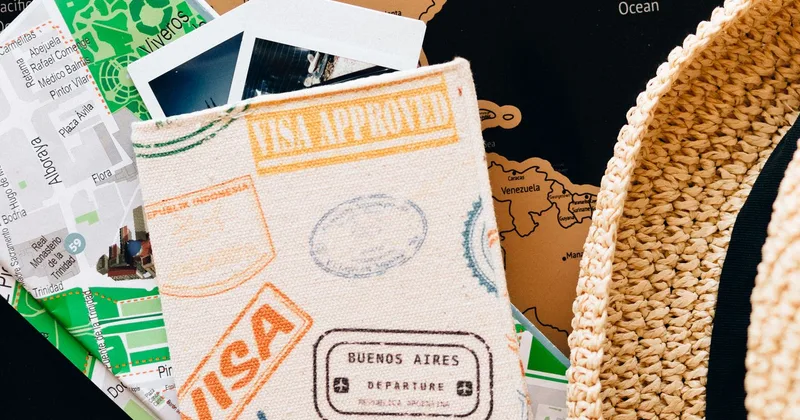
A freelance developer in Cebu bills clients in California and Sydney, keeps the money in a Wise account, and wonders how a move abroad would change that. This guide looks at what Paraguay offers that profile, and what it does not. As of 2026 the country waived its entry visa for ordinary Philippine passport holders, and Philippine tax law already draws a helpful line: non-resident citizens are taxed only on Philippine-source income. Line those two facts up and Paraguay for Filipinos stops being an obscure idea.
What follows is the practical version, not the brochure. My own trips to Paraguay are regular, and our team in Asunción takes clients through the residency steps, so I will be specific about the entry rules, the resident-versus-non-resident tax split that decides everything, and where Paraguay's territorial 0% does and does not reach a Filipino who earns online. The pieces reinforce each other, which is unusual and worth understanding before you move a peso.
Why Filipinos Are Looking at Paraguay Now
The audience here is fairly specific. Online entrepreneurs, remote employees, and freelancers who invoice foreign companies. Some OFWs who want a stable base rather than another work contract. What they share is USD or foreign-currency income and an interest in a second residency abroad.
Paraguay is relevant to that group for three reasons. Entry is now open without a visa. Foreign-source income sits outside the local tax net. And the residency you build can lead to citizenship. For a Filipino whose work is portable, that combination is rare, and the rest of this guide is really about whether it fits your specific situation.
There is also the quieter appeal of cost. Living expenses in Asunción run low by Western standards, the currency you earn tends to stretch, and a modest online income can support a comfortable life while you establish everything properly.
Entry Just Changed: Paraguay Is Visa-Free for Filipinos
Start with the news, because it reshapes the calculus. A Paraguayan decree in December 2025 removed the tourist visa requirement for ordinary Philippine passport holders, initially allowing a stay of around 30 days. The Philippines and Paraguay then signed a reciprocal visa-waiver agreement in May 2026, but its date of entry into force had not been announced at the last check, so for now visa-free entry rests on the December 2025 decree.
For a Filipino, this means you can now fly to Paraguay and enter as a visitor without arranging a consular visa in advance. That lowers the friction of scouting the country before committing, and it removes a barrier that still complicates entry for several other nationalities. Treat the exact day-count as approximate and confirm the current permitted stay close to your travel date, since these figures get adjusted.
Visa-free entry is not the same as residency, though. The waiver covers tourism, not the right to live and work there long term or to claim tax residency. To live in Paraguay long term, you convert a visit into formal Paraguay residency, which is a separate process covered further down.
The Resident vs Non-Resident Filipino Tax Distinction
This distinction is set by Philippine law, and a Philippine tax professional should confirm how it applies to you. The Philippines taxes a resident citizen on worldwide income, every peso from everywhere. But a non-resident Filipino citizen is taxed only on income sourced inside the Philippines. Change your status from resident to genuine non-resident and the reach of Philippine tax over your foreign and online income generally falls away.
For a location-independent Filipino, that is a favorable rule, not a trap like the departure taxes some other countries impose. Your foreign clients, your online business, your overseas investments: once you are a bona fide non-resident citizen, that income typically sits outside the Philippine tax base. Philippine-source income, such as local rentals or a local business, stays taxable at home.
The operative word is genuine. You establish non-resident status by actually living abroad and meeting the BIR's tests for it, not by keeping a Manila life and calling yourself non-resident. Document the move, notify the right authorities, and confirm your status with a Philippine tax professional before you rely on it.
How Paraguay's Territorial Tax Works for a Filipino
Here is where Paraguay's side clicks into place. Paraguay runs a territorial tax system: personal income tax applies to Paraguay-source income, while genuinely foreign-source income falls outside its scope. For a Filipino who is a Paraguayan tax resident, dividends, interest, and gains on investments abroad, plus business income from activity carried out outside Paraguay, face 0% Paraguayan income tax as of 2026.
Freelance and remote work is the sensitive part. Paraguay can tax work done on its soil as local income, with personal income tax (IRP) of 8–10%, or the 10% corporate IRE for a local business, even when the client sits in California. How your own invoices are classified depends on the facts, so let a licensed adviser in Asunción settle that before any budget assumes 0%.
Now stack the two systems. Income earned outside both countries leaves the Philippine net because you are a non-resident citizen, and it never enters the Paraguayan net under the territorial principle. Neither country reaches for that income, while Philippine-source income, such as rent on a condo in Manila, stays taxable in the Philippines. Both conditions have to be confirmed by tax professionals in each country. The deeper mechanics of what counts as foreign-source sit in the guide to Paraguay's 0% territorial tax.
Structure helps with the practical side. Many online Filipinos route income through a US LLC used as a pass-through, invoicing foreign clients and banking abroad with providers like Wise or Mercury. That keeps the books clean and the banking simple, but the LLC wrapper cannot relocate the work itself, and the place where you sit while doing it still decides the source.
Getting Paraguay Residency and a Cédula as a Filipino
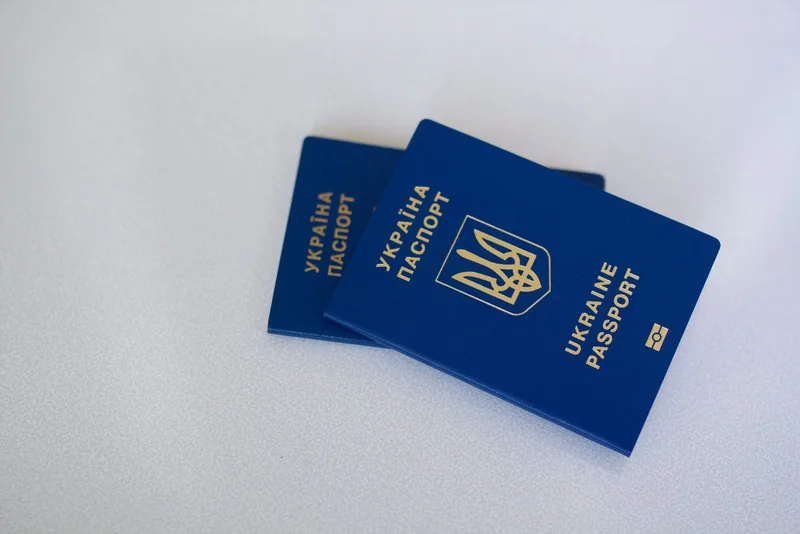
The 0% only means something once you actually hold Paraguay residency and can show a real tax home there. The standard path starts with a two-year temporary residency; the cédula, the national ID card, arrives during that temporary stage rather than after it.
The residency card normally arrives after three or four months, with the cédula one or two months behind it. Spread over two trips, that adds up to five to seven months; squeezed into one trip with fast-tracking, it can shrink to three or four. Permanent residency is a later step, applied for during the last four months of the two-year temporary period.
The paperwork is bounded rather than mysterious. You gather your birth certificate and your Philippine police clearance (the NBI clearance) and have them apostilled in the Philippines; the sworn Spanish translation is done later, in Paraguay.
Police records look back three years. An OFW who lived more than 12 months in another country within that window also needs that country's police certificate, apostilled or legalized there, plus proof of the stay. Requirements shift, so confirm current rules before you travel. A clear walk-through of the sequence lives in the Paraguay residency and cédula guide.
Tax residency then builds on top of the immigration status. Formally, Paraguay tax residency is governed by Ley 6380/2019, and a Paraguayan contador confirms it for the individual case. Presence in Paraguay, a home you actually use, and a local life are what make that residency credible, both to Paraguay and, indirectly, to the BIR when it weighs whether you genuinely left. A cédula you never occupy is weak on both ends.
Considering residency in Paraguay? A short intro call explains our residency packages, the trips involved and the usual time to the cédula. Get in touch
The Investor Route to Paraguay Residency for Filipinos
Not every Filipino wants to wait through the temporary-residency stage, and Paraguay offers a faster lane. The Investor Pass, set out in Resolución MIC 283/2026 under the Migrations Law (Law 6984/2022), grants direct permanent residency, skipping the two-year temporary step, through one of four categories:
- ▹Productive investment: USD 70,000, backed by a business plan that creates five or more formal jobs
- ▹Tourism: USD 150,000, with half-yearly progress reports
- ▹Financial instruments: USD 200,000, held for at least two years
- ▹Real estate: USD 200,000 in property that is let or held for appreciation, not your own home
SUACE issues the investor certificate within five business days at most, and Migraciones then decides the residency on its own timeline, with no statutory deadline. For a Filipino entrepreneur, this can compress the timeline and start the clock toward citizenship sooner. The trade-off: real money is tied up, and the USD 70,000 tier only fits someone who will run a business and hire in Paraguay; a passive investor starts at USD 200,000.
Either path lands you in the same place: permanent residency, a cédula, and foreign-source income taxed at 0% under current Paraguayan law for as long as you remain a genuine resident. That is today's law, not a guarantee; a senator's proposal for a 14% income tax was rejected in August 2026, a reminder that the rules can be debated. How the timelines compare in practice is broken down in the Paraguay residency timeline overview.
Citizenship and the Paraguayan Passport for Filipinos
For some Filipinos the residency is also a step toward naturalization. After holding permanent residency for the qualifying period, generally cited as around three years, you become eligible to apply for citizenship. Hedge that figure and confirm the current requirement, since naturalization rules and their interpretation move.
The Paraguayan passport itself offers broad visa-free travel. Residency and the cédula leave your Philippine citizenship as it is; naturalization is where the nationality question arises.
The Philippines generally recognizes dual citizenship for natural-born Filipinos, but the Paraguayan side is stricter. Paraguay only accepts multiple nationality where a treaty covers it (constitutional Article 149), which most countries lack, and a naturalization can come with a requirement to give up the citizenship you already hold. The 2023 multiple-nationality law (Ley 7052/2023) shields people born Paraguayan, while those who naturalize remain within the reach of Article 150. Our partner lawyer can tell you how this would play out for a Filipino applicant.
Taken together: visa-free entry covers the visit, Philippine non-resident status is decided under Philippine law, and Paraguay's territorial rules in principle leave genuinely foreign earnings outside its income tax.
Practical Steps for Filipinos Moving to Paraguay
Sequence beats speed. First, check whether your income is foreign-source from both countries' points of view, which for freelance work done in Paraguay means asking a Paraguayan tax adviser, and get a Philippine tax professional to map how and when you become a non-resident citizen. That status is the load-bearing piece; everything downstream assumes it is genuine and documented.
Second, plan the Paraguay side as a coordinated project rather than a scramble. Decide between the standard temporary-residency path and the investor route, prepare and apostille your Philippine documents, and budget for a first year of settling in: a lease, a local accountant, a bank account, and enough days on the ground to make residency real. Remote earners who want the lifestyle angle will find the digital nomad guide to Paraguay useful for the day-to-day.
Moving your capital across is a separate job with its own rules. The guide to moving money from the Philippines to Paraguay walks through the BSP limits and why many movers convert to US dollars to hold value.
Third, run the two halves in parallel, not in sequence, with each side handled by the relevant professionals. The full end-to-end sequence, from documents to landing to cédula, is laid out in the step-by-step guide to moving to Paraguay.
A quick filter for dual citizens: if you also hold US citizenship or a US green card, none of the non-resident logic above rescues you, because the US taxes its citizens on worldwide income regardless of where they live. See the guide for US citizens and Paraguay taxes before assuming any 0% applies.
Who Paraguay for Filipinos Actually Suits
Strip out the excitement and this plan fits some Filipinos beautifully and others poorly. It suits location-independent earners: online business owners, remote employees, freelancers, and investors whose income is genuinely foreign-source and who can actually live outside the Philippines long enough to be non-resident. If your work travels with your laptop, the fit on the Philippine side is strong; on the Paraguayan side, laptop work done in Asunción still needs its source checked before you assume 0%.
It suits worse anyone whose income is Philippine-source, such as a local business owner or someone employed by a Manila company on the ground. Non-resident status does not shelter Philippine-source income, so the tax advantage largely evaporates. It also suits worse someone who cannot spend real time abroad, because a paper move fails both the Philippine non-resident test and Paraguay's genuine-residency standard.
The honest rule of thumb: for a mobile, foreign-earning Filipino, Paraguay is a legitimate residency option with a long-term path behind it. For someone rooted in local Philippine income and unable to leave, it is an expensive detour. Be clear about which you are first.
Frequently Asked Questions About Paraguay for Filipinos
Do Filipinos need a visa to enter Paraguay in 2026?
No. As of 2026 Paraguay is visa-free for ordinary Philippine passport holders under a December 2025 decree. A reciprocal visa-waiver agreement was signed in May 2026, but its start date had not been announced when this was last checked. You can enter as a visitor without a consular visa; confirm the current permitted length of stay before travel.
How does moving to Paraguay affect a Filipino's Philippine tax status?
It can. The Philippines taxes resident citizens on worldwide income but taxes non-resident citizens only on Philippine-source income. A Filipino who genuinely becomes a non-resident by living in Paraguay generally moves foreign and online income outside the Philippine tax base. You must establish non-resident status properly and confirm it with a Philippine tax professional.
How does Paraguay's territorial tax work for Filipinos?
Paraguay's income tax targets Paraguay-source income only, which puts foreign dividends, interest, and investment gains at 0% as of 2026. Freelance or remote work you do after moving there is another matter: Paraguay may tax it at 8–10% even for foreign clients. Where income is foreign to both countries, non-resident Philippine status means neither one taxes it.
How does a Filipino get Paraguay residency and a cédula?
Filipinos typically start with a two-year temporary residency. Plan on roughly five to seven months before the cédula is in your hand, or three to four if everything happens on one trip, and apply for permanent residency toward the end of the two years. Bring apostilled Philippine documents plus a police record from any country where you spent over a year during the previous three, and have translations done in Paraguay.
Is there a faster investor route to Paraguay residency for Filipinos?
Yes. The Investor Pass under Resolución MIC 283/2026 grants direct permanent residency in four categories: USD 70,000 in a productive project whose business plan adds five-plus formal jobs, USD 150,000 in tourism, USD 200,000 in financial instruments held for two years or more, or USD 200,000 in real estate other than your own home. It suits Filipinos who intended to invest in Paraguay anyway.
Can Filipinos get Paraguayan citizenship and keep their Philippine passport?
After holding permanent residency for the qualifying period, generally cited as around three years, a Filipino becomes eligible to apply for Paraguayan citizenship. The Philippines generally lets natural-born citizens keep their nationality, but Paraguay ties dual nationality to a treaty that most countries do not have with it, and it can ask new citizens to drop their earlier nationality. Its protection under Ley 7052/2023 covers Paraguayans by birth, not naturalized citizens. Have our partner lawyer clarify your case before relying on keeping both.
Who does Paraguay for Filipinos suit best?
Mobile, foreign-earning Filipinos: online entrepreneurs, remote workers, freelancers, and investors with genuinely foreign-source income who can live outside the Philippines long enough to be non-resident. It suits poorly anyone dependent on Philippine-source income or unable to spend real time abroad, since neither the non-resident test nor Paraguay's genuine-residency standard is met.
Want the numbers for your situation? See how the residency packages and pricing are structured, and what each tier includes. View the packages
Legal basis and disclaimer: This article is general information, not individual tax or legal advice, and residency and exit-tax rules change. Philippine tax rules for resident and non-resident citizens are published by the Bureau of Internal Revenue (BIR). Confirm your position with the authority or a qualified adviser before you act. Filipino readers can cross-check the BIR side against PwC's country file.

About the author
Yannick Schroth
Founder · Paraguay relocation support
Spends regular time in Paraguay and, with his team on the ground in Asunción, guides international nomads, entrepreneurs and investors through residency, the cédula and the RUC paperwork.
Note: this article reflects the position at the time of publication. Laws, prices and deadlines can change, so individual details may since be out of date. Check the current rules before you act on them: we answer questions about residency and our services, while the tax treatment of your own case belongs with a qualified tax adviser.