You are considering Paraguay: a territorial tax system, a low cost of living, and a possible path to citizenship after several years. This guide is about how the process works, and how to do it without wasting a trip or losing a year to avoidable mistakes.
This guide walks the entire relocation, from the first honest decision to the day you are settled, with the 2026 rule changes built in, so you know what to gather, what it costs, and where the process quietly trips people up. I have been through the residency process myself, and my team on the ground in Asunción walks others through it, so what follows is the practical version, not the brochure.
What Moving to Paraguay Involves in 2026
Moving to Paraguay in 2026 follows a clear path: decide it genuinely fits, legalize your documents, plan for real tax residency, make the trip, file for residency and collect your cédula in person, then open a bank account and settle in before building toward permanent residency and citizenship. Each stage carries a 2026 detail worth knowing before you commit money or flights.
- ▹Decide whether Paraguay fits your life, work, and finances.
- ▹Gather your birth certificate and police record, apostilled and translated.
- ▹Plan your Paraguay tax residency with a contador, including the RUC.
- ▹Book the trip and arrive in Asunción.
- ▹File for residency and collect your cédula in person.
- ▹Open a bank account and set up daily life.
- ▹Apply for permanent residency from month 21, then for citizenship.
The order matters. People who skip the decision stage or underestimate the in-person requirements are the ones who end up flying twice. Below, each step covers what to do, what changed for 2026, and the mistake to avoid so your move to Paraguay runs on one clean timeline instead of three messy ones.
Step 1 — Decide Whether Moving to Paraguay Fits Your Plan
Before you touch a single document, be honest about why you want to move to Paraguay and whether the country actually suits you. The people it fits best are location-independent earners: online entrepreneurs, remote workers, investors, and digital nomads whose income comes from outside Paraguay. Retirees with a foreign pension and families looking for a lower-cost, slower-paced base also do well. If your livelihood depends on a local job market or fast, first-world infrastructure, weigh that carefully first.
Paraguay rewards people who arrive with realistic expectations. Asunción is hot for much of the year, the bureaucracy moves at its own pace, and daily life runs in Spanish. None of that is a dealbreaker, but it does separate those who thrive from those who leave frustrated after six months. Treat the heat, the paperwork, and the language as facts to plan around, not surprises to complain about later.
The financial case is usually what tips the decision. A modest professional income stretches a long way, and the gap between what you earn abroad and what you spend locally is the real engine of the move. To pressure-test your own budget against local reality, our breakdown of the cost of living in Paraguay for 2026 puts concrete numbers on rent, food, healthcare, and utilities. Run your figures against it before you commit, because a decision built on wishful math is the one that unravels.
Decide with your eyes open. If the numbers work and the trade-offs are ones you can live with, the rest of this guide is execution. If they do not, better to learn that now than after you have shipped your life across an ocean.
Step 2 — Gather the Documents You Need to Move to Paraguay
The paperwork to move to Paraguay is smaller than most people fear, but the sequence is unforgiving. The two core home-country documents are a birth certificate and a police record (a criminal-background or good-conduct certificate). As of 2026, both must be issued recently, then carry an apostille from the country that issued them, and finally be translated into Spanish by a sworn public translator once you are in Paraguay. Apostille first at home, translate afterwards on the ground.
One assumption buried in that sentence is worth dismantling: "home country" may not be a single country. Migraciones looks back over your last three years, so anywhere you were resident for more than twelve months inside that window owes you its own certificate, apostilled where it was issued, together with documentation proving how long you actually lived there.
The clock is tight too. Migraciones asks for a current certificate without naming a period, so check what your own issuing authority states; we recommend filing each one within 90 days of its issue date, counted from issue rather than from the apostille.
One item you can cross off the list. Older guides still name a medical certificate (certificado médico), but the 2024 reform at Migraciones removed it from the standard file, so there is no examination to arrange at home or on arrival.
That order is where people slip. The apostille is part of what gets translated, so translating before you apostille means paying for the translation twice.
The same chain, and its limits, applies to anything you have notarized abroad rather than issued by a registry: see the guide to a Paraguay power of attorney. If your country is not part of the Hague Apostille Convention, you go through consular legalization instead, which is slower, so start that early. Order fresh copies of both documents, because many offices reject certificates that are more than a few months old.
Depending on your situation, you may also need a marriage certificate if you apply with a spouse, documents for any children applying alongside you (each person files separately), and a passport valid for at least six months on the day you file (twelve is the safer margin). Married couples should note that this is one certificate per spouse, not one between them.
Decide now whether you want a local tax ID (RUC) as well, since it affects how your appointments are planned. It does not change the number of trips: the RUC can only be requested after your cédula is issued, and completing it takes an in-person DNIT appointment that is yours to attend, at whichever DNIT office is nearest you. How many flights you book depends on the cédula route, covered in Step 5.
A checklist built against current 2026 requirements beats a year-old copy every time.
The single most common cause of a wasted trip is arriving with a document missing, expired, or in the wrong form, and only discovering it at the counter. Gather everything before you fly, confirm each item against a current source, and treat the document phase as the foundation of the whole move rather than an afterthought.
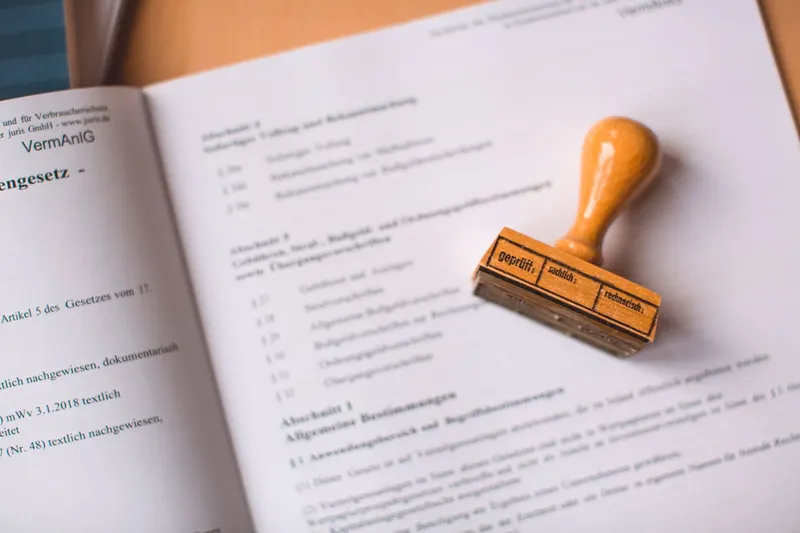
Step 3 — Understand Paraguay Tax Residency Before You Move
Paraguay applies a territorial tax system: in principle, foreign-source income of tax residents is not taxed locally. The important words are "in principle" and "genuine." Legal residency and a cédula are your immigration status; tax residency is a separate question of where your center of life actually sits, and the territorial rules apply only to the second.
Real Paraguay tax residency is a legal question first. Paraguay's tax law (Ley 6380/2019) names no minimum stay in days; a Paraguayan contador clarifies whether and from when you are tax-resident, and the RUC follows the cédula. A real life in the country, with a lease and local ties, is what makes that position credible. Our guide to Paraguay tax residency and 0% territorial tax explains how the territorial principle works and where people misread it.
A foreign business, a US LLC, or an investment portfolio all interact with where you are genuinely resident, so raise them with a licensed tax adviser in each country concerned.
One point catches remote workers out. Paraguay may treat the work you physically do inside the country as locally sourced, taxing it at around 8 to 10%, even when the client or your US LLC sits abroad; foreign dividends, interest and pensions are the cleaner 0% cases. Which side your income falls on depends on the facts, so have your income classified by a Paraguayan tax adviser before you rely on the lower figure.
US citizens and green-card holders: You are taxed on your worldwide income regardless of where you live (citizenship-based taxation). Moving to Paraguay does not remove your US tax filing or liability; only renouncing citizenship does, and that can trigger an exit tax. Consult a US-qualified advisor and see our US citizens and Paraguay taxes guide.
For everyone else, the territorial treatment depends on conditions. It rewards people who genuinely relocate their life, and it disappoints anyone hoping a quick trip and a card will change their tax position by itself.
Step 4 — Plan the Trip That Starts Your Move to Paraguay
With documents apostilled and your tax picture mapped, the move to Paraguay becomes a physical trip. Book a stay long enough to complete the in-country steps without rushing, which for most people means a couple of weeks rather than a long weekend. Fly into Asunción, arrange somewhere to stay, and treat the first days as setup: getting a local SIM, orienting yourself, and lining up appointments.
Timing intersects with one 2026 change directly: updated Migraciones fees took effect on 1 July 2026, so a budget built on older information will be off. The solvency rule that started on 6 July 2026 does not touch this trip; it applies to the permanent-residency application about two years later. Check the current requirements close to your travel date rather than trusting a guide written months earlier, because this is exactly the kind of detail that shifts.
Your first substantive task on the ground is the sworn Spanish translation of your apostilled documents, done by a matriculated public translator locally. It is fast and inexpensive, and it converts your home-country paperwork into the form Migraciones accepts. Getting it done in the first days keeps the rest of the trip moving.
Use the trip to test the reality, not just the paperwork. Walk the neighborhoods, sit in the heat, price a few apartments, and notice whether the pace of life energizes or frustrates you. A move to Paraguay that survives contact with the actual country is far more durable than one built entirely on spreadsheets and forum posts.
Step 5 — File for Paraguay Residency and Collect Your Cédula
This is the administrative heart of the move. You file your temporary-residency application with the Dirección Nacional de Migraciones, submitting your apostilled and sworn-translated documents. Note what this stage does not require: the solvency regime under Resolución DNM 407/2026 governs permanent-residency applications, not this one. At the temporary stage Migraciones asks instead for a sworn declaration (declaración jurada) of the profession or activity you will pursue in the country.
The official list runs to ten points, and one of them is easy to miss: proof of civil status, which means the document matching your situation. Married applicants file a marriage certificate, divorced applicants the divorce decree, widowed applicants the death certificate. Each is apostilled like the rest.
Fees are paid at filing, updated for 2026 under Resolución DNM 478/2026 (effective 1 July 2026). Because both are recent, verify the exact amounts and accepted forms of proof before you file rather than assuming last year's figures.
Expect a bureaucratic experience. Queues are real, in-country checks such as a local police records verification and an Interpol Paraguay clearance are part of the process, and a representative who knows the current counter-level requirements saves time and repeat visits. Doing it entirely solo, in Spanish, without knowing the latest procedural quirks, tends to cost more in wasted trips than professional help costs in fees. The full sequence is laid out in our dedicated Paraguay residency and cédula guide.
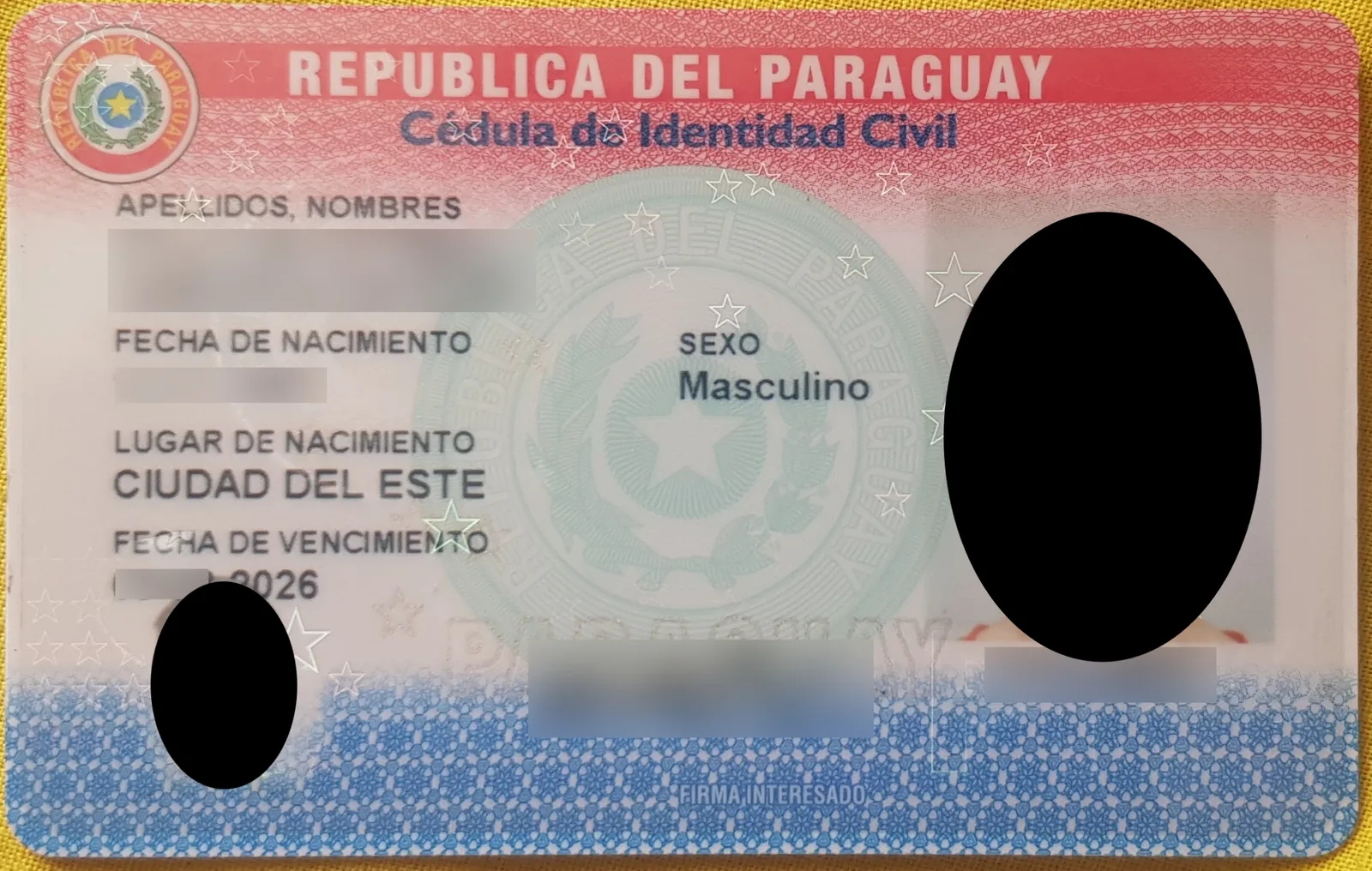
The cédula itself is issued in person, with biometrics taken on site, which leaves the move two plannable shapes. On two trips, you file and complete the local steps, fly home while Migraciones works, and return to collect the card, about five to seven months end to end.
On one trip, you stay through the carnet and the cédula fast-track brings the card within days of it, about three to four months; our Premium package is built on that single stay. Ignore any marketing that promises the whole thing done remotely from your sofa.
Once you hold the cédula, you are a documented Paraguayan resident. That card unlocks the practical layer of your new life: local banking, contracts, a registered vehicle, and the presence that supports genuine tax residency over the months that follow.
Want to know what our packages cover? A short intro call explains the scope, the trips and the price of each tier. Talk to us.
Step 6 — Open a Bank Account and Settle Into Paraguay
With a cédula in hand, the move to Paraguay shifts from bureaucracy to daily life, and opening a local bank account is usually the first task. A Paraguayan account lets you receive and hold funds locally, pay rent and utilities, and anchor the local ties that reinforce your tax residency. Bring your cédula, your RUC if you have one, and proof of address; requirements vary by bank, so confirm the current document list with the branch before you go.
Housing comes next. Many newcomers rent for the first year before buying, which keeps you flexible while you learn which neighborhood suits you. Villa Morra and the surrounding barrios in Asunción are popular with expats for their amenities and relative convenience, though rents there sit above the city average. A short-term rental while you search beats signing a long lease on a place you chose from photos abroad.
Settling in also means the small infrastructure of a life: a reliable mobile plan, private health cover appropriate to your needs, and a routine that fits the climate. The expat and entrepreneur community in Asunción is small but genuinely helpful, and a few local contacts shorten the learning curve on everything from finding a good doctor to hiring a translator. Ask early and often; people who have made the same move remember how confusing the first months are.
Give yourself a season to feel settled rather than expecting it in a fortnight. The people who are happiest a year after their move to Paraguay are the ones who treated the first few months as adaptation, not a test they had to pass immediately.
Step 7 — Build Permanent Residency and Citizenship in Paraguay
Your first residency status is temporary, and the move to Paraguay has a longer arc built into it. Temporary residency is valid for two years, and you apply to convert it to permanent residency during months 21 to 24, while it is still running. This is a fresh application with its own documents and fees, including the solvency evidence that Resolución DNM 407/2026 now demands, so put it in your calendar well ahead. Permanent status itself has no end date; only the carnet is renewed every ten years.
The conversion checks that you kept your residency alive rather than filing once and disappearing: you must never have stayed away for more than 12 consecutive months. The limit bites on the unbroken stretch rather than on a yearly quota, so a single re-entry restarts the count, and you need at least one entry per year.
Once you are permanent, the bar drops to one entry every three years, a requirement under Art. 54 of Ley 6984/2022 rather than a suggestion. A real life in the country helps on the tax side as well. Keep your paperwork tidy across the years, with your cédula current and your details up to date at Migraciones.
Citizenship is the prize at the far end. Paraguayan naturalization becomes reachable once permanent residency has run for three years, in broad terms around five years in total counting the temporary-then-permanent path, though the exact counting depends on current law and your circumstances. The result is a Paraguayan passport with visa-free or visa-on-arrival access to many countries; the citizenship guide covers the requirements.
Do not assume it simply sits on top of your current passport, though. Paraguay accepts multiple nationality only where an international treaty provides for it (Article 149 of the Constitution), as with Spain, and there is no such treaty with most countries, including the US, the UK, Canada and Australia. On naturalization Paraguay may require you to renounce your previous nationality; how that plays out in your case is something our partner lawyer clarifies.
Ley 7052/2023, the multiple-nationality law, protects Paraguayans by birth; naturalized citizens remain exposed to the Constitution's Article 150, the provision on loss of nationality. Naturalized men aged 17 to 50 also have to register for military service under Ley 569. Check how your current country treats a second citizenship as well.
Treat these final stages as scheduled milestones, not distant abstractions. The move that starts with a birth certificate and an apostille ends, for those who stay the course, with a Paraguayan passport.
What Moving to Paraguay Costs in 2026
The headline number most people want is the cost of getting residency handled. Handled end to end, with document coordination, sworn translation in Paraguay, the Migraciones filing, and in-country support, that runs $1,400 at present, and the government fees updated under Resolución DNM 478/2026 are included. If you would rather do the legwork yourself and keep a guide beside you, the entry tier is $600, with those fees and the translations paid separately.
On top of either come the costs of obtaining and apostilling your home-country documents, and your travel and accommodation for the trip.
Doing it entirely alone looks cheaper on paper and often is not in practice. A single misordered apostille, an expired police record, or a missed 2026 requirement can cost an extra international flight, which dwarfs any saving on service fees. For a process that is bureaucratic, conducted in Spanish, and actively changing in 2026, guided support can reduce the risk of repeat trips and lost weeks.
Set against what Paraguay offers, a territorial tax system, a real second residency, and a path to a strong passport, the one-time relocation outlay is modest. Budget honestly for the whole picture: services, government fees, document costs, and at least one substantial trip. A plan that accounts for all four is the one that does not blow up halfway through.
Want your move to Paraguay handled end to end? See how a guided package covers document coordination, sworn translation in Paraguay, and the Migraciones filing for a fixed fee. View the packages.
Frequently Asked Questions About Moving to Paraguay
How much does it cost to move to Paraguay in 2026?
Full guided handling of residency and the cédula costs $1,400, or $600 if you gather the documents yourself. The $1,400 figure includes the government fees under Resolución DNM 478/2026; the $600 one does not. Your apostilles and travel sit outside both. Doing it alone is cheaper on paper but a single misordered document can cost an extra international flight.
How long does it take to move to Paraguay?
Plan for a staged timeline rather than one fast transaction. You file for temporary residency, complete in-country checks, and collect the cédula in person. From filing, the card takes five to seven months on two trips, or three to four months on one stay with the cédula fast-track. Add five to seven weeks at home beforehand for documents and apostilles.
Do I need to speak Spanish to move to Paraguay?
You can start a move to Paraguay with little Spanish, but daily life runs in it, so basic Spanish makes settling far smoother. Official steps use sworn translators and, often, a local representative. Beyond the paperwork, learning the language is the single biggest factor in feeling at home rather than isolated.
Does moving to Paraguay change my tax position?
Not by itself. The territorial system means foreign income can be untaxed locally in principle, but only with genuine Paraguay tax residency, which requires real presence and local ties. A cédula is your immigration status, not an automatic 0% rate. US persons remain taxed on worldwide income regardless.
Can I move to Paraguay and get residency in one trip?
Yes, if you can remain in the country for three to four months. The cédula is issued in person with biometrics, so the single-trip route means remaining in Paraguay through the carnet while the cédula fast-track brings the card soon after, which is how our Premium package works. If you would rather go home in between, plan two trips and roughly five to seven months. The RUC tax ID is a separate step that follows the cédula.
How much time must I spend in Paraguay for tax residency?
Paraguay sets no day count. Under Ley 6380/2019, what counts on the Paraguayan side is a RUC in active standing with returns up to date, which means holding the cédula first. Your home country's own residency rules, including any day tests there, still decide when you stop being taxed at home.
Can my family move to Paraguay with me?
Yes. Spouses and children can move to Paraguay with you, though each family member files as a separate applicant with their own documents and fees: typically a birth certificate and, for anyone aged 14 or older, a police record, all apostilled and sworn-translated. Families are a well-established audience here, and the lower cost of living is often the reason they make the move.
Legal basis and disclaimer: This article is general information, not individual legal or immigration advice, and requirements can change. Paraguay's residency and immigration rules rest on Ley 6984/2022 (Ley de Migraciones), a statute passed by Congress, and the resolutions that apply it are published by the Dirección Nacional de Migraciones (DNM). Confirm the current requirements with Migraciones or a qualified adviser before you file.

About the author
Yannick Schroth
Founder · Paraguay relocation support
Spends regular time in Paraguay and, with his team on the ground in Asunción, guides international nomads, entrepreneurs and investors through residency, the cédula and the RUC paperwork.
Note: this article reflects the position at the time of publication. Laws, prices and deadlines can change, so individual details may since be out of date. Check the current rules before you act on them: we answer questions about residency and our services, while the tax treatment of your own case belongs with a qualified tax adviser.