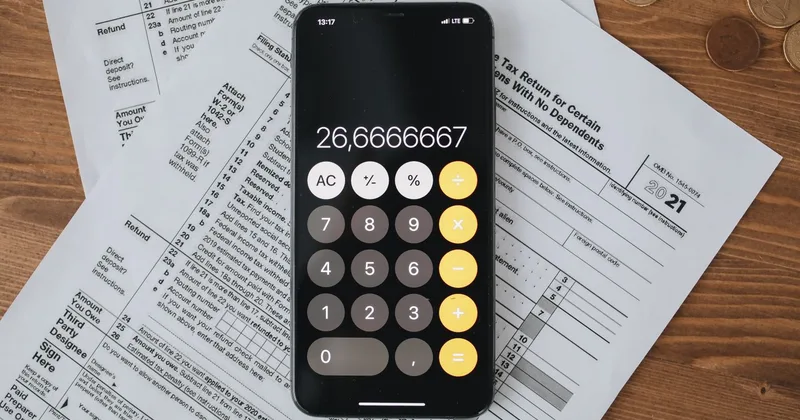
You priced out an apartment in Asunción, you did the sums on Paraguay's 0% territorial tax, and somewhere in the excitement your US passport is quietly waiting to ruin the math. Here is the part the relocation pitches skip: because the United States taxes on citizenship, not residence, leaving does not switch off your US federal return.
So this is the honest relocation guide for an American. Moving from the US to Paraguay changes your cost of living and can give you a second residency. It is not a clean US-tax exit, and pretending otherwise is how people get hurt.
US citizens and green-card holders: Moving to Paraguay does not remove your US federal tax. You are taxed on worldwide income regardless of where you live (citizenship-based taxation), so you keep filing Form 1040 every year, plus the FBAR and Form 8938 once your foreign accounts pass their thresholds. Only renouncing citizenship ends that, with a possible Section 877A exit tax. The FEIE and foreign tax credits help only partially. See the US citizens and Paraguay tax explainer and consult a US-qualified adviser.
Why Moving From the US to Paraguay Does Not End Your US Taxes
Here is the 40-second answer, because it is the whole article in miniature. A US citizen who lives full-time in Paraguay still files a US federal return every year, still reports worldwide income, and can still owe US tax after Paraguay has taxed that same income at 0%. Paraguay steps back from your foreign income. The IRS does not.
Almost every other country taxes on residence. A German, a Briton, or a Canadian who genuinely relocates to Paraguay generally stops owing income tax back home on foreign earnings. The American who does the identical thing keeps the IRS as a lifelong tax authority.
That gap is the single most expensive misunderstanding an American carries into a Paraguay plan. The physical move is the same; the tax result is not. So the right question is not "how do I escape US tax" but "what actually changes, and is the rest still worth it?" For most people, it is, just not for the reason the headline promised.
What US Citizens Keep Owing After They Leave
Start with what does not move an inch. As a US citizen, you keep an annual Form 1040 filing obligation for every year you hold the passport, even in years you owe nothing. You report worldwide income on it: wages, self-employment profit, dividends, interest, capital gains, crypto disposals, and rental income, wherever on earth they arise.
On top of the tax return sit the information returns. The FBAR (FinCEN Form 114) is required when your foreign financial accounts together top $10,000 at any single moment in the year. FATCA's Form 8938 is filed with your return once foreign assets pass higher thresholds. Neither is a tax; both carry steep penalties for non-filing.
The system has teeth because much of it runs through the banks. FATCA leans on foreign institutions to identify their American clients, and some banks abroad simply turn US customers away as a result. Washington and Asunción have no FATCA agreement in force, just a Model 2 text settled in substance, though a local bank may still hand you a W-9 to sign. None of this changes your own filing duties when you land in Paraguay. You do not file less; you file from a new address.

What Actually Changes: US State Income Tax
State income tax works differently. While your federal tax follows your passport, your US state income tax follows your residence, and that you can shed. If you properly sever residency from a taxing state before you go, you can stop owing state income tax on income earned once you have left.
The catch is the word "properly". States like California and New York are aggressive about residents who claim to have left but keep a home, a driver's license, voter registration, and family ties in place. A sloppy exit invites a residency audit, and the state can argue you never truly left. Establishing a domicile elsewhere and cutting those ties matters.
How a state treats a departing resident depends on that state's own rules, which a US adviser can explain.
How the FEIE Shelters Part of an American's Income
The Foreign Earned Income Exclusion is the relief every American expat has heard of, and it is genuinely useful within limits. Filed on Form 2555, the FEIE lets you exclude a large slice of earned income from US tax, $132,900 for the 2026 tax year, up from $130,000 in 2025 and indexed upward each year.
To claim it you must qualify as living abroad, by one of two tests. The Physical Presence Test wants 330 full days outside the US in a rolling 12-month window. The Bona Fide Residence Test wants genuine residence in a foreign country for a full calendar year, which a real Paraguay residency and cédula supports well.
But read the word earned carefully, because it is where the hype dies. The FEIE covers salary and net self-employment profit only. It does nothing for dividends, interest, capital gains, crypto, or rental income, all of which the US taxes in full. The mechanics and the fine print are laid out in the FEIE and Form 2555 explainer.
Foreign Tax Credits and Why Paraguay's 0% Undercuts Them
There is a second US relief worth understanding, and a bitter irony hiding inside it. The Foreign Tax Credit offsets your US tax dollar-for-dollar with income tax you actually paid to a foreign government. In a normal high-tax country, an American often owes little US tax because the local tax already ate the bill.
Paraguay is not a high-tax country. On income it treats as foreign-source you pay 0% locally, so there is no foreign income tax to credit, and the US tax can land in full on whatever the exclusions do not cover. The very 0% that makes Paraguay attractive to everyone else can leave an American more exposed to residual US tax, not less.
That inversion is why the levers that matter for Americans are the FEIE and, if you go far enough, renunciation, rather than the foreign tax credit. It is also why the self-employment charge stings: US self-employment tax of roughly 15.3% applies to net profit even when the FEIE zeroes your income tax, and Paraguay has no totalization agreement with the US to switch it off.
One more wrinkle concerns the Paraguay side itself. Pay for work carried out while you live in Paraguay may qualify as income from a Paraguayan source, subject to IRP rates of 8 to 10%, wherever your clients or employer are based, so get a Paraguayan tax adviser to classify it before assuming a local zero.
Weighing the move with a US passport? Use a free intro call to settle the Paraguayan logistics: residency route, trips, documents, and the wait for the cédula. What changes in your US taxes is a conversation for a certified public accountant or enrolled agent in the US, since our packages leave US returns alone. Book a call
What Does Not Change: Federal Filing and Passive Income
It helps to draw the line cleanly between the two columns. In the "changes" column: your US state income tax, which a clean exit can end; and your US income tax on earned income up to the FEIE ceiling, which the exclusion can shelter. Those are real, and for a modest earner they can add up to a meaningful cut.
In the "does not change" column sits everything federal. You keep filing the 1040, the FBAR, and the FATCA forms. You keep owing US tax on passive income of every kind, and on earned income above the FEIE ceiling. Self-employment tax rides along untouched by the exclusion.
For an investor or a portfolio-heavy retiree, that second column is the whole story, because their income is mostly passive. The honest read is blunt: if your money is capital gains and dividends, moving from the US to Paraguay changes your cost of living, not your US tax bill. Model the federal side first, then decide what Paraguay is worth to you on lifestyle terms.
The Practical Side of Moving From the US to Paraguay
With the tax reality set straight, the relocation itself is refreshingly ordinary. Paraguay has historically been one of the more accessible residency routes in the region, without the large investment minimums that rivals like Panama or the Gulf states demand, though requirements and processing have tightened over the years.
The rough shape of the process is apply for residency, gather and apostille your US documents (birth certificate and police record; the passport itself needs no apostille), attend appointments in Asunción, and receive your cédula, the national ID card. Timelines and document lists shift, so treat any specific figure you read as approximate, as of 2026, and confirm the current rules before you book flights.
The full sequence, from paperwork to the cédula appointment, is walked through end to end in the step-by-step guide to moving to Paraguay. The point worth holding onto is that the Paraguay half is the easy half. The US side, state and federal, belongs with a US-qualified adviser before you leave.
Paraguay Residency, the Cédula, and Becoming a Tax Resident
Residency and tax residency are not the same thing, and the distinction matters. Migraciones grants legal residency, starting with temporary residency; the carnet and then the cédula (Paraguay's identity card) come afterward. Becoming a Paraguayan tax resident is a separate step that rests on the RUC, the local tax ID, kept active with its filings up to date. Paraguay's income tax law has no day-count test, and finishing the RUC takes a personal visit to a DNIT office, any one nationwide, once the cédula exists.
That tax residency does two jobs: for a non-American it anchors the 0% territorial treatment of foreign-source income, and for an American it backs the FEIE's residence tests. For you, it does the second job but not the first. It supports your Bona Fide Residence claim on Form 2555, yet it cannot lift the US federal tax your passport keeps in place.
Paraguay's territorial system taxes income sourced inside the country and, as a rule, leaves foreign-source income of residents untaxed. How that base is built, and why it is durable, is covered in the Paraguay 0% territorial tax guide. Just remember whose benefit it was designed for, and read the US-persons caveat alongside it.
Cost of Living: The Real Win for Americans in Paraguay
Cost of living is where the comparison looks different. For an American, the cost of living is the headline benefit, and it is not marketing. Rent, food, healthcare, and domestic help run at a fraction of US metro prices, so the same remote income buys a materially better standard of daily life.
That reframes the whole exercise. If the FEIE shelters most of your earned income, your effective US income tax can be modest, and you spend the money you keep in a country where it stretches considerably further. The lifestyle arbitrage does the work that the tax fantasy could not.
The move suits some Americans far better than others. It fits an earner with mobile income under the FEIE ceiling, someone who wants a genuine plan B and a stable second residency, and anyone chasing a lower burn rate without a Dubai price tag. It fits poorly if your income is large and passive, because then the US tax you cannot escape dominates the decision.
Renouncing US Citizenship: The Only Clean Exit
For a minority of high-earning US persons, the only route to a true 0% life in Paraguay is to renounce US citizenship. It is legal and it is done, but it is not a decision to romanticize. Renunciation is irreversible, requires an in-person consular appointment and a State Department fee of $450 (down from $2,350 since 13 April 2026), and demands that you certify five prior years of full US tax compliance.
The financial catch is the exit tax under Section 877A, which hits "covered expatriates". You are covered if you meet any one of three tests: net worth reaching $2 million (a fixed line, not indexed); an average yearly US income-tax bill topping $211,000 (2026) across the five years before you leave; or a failure to certify five clean years. Hit one, and the US treats you as having sold everything the day before you left, taxing the unrealized gain above the indexed exclusion ($910,000 in 2026).
So renunciation is a real tool, but a blunt one. It genuinely helps people wealthy enough that lifetime US tax drag exceeds the one-time exit cost, or young and asset-light enough to fall under the covered thresholds. If your net worth is modest and your income ordinary, renunciation is rarely the relevant question, and a US-qualified adviser can model your position.
Ready to price your relocation? See what a structured Paraguay residency and setup package actually includes, and what it costs in USD, on our packages and pricing overview.
Who Moving From the US to Paraguay Actually Suits
Strip out the hype and a clear profile emerges. Paraguay works well for an American whose income is mostly earned and sits near or under the FEIE ceiling, who values cost of living, a stable second residency, and a real plan B more than a tax number that was never on offer for citizens anyway.
It works poorly as a tax play for anyone living off a large portfolio or big capital gains, because the US taxes those regardless of where you sleep. For that profile, treat Paraguay as a lifestyle-and-cost decision with a partial tax benefit, model the federal bill honestly, and let Paraguay compete on what it is genuinely good at.
The rule of thumb after helping people through this: for a US citizen, moving from the US to Paraguay is a lifestyle-and-cost win and only a partial tax win. Anyone selling you a clean 0% is quoting you the non-American version of the pitch. Get the US side modeled by a US-qualified adviser, then let Paraguay do the rest.
The guides that matter for this move are bundled on the Paraguay hub for US citizens and green-card holders, tax reality first.
Frequently Asked Questions About Moving From the US to Paraguay
Does moving from the US to Paraguay end my US federal taxes?
No. The US taxes citizens and green-card holders on worldwide income regardless of residence, so moving from the US to Paraguay does not end your federal filing. You keep lodging Form 1040 every year, plus the FBAR and Form 8938 in any year your foreign accounts or assets pass their thresholds. Only renouncing citizenship ends it, with a possible Section 877A exit tax.
Can Americans stop paying US state income tax in Paraguay?
Often yes. State income tax follows residence, not citizenship, so severing residency from a taxing state before you leave can end it. Aggressive states like California audit sloppy exits, so the facts of your departure matter, and a US adviser can tell you what your state requires.
Does the FEIE make US tax zero for expats in Paraguay?
Not fully. The Foreign Earned Income Exclusion (Form 2555) can shelter $132,900 of earned income in 2026, indexed upward each year, if you pass the physical-presence or bona-fide-residence test. It does nothing for dividends, interest, capital gains, crypto, or rental income, and it does not touch self-employment tax. Many Americans still owe something after claiming it.
What US taxes do you still owe on passive income after moving to Paraguay?
All of them. The US taxes dividends, interest, capital gains, crypto disposals, and rental income in full, with no FEIE shelter, no matter where you live. Because Paraguay charges 0% locally, there is no foreign income tax to credit against the US bill, so passive income is where the American profile loses most of the appeal.
How long until I become a Paraguay tax resident?
Legal residency begins when Migraciones grants temporary residency, and the cédula follows, typically 5 to 7 months in on two trips or 3 to 4 months on one. Tax residency is separate: it depends on holding a RUC that stays active, with returns filed on time, not on how many days you spend there, and the RUC needs the cédula first. That helps anchor Paraguay as your tax home for the FEIE residence tests, though for a US citizen it cannot remove the federal tax your passport carries.
Is renouncing US citizenship the only way to fully exit US taxation?
Yes, for a genuine 0% outcome. Only renunciation ends citizenship-based taxation, and it is irreversible, requires certifying five clean compliance years, and carries a consular fee of $450 since April 2026 (previously $2,350). "Covered expatriates" also face the Section 877A exit tax on unrealized gains. It suits high-net-worth cases far more than ordinary earners.
Is moving from the US to Paraguay worth it for Americans?
That depends on your priorities; the main differences are cost and lifestyle rather than a clean tax exit. Americans with mostly earned income under the FEIE ceiling can keep an effective US income tax that is modest, then spend it in a country where rent, food, and healthcare cost a fraction of US prices. Model the federal side before deciding.
Legal basis and disclaimer: This article is general information, not individual US tax or legal advice, and rules can change. US federal tax rules for citizens and green-card holders are published by the Internal Revenue Service (IRS). Consult a US-qualified adviser before you act. Check the US side against PwC's Worldwide Tax Summaries as well.

About the author
Yannick Schroth
Founder · Paraguay relocation support
Spends regular time in Paraguay and, with his team on the ground in Asunción, guides international nomads, entrepreneurs and investors through residency, the cédula and the RUC paperwork.
Note: this article reflects the position at the time of publication. Laws, prices and deadlines can change, so individual details may since be out of date. Check the current rules before you act on them: we answer questions about residency and our services, while the tax treatment of your own case belongs with a qualified tax adviser.