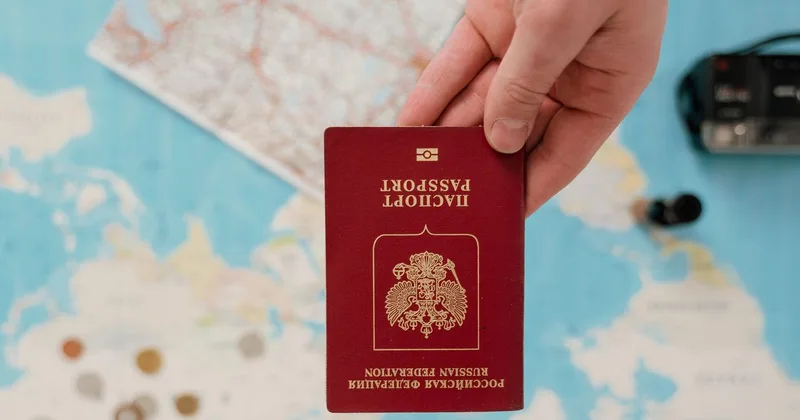
Your bank in Frankfurt or Toronto sends a short, cold email: confirm your country of tax residence, and attach proof. Your old tax office wants the same thing before it will stop treating you as one of its own. You reach for your Paraguayan cédula, and then it hits you that a residency card is not proof of anything fiscal. It shows you may live here. It says nothing about where you pay tax.
The piece of paper those institutions actually want is a Paraguay tax residency certificate, and until you hold one, "I moved to Paraguay" is just a sentence you can say.
That gap between claiming residency and proving it is where this whole guide lives. The certificate matters: official evidence that supports a lifestyle change, though a foreign tax office still weighs it alongside the facts of your life rather than treating it as conclusive proof.
What the Paraguay Tax Residency Certificate Actually Proves
The tax residency certificate (in Spanish, Certificado de Residencia Fiscal) is an official statement from Paraguay's tax authority confirming that, for the period or fiscal year it names, you are a tax resident of Paraguay. It is not the cédula, and it is not your visa. It is a document produced by the tax administration specifically to be shown to other tax authorities and to banks.
Why does that distinction matter so much? Because your tax position abroad often turns on proving where your fiscal home sits. The 0% territorial system only helps you if a competing country accepts that you have genuinely moved. The residency certificate is one of the main pieces of evidence they look at.
Without it, you have a claim. With it, you have a document that a foreign tax office knows comes from a sovereign tax administration. It does not settle the question by itself, since the other country still applies its own rules, but it strengthens your position when someone abroad is deciding whether they still get to tax you.
Who Issues the Certificate: the DNIT, Formerly SET
The body that issues the fiscal residency certificate is the DNIT (the tax authority, formerly SET) — the Dirección Nacional de Ingresos Tributarios. In 2024 Paraguay reorganized its revenue administration and the former Subsecretaría de Estado de Tributación (SET) was absorbed into the DNIT, so older guides that mention "SET" are pointing at the same function under a new name.
The DNIT administers the RUC, processes tax declarations, and issues the compliance documents that feed into your certificate request. Everything in this process routes through that single authority. The 2020 resolution set the request up as a written application on an official form; check the DNIT's current channel, online or at its offices, when you apply.
Knowing the issuer matters for one practical reason: when your home country or bank asks who certified your residency, the answer is a named national tax administration, not a private agent or a notary. That provenance is exactly what gives the tax residency certificate its weight abroad.
Why the RUC Has to Be Up to Date, Not Just Open
Here is the assumption that quietly wrecks people's plans. They register a RUC (Registro Único del Contribuyente, the taxpayer ID), then let the filings it brings lapse, and still expect the DNIT to hand over a residency certificate on request. It does not work that way, and it is not supposed to.
A RUC with overdue returns proves you signed a form and then stopped. Resolución General 65/2020, the rule behind the certificate, asks taxpayers for three things: a RUC, being up to date with their tax obligations, and a copy of a valid cédula. Falling behind on the second is enough to stop a request.
Notice what the resolution does not ask for: no invoices, no minimum level of business activity, and no minimum number of days in the country. Issuing local invoices would in fact create Paraguayan-source income and IVA duties, which is a separate matter from the certificate.
The resolution also provides a route for people without a RUC, based on a Constancia de Movimiento Migratorio from Migraciones for the period. Whether you are tax-resident in the first place is a question of Paraguayan law for a contador; this guide follows the RUC route, which needs a RUC kept active and up to date.
The Tax-Compliance Certificate: A Useful Check Before You Apply
The easiest way to see whether you meet the "up to date" condition is the Certificado de Cumplimiento Tributario, the tax-compliance certificate. It confirms you are current with your obligations: filings submitted, nothing outstanding, no open irregularities. As of 2026 it is generated through the DNIT's online system at no cost, which is worth confirming when you apply. RG 65/2020 does not list it as a required attachment; treat it as your own check before the request goes in.
Think of it as a dry run: if the compliance certificate will not generate, the residency certificate request is not ready either, and the fix is to bring the missing returns up to date first.
The logic of the resolution is clean: a valid cédula for your identity, a RUC for your tax file, and current obligations to show the file is in order. Once those three line up, the DNIT has what the rule asks for.

How to Get Your Paraguay Tax Residency Certificate: Step by Step
There is a logical order to this, and doing the steps out of sequence is why some applications stall for months. The path runs from immigration status through a RUC kept current to the request itself.
- ▹Secure legal residency and your cédula. A valid cédula is what the resolution asks for, whether it comes from temporary residency or, after a separate application from month 21 onward, permanent residency; the residency and cédula process comes first.
- ▹Register a RUC with the DNIT. The RUC needs the cédula, and completing it means an in-person appointment, which you can keep at a DNIT office outside Asunción too.
- ▹Keep every obligation current. File each return your RUC category triggers, including nil returns, on time. No invoices or local business activity are required for the certificate.
- ▹Check your standing. Pulling the Certificado de Cumplimiento Tributario online is a quick way to confirm nothing is outstanding.
- ▹Request the residency certificate. Submit the application with a copy of your valid cédula through the DNIT's current channel; under RG 65/2020 the certificate is issued within 10 business days of the request and is valid for one year from issue.
None of these steps is exotic, but each depends on the one before it. A complete request, filed while your obligations are current, is what turns that ten-business-day window into a certificate rather than a rejection. If you would rather not handle the request yourself, we file it for you as a $150 add-on; it is not part of any package.
No Day Count, but a Real Life Behind a Solid Residency Claim
Neither RG 65/2020 nor Paraguay's tax law (Ley 6380/2019) demands any minimum stay in Paraguay for the certificate or for tax residency. For the certificate on the RUC route, the RUC with current filings is the requirement. That does not make the certificate a free pass abroad: a foreign tax office reading it will still ask whether Paraguay is really where your life is centered.
The reason presence matters is that a certificate is only as strong as the reality behind it. If a foreign tax office later scrutinizes your position, a residency certificate backed by real time on the ground, a lease, and local ties holds up. One backed by a fly-in, fly-out pattern is far weaker.
Presence and day-counting rules interact with your old country too, which is a separate topic covered in the 183-day rule and tax residency guide. For the certificate itself, the practical point is simple: build a life the document can honestly describe.
Need the certificate itself? We can prepare and file the request once your cédula and RUC are in place, as a $150 add-on. Whether it will settle things with your former tax office is a question for an adviser qualified in that country. Book an intro call.
Why Your Home Country Demands Proof of Fiscal Residency
Foreign institutions do not ask for a tax residency certificate to be difficult. They ask because their own rules force them to. When you leave a country, many tax authorities keep treating you as resident until you positively show you have become resident somewhere else, and a certificate from the new country is the cleanest evidence of that.
Tax treaties can add a second reason, though rarely for Paraguay. Where a double-tax treaty exists and two countries both claim you, its tie-breaker allocates residency to one of them, and your certificate is a core exhibit. Paraguay has only a few such treaties (with Spain, Chile and Taiwan, for example), so for most home countries no tie-breaker applies and the certificate works as evidence rather than as a treaty claim.
Banks have a third, more mechanical reason. Under the Common Reporting Standard (CRS), they must record and report the tax residence of their account holders. When your bank asks for a fiscal residency certificate, it is often satisfying its own CRS reporting duty, not doubting your word. Paraguay itself has not yet started automatic exchange; the OECD expects its first exchanges by 2028.
How the Certificate Fits the Wider Paraguay Tax Picture
The residency certificate does not stand alone; it is one output of a working tax setup. You register the RUC, you file, and the certificate is the endorsement that the machine is running properly. The mechanics of that filing side are covered in the RUC and tax filing guide, and the broader rules in the Paraguay tax system overview for 2026.
Seen that way, the certificate is less a hurdle and more a receipt. It says your residency, your taxpayer registration, and your compliance all line up. That coherence is precisely what makes it persuasive abroad.
This is also why "get the certificate" is never step one. It is the visible result of the earlier steps, which is why a RUC with lapsed filings cannot produce it on demand.
US citizens and green-card holders: a Paraguay tax residency certificate does not release you from US tax. The United States taxes its citizens and green-card holders on worldwide income regardless of where they live (citizenship-based taxation), so no Paraguayan document ends your US filing or liability. The Foreign Earned Income Exclusion (FEIE) helps only partially, and full relief generally requires renouncing citizenship, with a possible exit tax. Read the guide for US citizens and Paraguay taxes and consult a US-qualified adviser before assuming any 0% applies to you.
Validity and Renewal of the Fiscal Residency Certificate
A tax residency certificate refers to the period or fiscal year it names and, under RG 65/2020, is valid for one year from the date of issue. That means it has a shelf life. A certificate covering 2025 answers the question "were you resident in 2025," and a bank or tax office asking about a later year will want a current one.
In practice this means renewal is part of the routine. As long as you keep your RUC active, keep filing, and stay compliant, requesting a fresh certificate for a new period is a repeat of the same process, not a fresh ordeal. Confirm the current procedure when you apply, since the DNIT can change its channels.
Plan for the certificate to be something you refresh periodically, especially in years when you open new accounts or face questions from a former tax authority. A living residency, kept in good standing, keeps the door to renewal open.
Common Mistakes That Delay or Block the Certificate
The failures tend to cluster into three predictable patterns. The first is the neglected RUC: a taxpayer number registered and then left without its returns. The resolution requires you to be up to date with your obligations, so missing declarations stop the residency certificate.
The second is expecting the certificate on day one. People land and assume the fiscal document follows automatically. It does not: the RUC cannot be requested before the cédula, the certificate is only issued on request, and the DNIT then has up to 10 business days. Plan the request around the date a bank or tax office needs it.
The third is confusing the two documents entirely: treating the immigration cédula as if it were the tax residency certificate. They come from different authorities and prove different things. Residency is granted by Migraciones and the cédula is issued by the Policía Nacional; it proves you may live here, while only the DNIT's fiscal certificate speaks to where you are taxed. Mixing them up is how people show a bank the wrong paper and wonder why it is rejected.
Ready to build a residency the DNIT will certify? See the residency packages: they carry you as far as the cédula, and the top tier, Premium, also covers the RUC inscription. The annual return ($850 a year) and the certificate request ($150) are add-ons outside every package.
Frequently Asked Questions About the Paraguay Tax Residency Certificate
What is a Paraguay tax residency certificate?
It is an official document from the DNIT (the tax authority, formerly SET) confirming that, for the period or fiscal year it names, Paraguay is your country of tax residence. It exists to be shown to foreign tax authorities and banks as evidence of your fiscal home, which they weigh under their own rules, and it is separate from your cédula or visa.
Is an open RUC enough to get the Paraguay tax residency certificate?
Only if your obligations are current. Under RG 65/2020 a taxpayer needs a RUC, to be up to date with their tax obligations, and a copy of a valid cédula. There is no invoice or business-activity requirement, but a RUC with overdue returns will not qualify. People without a RUC can apply with a Constancia de Movimiento Migratorio instead.
How long does the DNIT take to issue the tax residency certificate?
RG 65/2020 gives the DNIT 10 business days from a complete request to issue the fiscal residency certificate. The longer wait usually comes earlier: the cédula, then the RUC, then getting every return filed so you are up to date.
How many days a year do I need in Paraguay for the residency certificate?
None is set. RG 65/2020 and Paraguay's tax law contain no minimum number of days; the certificate rests on your RUC, current filings, and a valid cédula. Your former country may still apply its own day count or ties test before it accepts that you left, which is a separate question for an adviser there.
Does the tax residency certificate exempt US citizens from US tax?
No. US citizens and green-card holders are taxed on worldwide income regardless of residency, so a Paraguay fiscal residency certificate does not end US filing or liability. The FEIE can shelter some earned income but only partially. Full relief generally requires renouncing citizenship, with a possible exit tax; take US-qualified advice first.
How often do I renew the Paraguay fiscal residency certificate?
Each certificate is valid for one year from its issue date, so you request a fresh one when a bank or tax authority needs current proof. As long as your RUC stays active and your filings stay current, renewal repeats the same request.
Is the tax residency certificate the same as the cédula?
No. The cédula is your national ID, issued by the Policía Nacional once Migraciones has granted your residency, and it proves you may live in Paraguay. The tax residency certificate is issued by the DNIT and proves where you are taxed. They come from different authorities and answer different questions; only the DNIT document speaks to your tax residence, and a foreign tax office or bank still treats it as evidence, not a final verdict.
Legal basis and disclaimer: This article is general information, not individual tax or legal advice, and Paraguay's rules can change. Paraguay's territorial tax system (Ley 6380/2019) and tax-residency certification are administered and published by the Dirección Nacional de Ingresos Tributarios (DNIT). Confirm the current position with an official source or a qualified cross-border adviser before you act. the PwC tax summary documents the certificate's tax context from outside.

About the author
Yannick Schroth
Founder · Paraguay relocation support
Spends regular time in Paraguay and, with his team on the ground in Asunción, guides international nomads, entrepreneurs and investors through residency, the cédula and the RUC paperwork.
Note: this article reflects the position at the time of publication. Laws, prices and deadlines can change, so individual details may since be out of date. Check the current rules before you act on them: we answer questions about residency and our services, while the tax treatment of your own case belongs with a qualified tax adviser.