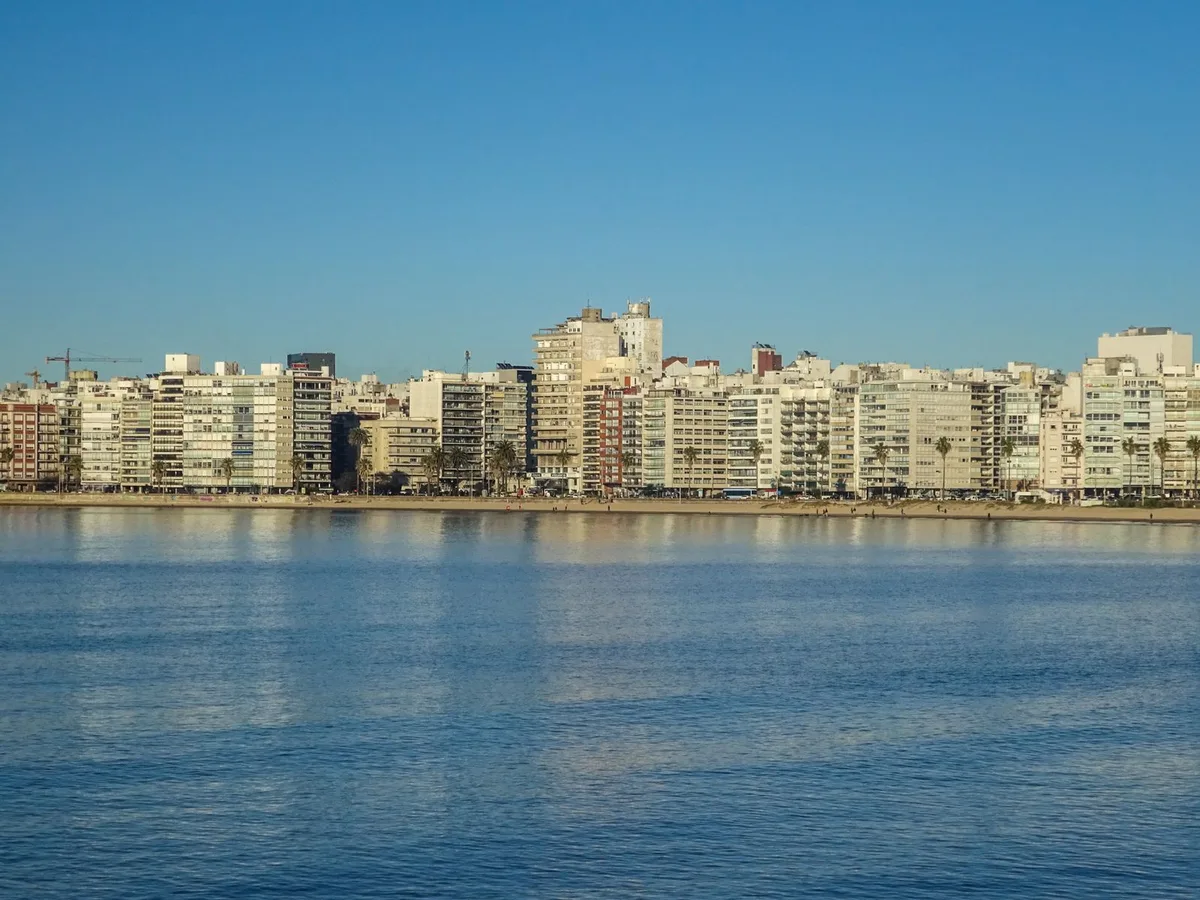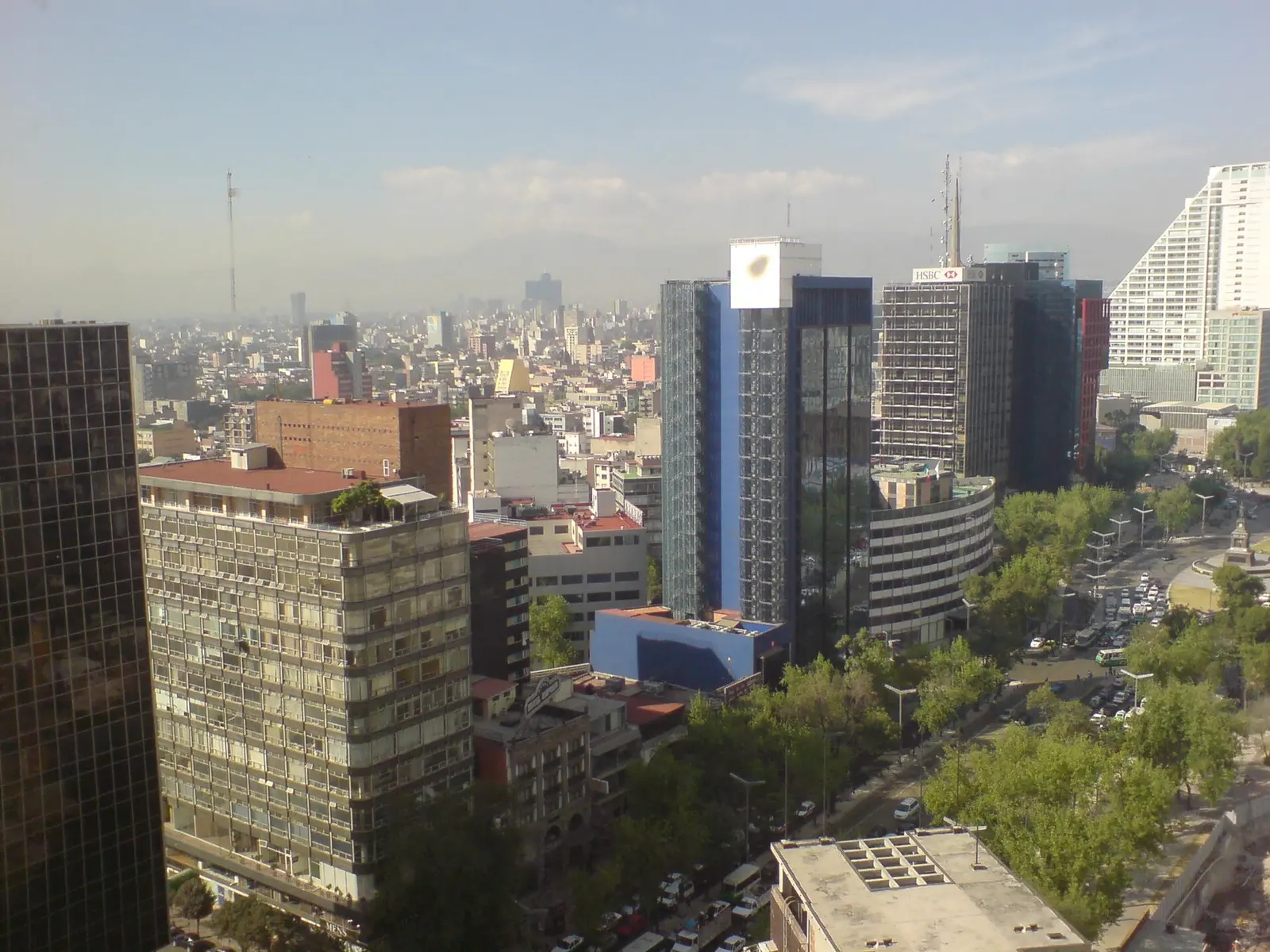
You are comparing two Latin American countries as a possible base. Two countries dominate that search from opposite ends of the spectrum. Mexico is the giant: a huge, well-connected country with a deep expat scene, world-class food, and direct flights to almost everywhere. Paraguay is the quiet specialist: a small, cheap, territorial-tax country built around a durable 0% on genuinely foreign income, in principle.
They solve different problems, and this comparison keeps that front and center. Mexico is optimized for living, scale, and proximity to the United States. Paraguay is optimized for a clean territorial tax base and a fast second residency. This deep-dive puts them side by side on the factors that actually decide the move, and it does not pretend either one wins on everything.
Paraguay vs Mexico at a Glance
Here is the short version before the detail. Every figure below is approximate and current as of 2026; tax rules, visa thresholds, and prices in both countries move, and Mexican residency numbers vary by consulate, so treat the table as a filter and confirm specifics before acting.
| Factor | Paraguay | Mexico |
|---|---|---|
| Tax on foreign income | 0% in principle on genuinely foreign-source income (territorial, with genuine tax residency) | Taxed as worldwide income if you are a tax resident (ISR 1.92-35%) |
| Tax system | Territorial | Worldwide (residence-based) |
| Low-tax niche | No special regime; income that arises abroad is untaxed, but self-employed work done in Paraguay can be taxed at 8-10% (IRP) | RESICO ~1-2.5% on collected income up to ~MXN 3.5M, for registered small earners |
| Residency financial bar | None at the temporary stage; solvency proof, with no set amount, for permanent | Temporary: ~$4,300-4,500/mo income or ~$73,000 savings (2026) |
| Time to permanent residency | After the 2-year temporary stage (filed in months 21–24) | After 4 years of temporary residency (or much higher numbers) |
| Presence to keep it | No set number of days; while temporary, an entry every year and no absence over 12 months; once permanent, an entry at least every 3 years | Flexible to hold, but living there risks triggering tax residency |
| Path to citizenship | ~3 years permanent (≈5 total) + written knowledge exam (history, geography, Constitution); multiple nationality only under a treaty (none with most countries), renunciation may be required | ~5 years residency (2 for Latin American or Iberian nationals) + Spanish/history exam; formal renunciation required, though many home countries do not recognize it |
| Cost of living (single, USD/mo) | ~$1,200-1,700 | ~$1,500-2,500 (Mexico City and expat hubs higher) |
The rows below explain what each one feels like in practice, because the numbers hide the trade-offs.
US citizens and green-card holders: You are taxed on your worldwide income no matter where you live (citizenship-based taxation). Neither Paraguay residency nor a Mexican visa removes your US filing or liability; only renouncing citizenship does, with a possible exit tax. Read the US citizens and Paraguay tax explainer before you plan.
Tax: Territorial 0% Against Mexico's Worldwide System
This is the row most people arrive for, and the two countries could hardly differ more in structure. Paraguay's system is territorial: it reaches income arising inside the country and, as a rule, leaves foreign-source income out of scope. A Paraguay tax resident's dividends from abroad, pension from another country, or profits of a business run outside Paraguay can legitimately sit outside Paraguayan income tax.
Remote work needs more care. A remote job or freelance contract worked from Paraguay can be sourced there and taxed at roughly 8–10%, whoever the client is, and a local tax adviser should settle which bucket yours belongs in. The Paraguay 0% territorial tax guide walks through the sourcing rules.
Mexico is the opposite model. A Mexican tax resident is taxed on worldwide income, at progressive ISR rates that run from 1.92% up to 35%. Where the money is earned or banked does not matter; if you are a Mexican tax resident, Mexico can tax it. Under the 2026 annual table the top 35% rate applies only above about MXN 5.1 million, but the 30% band already starts at roughly MXN 669,000, so a normally-paid remote worker quickly reaches meaningful rates.
There is one nuance worth naming on the Mexican side. The RESICO regime (Régimen Simplificado de Confianza) taxes eligible small earners at just 1% to 2.5% on income actually collected, up to about MXN 3.5 million a year. It is genuinely cheap, but it is built for registered activity in Mexico and does not turn the country into a territorial haven for foreign income; you remain a worldwide-taxed resident for anything outside it. Treat RESICO as a niche, not a substitute for Paraguay's territorial 0% on genuinely foreign income.
Tax Residency Triggers: The Home Test, Not 183 Days
The gap gets sharper once you look at how each country decides you are a tax resident, because that is the switch that turns the tax on. Mexico's domestic rule does not count days. You become a tax resident once you establish a home in Mexico, and if you also keep a home elsewhere, the tie-breaker is your center of vital interests: more than half of your income coming from Mexican sources, or Mexico being the main place of your professional activity.
Many nomads live in Mexico on a tourist entry or a temporary-resident card and simply never register or file, betting they will not be deemed resident.
That works until it does not. If you set up a home in Mexico and live there, you can be a tax resident however you count your days, and the liability is worldwide. Paraguay runs the cleaner line: no minimum stay is written into its tax law, tax residency is a question of law that a local contador clarifies, and the reward is 0% on foreign-source income rather than a worldwide bill, with IRP or IRE of around 8–10% only on what counts as Paraguayan-source.
So the same decision, actually becoming a resident where you live, is a liability in Mexico and an asset in Paraguay. That inversion is the core of the whole comparison. For the mechanics of day-count and residency tests, see our explainer on the 183-day rule and tax residency.
Residency and Visas: Open and Cheap vs Income-Gated
Two applicants with the same income can have very different first years here, because the two countries ask for very different things up front. Mexico gates residency on money. For 2026, a temporary-resident visa typically requires proof of about US$4,300 to US$4,500 in monthly income over the past six months, or average savings of roughly US$73,000 over twelve months, with exact figures set per consulate and revised upward for 2026.
Temporary residency runs up to four years; only then can you convert to permanent residency, unless you qualify directly on much higher numbers, around US$7,400 a month or US$296,000 in savings.
Paraguay works the other way. There is no income or investment threshold to get in: the temporary residency rests on a sworn declaration of what you plan to do there, and you show up personally for the cédula. The temporary clock runs two years rather than four, and in the last months of it you file the permanent application and show your means under Resolución DNM 407/2026, a rule with no fixed amount.
For a location-independent earner who does not want to park US$73,000 in a bank to satisfy a consulate, Paraguay is dramatically more accessible. Mexico's bar is not extreme, but it is a real financial gate, and 2026 tightened it.
Not sure whether Paraguay or Mexico fits your plan? Tell us where you want to spend your time, and we will walk you through the Paraguayan residency route, the trips, and the costs. The tax trade-offs for your own income need a qualified adviser, such as a Paraguayan tax adviser from our network for the local side and a Mexican or home-country professional for the rest. Get in touch.
Cost of Living: Asunción Against Mexico's Range
Both countries are cheap by Western standards, but Paraguay is the cheaper of the two on average, especially against Mexico's expat hotspots. A comfortable single-person life in Asunción, including a modern one-bedroom in a good area, private health cover, eating out, and transport, runs roughly US$1,200 to US$1,700 a month.
Mexico spans a wider range. Secondary cities can match or undercut Asunción, but Mexico City's desirable neighborhoods, Playa del Carmen, and the established expat towns have been pushed up by years of inbound demand, so an equivalent lifestyle there often lands nearer US$1,700 to US$2,500.
The direction is clear even though Mexico's spread is huge. If rock-bottom cost is the priority, Paraguay wins on the average; if you want a cheap Mexican base, you have to choose the less fashionable cities to beat Asunción. Our cost of living in Paraguay breakdown has the detail.
Lifestyle, Scale and Location: Where Mexico Wins
This is where Mexico pulls ahead, and it is not close. Mexico is a large, diverse, well-connected country with world-class food, deep expat infrastructure, direct flights across North America, and time zones that overlap the US working day. For a nomad who values scale, variety, and proximity to the States, Mexico is one of the best bases anywhere, and nobody picks Paraguay for beaches or nightlife.

Photo: “Palacio de Bellas Artes, Ciudad de México (2015-07-18 DD 10)” by Diego Delso, Wikimedia Commons, CC BY-SA 4.0, scaled (WebP)
Paraguay offers something quieter and more specific: a low-key South American capital, a slower pace, lower cost, and, above all, a durable tax and residency structure. You do not move to Asunción for the lifestyle headline; people who choose it tend to weigh the territorial tax rules and an affordable residency route. Match the country to what you actually want, a rich place to live versus an efficient place to be resident.
Citizenship and Passport
The passports and timelines are closer than the rest of the comparison. Paraguay allows naturalization after about three years of permanent residency, following the two-year temporary stage, so roughly five years in total.
Do not assume you keep your current nationality: under Article 149 of the Constitution, Paraguay recognizes multiple nationality only under a treaty, as with Spain, and has none with most countries, the US and Canada included. It may require you to renounce your previous nationality on naturalization; our partner lawyer clarifies how that is handled in your case. Ley 7052/2023 protects only Paraguayans by birth.
Mexico allows citizenship after five years of legal residency (two for Latin American or Iberian nationals), with a Spanish-language test and a Mexican-history exam, but it asks naturalizing applicants to formally renounce their other nationality. Many home countries do not recognize that renunciation, so whether you keep your original passport depends on your home country's rules.
Both countries examine applicants, just not on the same thing. Paraguay's Corte Suprema sets a written test on the country's history, geography and culture and the basics of its Constitution, under Acordada 464/2007, with 21 of 30 points needed to pass. No separate language test is documented, although the exam is set in Spanish, so a working command of the language matters in practice.
On passport strength the two are broadly comparable regional passports, both giving solid visa-free access without sitting in the top global tier. If naturalization is the goal, both are realistic on a similar horizon, neither should be planned on as a way to hold two passports, and the deciding factor is usually the tax and residency road you take to get there rather than the citizenship at the end.
Banking in Paraguay and Mexico
Neither country is frictionless, but both are workable. Mexico has a large, modern banking sector and plenty of fintech options, though opening accounts as a foreigner has tightened and usually wants your resident card and proof of address. Paraguay's banks are functional but paperwork-heavy, and opening an account is smoother once you hold a cédula and a RUC. Our guide to opening a Paraguay bank account covers the steps.
For US persons the banking picture differs: Mexico has a FATCA intergovernmental agreement in force, while Paraguay has only an agreement in substance and no signed IGA in force, although some Paraguayan banks still ask for W-8 or W-9 self-certification. Neither local setup changes your own US filing duties. Keep expectations realistic: banking abroad is a documentation exercise wherever you go.
The Verdict: Paraguay vs Mexico in 2026
There is no universal winner, so match the choice to your priority. Choose Mexico if you want a large, vibrant, well-connected country to actually live in, you are comfortable managing your tax residency carefully, and you can meet the income or savings bar for a visa. Choose Paraguay if the tax outcome is the point: a legitimate 0% on foreign income as a genuine resident, a cheap residency with no income gate and a permanent application you can file from month 21, and the lowest cost of the two.
Put bluntly, Mexico is the better place to live and the trickier place to be taxed; Paraguay is the plainer place to live and the cleaner place to be taxed. Spending long periods in Mexico while relying on a Paraguay tax residency is risky, because Mexico's home test can make you resident there regardless.
If you want the wider field, our roundup of the comparison of residency countries puts Paraguay against the global shortlist. For US citizens, remember that neither country changes your US bill, so run your US position first and treat this as a cost, lifestyle, and residency decision.
Frequently Asked Questions About Paraguay vs Mexico
Is Paraguay or Mexico better for taxes?
For foreign income, Paraguay. Its territorial system leaves genuinely foreign-source income untaxed at 0% for a real resident, while Mexico taxes residents on worldwide income at 1.92% to 35%. Mexico's cheap RESICO regime helps small, Mexico-registered earners but does not exempt foreign income. US citizens are taxed by the US in both cases.
Do digital nomads pay tax in Mexico?
They can, and many underestimate it. If you establish a home in Mexico, or keep homes in several countries while Mexico is your center of vital interests, you become a Mexican tax resident and owe tax on worldwide income; a day count on its own is not the test. Nomads who avoid tax by never registering are relying on not being deemed resident, which is fragile if Mexico is genuinely where they live.
Is it easier to get residency in Paraguay or Mexico?
Paraguay, for most people. It sets no income or investment threshold for temporary residency, and the separate permanent application, filed from month 21 of temporary residency, needs a solvency proof that has no fixed amount. Mexico requires proof of about US$4,300 to US$4,500 a month, or roughly US$73,000 in savings, for temporary residency in 2026, and permanent status only after four years or on much higher numbers.
Can I combine a Mexican base with Paraguay tax residency?
Be careful: a home in Mexico can make you a Mexican tax resident with worldwide liability, whatever your Paraguayan status. Each country has its own residency and reporting rules, and work performed while you are in either one raises its own sourcing questions, so confirm both with a qualified adviser, and remember US persons are taxed on worldwide income regardless of where they live.
Legal basis and disclaimer: This article is general information, not individual tax advice, and the tax and immigration rules in both countries change. Paraguay's income tax framework sits in Ley 6380/2019, administered by the Dirección Nacional de Ingresos Tributarios (DNIT); Mexico's individual tax rules are administered by the tax authority (SAT) and summarized in PwC's Mexico tax summary.
Comparative figures for both are collected in the OECD Tax Database. Check each country's current rules with an official source or a qualified adviser before you act, and note that the Mexican residency thresholds are set per consulate and move over time.

About the author
Yannick Schroth
Founder · Paraguay relocation support
Spends regular time in Paraguay and, with his team on the ground in Asunción, guides international nomads, entrepreneurs and investors through residency, the cédula and the RUC paperwork.
Note: this article reflects the position at the time of publication. Laws, prices and deadlines can change, so individual details may since be out of date. Check the current rules before you act on them: we answer questions about residency and our services, while the tax treatment of your own case belongs with a qualified tax adviser.