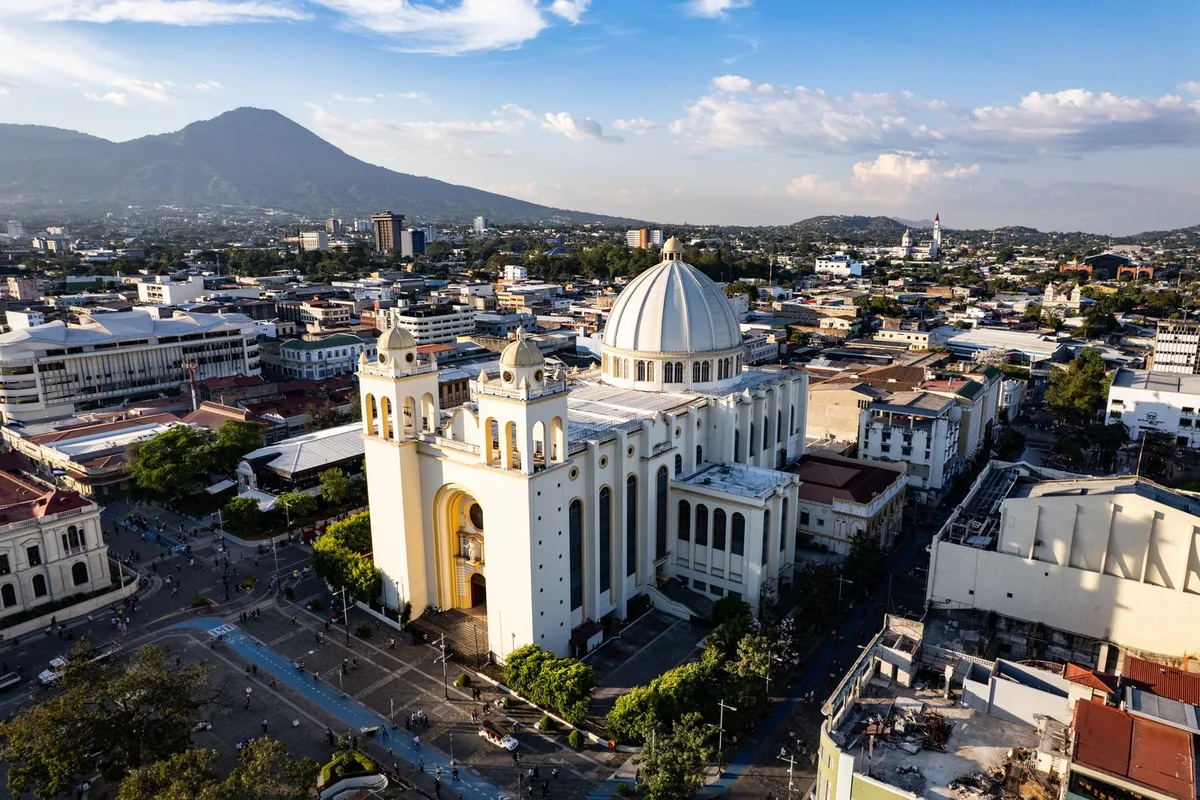
A Bitcoin holder eyeing a zero-tax base tends to land on one loud fact: El Salvador wrote 0% capital gains on Bitcoin into law and, back in 2021, made it the world's first legal-tender cryptocurrency. That branding is magnetic, though the legal-tender part was rolled back in 2025.
Yet a few thousand kilometers south sits Paraguay, which in principle leaves genuinely foreign income untaxed under a long-standing territorial code, without a single Bitcoin headline, and does it at a fraction of the cost. The choice between the noisy statutory route and the quiet structural one is what this comparison unpacks.
Both countries are territorial in flavour, so a lot of crypto Twitter treats them as roughly the same move. They are not. One sells a Bitcoin-native identity backed by dedicated legislation; the other offers cheap residency and a broad territorial 0% on genuinely foreign income, in principle. This head-to-head walks through tax, Bitcoin treatment, residency, cost, safety, citizenship, and banking, so you can match the base to your portfolio and your passport rather than the slogan.
Paraguay vs El Salvador at a Glance
Here is the quick verdict before the full comparison. Every figure below is approximate and current as of 2026; tax codes, visa thresholds, and prices in both countries move quickly, so treat the table as a filter and confirm specifics with a local adviser before acting.
| Factor | Paraguay | El Salvador |
|---|---|---|
| Foreign-income tax | 0% in principle on genuinely foreign income (territorial, long-standing) | 0% since the 2024 reform exempted foreign-source income |
| Bitcoin & crypto tax | 0% on genuinely foreign-source gains; not legal tender (only the guaraní is) | 0% on Bitcoin gains by statute; legal-tender status repealed in 2025, now voluntary |
| Local income tax | Up to ~10% on Paraguay-source income (Ley 6380/2019) | Progressive on local-source income |
| Presence requirement | No day minimum; temporary: one entry a year, never 12+ months away; permanent: one entry every 3 years | ~90 days/year for temporary residency (Decreto 531) |
| Residency speed & cost | Cheap; 2-yr temporary, then permanent (months 21–24) | Investment routes exist; fast citizenship is very expensive |
| Citizenship timeline | ~3 yrs of permanent status (roughly 5 total) | Standard route by years of residence; donation route fast but costly |
| Cost of living | Very low; among the cheapest in the region | Cheap, though San Salvador can run higher |
| Best for | Value-seeker wanting low costs and territorial 0% on foreign income | Bitcoin-maximalist wanting statutory BTC 0% |
The numbers hide the trade-offs, so the sections below explain what each row feels like once you are actually living it.
US citizens and green-card holders: You are taxed on your worldwide income, including every crypto gain, no matter where you live (citizenship-based taxation). Neither Paraguay nor El Salvador removes your US filing or liability; only renouncing citizenship does, with a possible exit tax. Read the US citizens and Paraguay tax explainer and take cross-border advice before you act.
For Americans, the tax and Bitcoin columns are misleading in both countries, because the US follows you offshore and taxes your BTC regardless of local law. The comparison still matters, but as a cost and lifestyle decision rather than a route to a clean zero.
Tax on Foreign Income: Two Approaches to Foreign Income
This is the row most people arrive for, and by 2026 both countries genuinely reach it. Paraguay runs a territorial system: genuinely foreign-source income sits outside its net in principle, at 0%, with no expiry date and no day-count condition for tax residency, which a Paraguayan contador assesses under the law.
Local personal income tax reaches only Paraguay-source earnings, a category that can include remote work done on Paraguayan soil, at rates up to roughly 10% under Ley 6380/2019. The Paraguay 0% territorial tax guide walks through how the sourcing line is drawn.
El Salvador arrived at a similar destination by a different road. A 2024 income-tax reform exempts foreign-source income for residents and non-residents, so overseas earnings are effectively untaxed there too. That change is newer and more explicitly political than Paraguay's long-standing code, which is worth weighing if you value a rule that has sat quietly on the books for years over one passed in the current cycle.
So the destinations converge while the character differs. Paraguay's exemption is old, structural, and unremarkable in the best sense; El Salvador's is recent, headline-grabbing, and part of a broader reform push. For genuinely foreign income, both reach zero. The question is how much you trust the permanence of a fresh statute versus an established one.
Bitcoin and Crypto Treatment: The Headline Matchup
Here the two countries separate most sharply, and it is the reason many readers open this page. El Salvador is unusually explicit: the 2021 Bitcoin Law (Decreto 57) granted Bitcoin legal-tender status and 0% capital gains on it, and the country levies no wealth, inheritance, or gift tax. Few places put crypto-friendliness into dedicated legislation this plainly.
There is an important update, though. In early 2025, under an agreement with the IMF, El Salvador repealed Bitcoin's legal-tender status, so accepting it is now voluntary rather than mandatory. The 0% capital-gains treatment on Bitcoin remains, which is what still matters for a holder, but the statutory clarity is a little less absolute than the original headlines suggested.
Paraguay reaches a similar outcome for foreign holdings but says far less about it. Whether crypto gains count as foreign-source does not depend on the platform's location alone; a contador in Paraguay has to classify them, and activity that touches Paraguayan banks or brokers is more likely to be treated as local income, taxed at roughly 8% to 10%. New domestic reporting under DNIT Resolución 47/26 adds paperwork for onshore activity. The crypto tax in Paraguay guide covers where that line falls.
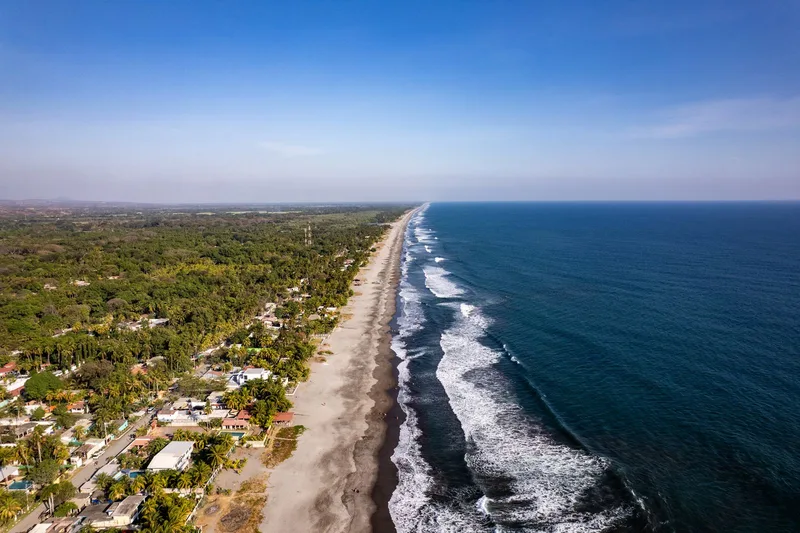
The practical read: El Salvador gives you an explicit, statutory 0% on Bitcoin and a crypto-native ecosystem, which is hard to match on paper. Paraguay has no crypto-specific rule, so the treatment of your gains depends on how a contador classifies their source, and the platform's location alone does not settle that. For a maximalist who wants BTC woven into daily life, El Salvador leads. For someone whose crypto income is genuinely foreign-source, Paraguay's route is quieter and costs less.
Residency and Presence: How Much Each Country Asks
Two applicants with identical portfolios can have very different experiences here, because the two countries ask for different amounts of money, time, and physical presence. El Salvador has been actively courting mobile capital. Decreto 531, effective around 31 March 2026, cut the temporary-resident physical-presence requirement to roughly 90 calendar days a year, whether consecutive or accumulated, which suits people who want a real but not full-time base.
El Salvador also runs investment-led routes, including a well-publicized donation-based fast-citizenship option historically pitched around a very large sum in Bitcoin or stablecoins. Treat any specific figure as approximate and confirm it directly, since these headline programs shift and are easy to overstate. The takeaway is that El Salvador's fast track exists but is priced for the wealthy.
Paraguay's route is light and cheap by comparison. You come in on a temporary permit lasting two years, with neither an income floor nor a solvency test, collect the cédula in person, and apply for permanent residency toward the end of those two years, at which point Resolución DNM 407/2026 requires you to show solvency, though it sets no statutory minimum.
There is no minimum number of days, but there are entry rules: temporary residents must enter at least once a year and never stay away more than twelve consecutive months, and permanent residents must enter at least once every three years (Ley 6984/2022). The contrast with the Paraguay vs Panama residency picture shows just how cheap Paraguay's door remains.
Cost of Living in Paraguay and El Salvador
Living costs weigh as much as tax rules, so this column quietly settles many moves. Both countries are cheap by US or European standards, and both sit well below what a nomad would pay in a dollarized hub like Panama City. Both leave more room in a monthly budget than most Western capitals.
The edge tilts to Paraguay on raw cost. Asunción consistently ranks among the least expensive capitals in the region, and a single person lives comfortably there, with a modern apartment, private healthcare, dining out, and transport, on a modest monthly budget. San Salvador is affordable too, but certain categories, especially housing in the more secure and expat-favored districts, can run higher than the Paraguayan equivalent.
The honest summary is that both are value plays, with Paraguay generally the cheaper of the two for comparable comfort. El Salvador's premium, where it exists, tends to buy proximity to the coast and the crypto scene rather than a fundamentally pricier country. Confirm current rents for your target neighborhood, because the averages hide wide swings within each city.
Safety and Lifestyle: An Honest Read
Beyond the spreadsheet, daily life and reputation matter, and this is where El Salvador carries the most baggage in search results. Its security picture has improved dramatically in recent years, with homicide rates falling sharply under a sustained crackdown, and many residents and visitors now describe San Salvador and the coast as calm. That turnaround is real and worth acknowledging plainly.
The caveats are equally honest. The methods behind the improvement remain internationally contested, the policy environment is high-profile and can feel volatile, and the country's Bitcoin-forward branding means it lives under a brighter media spotlight than most. Some newcomers value that energy; others read it as risk. Paraguay, by contrast, is quiet, low-drama, and rarely in the headlines, with a modest but stable safety profile and a slower, more provincial rhythm.
Lifestyle splits along those lines too. El Salvador offers surf towns and a crypto-native community that draws a specific crowd; Paraguay offers landlocked calm and little fanfare. Neither is objectively better, and the comparison of residency countries rundown places both in the wider field.
Weighing a loud Bitcoin base against a quiet territorial one? A short intro call covers what Paraguayan residency takes, from documents to the cédula, and what it costs. Crypto and income tax questions about your own holdings go to a licensed adviser, and in Paraguay we can make that introduction for you. Book a call
Citizenship and Passport in Both Countries
If naturalization is on your horizon, the two countries diverge on both speed and price. Paraguay allows naturalization once you have three years of permanent status, around five years from your first filing, and its passport carries broad visa-free or visa-on-arrival access.
Keeping your current nationality is another matter: Paraguay recognizes multiple nationality only under a treaty (Article 149 of the Constitution), there is none with the US, UK, Canada or most other countries, and on naturalization it may require you to renounce your previous citizenship. Our partner lawyer clarifies how that applies to you. Ley 7052/2023 protects only Paraguayans by birth; naturalized citizens stay under Article 150.
El Salvador's standard naturalization also runs on years of residence, with the required period depending on your nationality and family ties, so check the current rule rather than assuming it is quicker or slower than Paraguay's. Its shortcut is the donation-based route, which can deliver citizenship quickly but at a cost measured in the high six or seven figures, putting it out of reach for most readers. So the Salvadoran passport comes either through the ordinary residence path or fast through a very expensive one.
The trade is clear. For an affordable naturalization route on a predictable timeline, Paraguay leads on cost. El Salvador's real shortcut requires a very large check, so its fast track stays reserved for the wealthy.
Banking and Crypto Rails: A Brief Note
Money and coins have to live somewhere, and the two setups feel different. El Salvador leans into digital assets, and even after Bitcoin's legal-tender status was repealed in 2025 it keeps a growing, if still maturing, ecosystem of crypto-friendly services, though traditional banking there is smaller and its international reach limited. Paraguay's banking is likewise local and modest, usually requires residency first, and is best treated as a secondary account rather than the center of your financial life.
A common setup looks like this: they pair the local residency with a US LLC and US-dollar banking, keeping operating funds and off-ramps in a familiar system. The LLC does not change the source of anything: crypto gains and any business or service income earned while you live in Paraguay each need a sourcing check by a contador, and the platform's location alone does not decide it.
The Verdict: Paraguay vs El Salvador in 2026
No single winner emerges, so match the base to who you are. For the Bitcoin-maximalist, El Salvador is the natural home. You get an explicit statutory 0% on Bitcoin gains, no wealth or inheritance tax, a crypto-native community, and a 90-day presence rule, and you accept a newer, higher-profile policy environment and a security reputation still under repair. It optimizes hard for a crypto-first identity.
For the cost-sensitive value-seeker, Paraguay is the stronger pick. You get a broad territorial 0% on genuinely foreign income in principle, a very low cost of living, a low-cost residency with a permanent application from month 21, light presence rules, and an affordable naturalization route, provided your income is genuinely foreign-source. It suits people who value a long-standing, low-drama tax code.
The through-line is straightforward. El Salvador wins on explicit statutory Bitcoin treatment and crypto-native lifestyle; Paraguay wins on an established territorial code, low cost, cheap residency, and an affordable naturalization route. Both reach zero on genuinely foreign income in principle, so the real decision is whether you want your base loudly Bitcoin-branded or quietly cheap. Compare it against a stabler regional option in the Paraguay vs Uruguay breakdown before you settle.
Want to see what a Paraguay setup actually costs end to end? Our three packages show the residency and cédula costs in plain numbers, so you can weigh them against an El Salvador plan. RUC inscription comes with Premium, and company formation is a separate add-on. Compare the packages and pricing
Frequently Asked Questions About Paraguay vs El Salvador
How do Paraguay and El Salvador treat Bitcoin gains?
El Salvador is more explicit: its Bitcoin Law grants 0% capital gains on BTC by statute, although it repealed Bitcoin's legal-tender status in 2025. Paraguay does not tax a resident's genuinely foreign-source crypto gains, but the platform's location alone does not decide the source, and it has never treated crypto as legal tender, since the guaraní is the sole legal currency. For dedicated statutory Bitcoin clarity, El Salvador still leads as of 2026.
Do both Paraguay and El Salvador exempt foreign income?
Yes, in principle. Paraguay's territorial system has long left genuinely foreign-source income untaxed, while work done on Paraguayan soil is local income. El Salvador's 2024 income-tax reform exempts foreign-source income for residents and non-residents, reaching a similar zero. Paraguay's rule is older and more established; El Salvador's is newer and part of a broader reform push. Confirm current specifics before relying on either.
How much physical presence do Paraguay and El Salvador require for residency?
El Salvador's Decreto 531, effective around 31 March 2026, cut temporary-resident presence to roughly 90 days a year, consecutive or accumulated. Paraguay sets no day minimum, only entry rules: one entry a year and never more than twelve consecutive months away as a temporary resident, then at least one entry every three years once permanent. Tax residency is a separate matter in both countries; in Paraguay it is governed by Ley 6380/2019, not by days, and a local contador clarifies it.
Is El Salvador safe compared with Paraguay?
El Salvador's security has improved dramatically, with homicides falling sharply, and many residents now find it calm. The methods remain internationally debated and the policy image is high-profile. Paraguay is quieter and lower-drama, with a modest but stable profile. Research current conditions for your specific destination in either country before committing.
Which gives a faster, cheaper passport, Paraguay or El Salvador?
Paraguay leads on cost: you can apply to naturalize once three permanent years have passed, some five years from arrival. It recognizes multiple nationality only under a treaty and may require you to give up your current citizenship, so have a lawyer check that first. El Salvador's standard route also takes years of residence, and its fast donation-based citizenship costs a very large sum. On a normal budget, Paraguay's route is the cheaper one.
How is crypto taxed in Paraguay?
Genuinely foreign-source gains are outside Paraguayan income tax, but using a foreign platform does not by itself make a gain foreign-source. The risk is sourcing: routing a transaction through Paraguayan banks or brokers can reclassify it as local income, taxed near 8% to 10%, and new domestic reporting applies. Have a contador in Paraguay classify your gains before relying on any treatment.
Do the Paraguay vs El Salvador tax rules apply to US citizens?
Only partially. US citizens and green-card holders are taxed on worldwide income, including all crypto, wherever they live, so neither country's 0% removes US tax on its own. Model your US position first using the US citizens and Paraguay tax explainer, then treat this as a cost and lifestyle choice.
Legal basis and disclaimer: This article is general information, not individual tax advice, and tax and residency rules in the countries compared can change. Comparative figures for national regimes are available in the OECD Tax Database, and Paraguay's rules through the Dirección Nacional de Ingresos Tributarios (DNIT). Check the current rules for each country with an official source or a qualified adviser before acting on any of it. PwC documents both jurisdictions on its own terms (Paraguay, El Salvador).

About the author
Yannick Schroth
Founder · Paraguay relocation support
Spends regular time in Paraguay and, with his team on the ground in Asunción, guides international nomads, entrepreneurs and investors through residency, the cédula and the RUC paperwork.
Note: this article reflects the position at the time of publication. Laws, prices and deadlines can change, so individual details may since be out of date. Check the current rules before you act on them: we answer questions about residency and our services, while the tax treatment of your own case belongs with a qualified tax adviser.