You arrive expecting a smaller version of Argentina or Brazil, and within a week you realize you have landed somewhere quietly different. Paraguay is calmer, more private, and more rooted in family than its louder neighbors, and it runs on a second language most maps never mention. Understanding Paraguayan culture is not about memorizing rules; it is about reading a rhythm. Get that rhythm right and doors open fast, from your local kiosk to your landlord's Sunday table. Get it wrong and you stay a polite stranger for months.
Here is what newcomers should actually understand before they try to fit in.
What Newcomers Should Understand About Paraguayan Culture
Paraguayan culture rests on a few load-bearing pillars: a genuinely bilingual Spanish and Guaraní identity, the shared ritual of tereré, a family-first social structure, and a relaxed relationship with time. People are warm and welcoming but not performative, private until they trust you, and generous once they do. If you remember only one thing, remember that relationships come before efficiency here.
That single idea explains most of what surprises newcomers. A conversation matters more than a schedule. A shared drink matters more than a signed form. Knowing someone's cousin can matter more than any official channel. None of this is disorder; it is a different set of priorities, and the sooner you stop measuring Paraguay against a German or North American stopwatch, the sooner the country makes sense. If you are still planning the move itself, our step-by-step guide to moving to Paraguay covers the logistics that sit underneath the culture.
The Bilingual Heart of Paraguay: Spanish and Guaraní
Paraguay is one of the few countries in the Americas where an Indigenous language is spoken by the majority, not a minority. Spanish and Guaraní are both official languages, and most Paraguayans move fluidly between them, often mid-sentence, in a blend locals call jopara. You will hear Spanish in offices and formal settings, and Guaraní at the market, on the farm, and around the family table. This bilingualism is the single most distinctive feature of Paraguayan culture.
You do not need Guaraní to live here. Spanish handles daily life completely, and a newcomer who speaks decent Spanish will manage every counter, contract, and conversation that matters. Our guide to learning Spanish in Paraguay walks through how to get there faster. But Guaraní carries the emotional weight of the culture. A few words of it, even a clumsy mba'éichapa (how are you?), tends to earn a delighted response, because it signals you see Paraguay as itself rather than as generic Latin America.
Treat the language the way locals do: Spanish as the working tongue, Guaraní as the heart. You will not master the second one soon, and no one expects you to. But noticing it, respecting it, and picking up a handful of warm phrases is one of the quickest ways to move from outsider to welcome guest.
Tereré and Mate: Paraguay's Daily Social Ritual
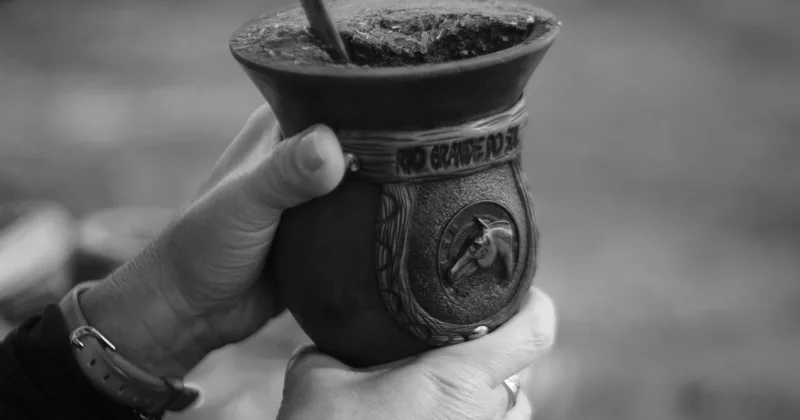
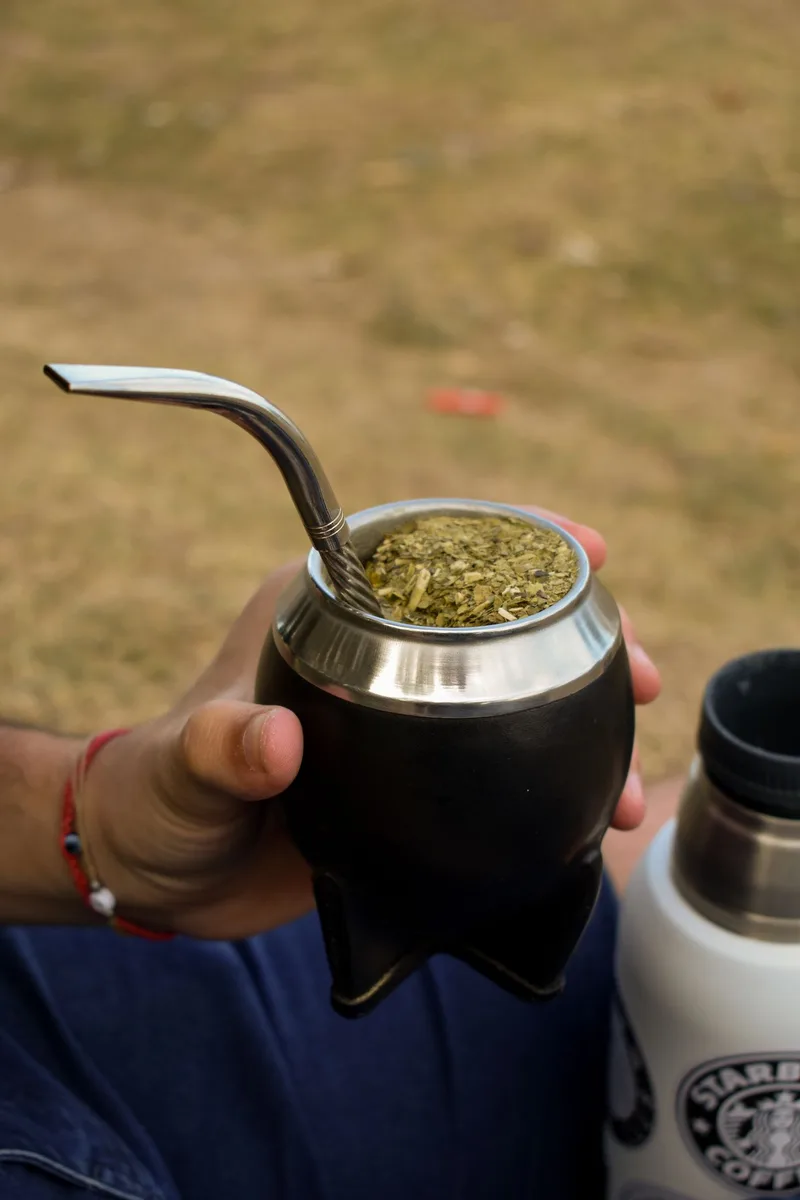
If one object symbolizes Paraguayan culture, it is the guampa, the cup people carry for tereré. Tereré is cold yerba mate, brewed with ice water and often fresh herbs called yuyos, sipped through a metal straw and shared in a circle. In the heat that defines much of the year, it is everywhere: outside shops, on park benches, in offices, between coworkers, among friends who simply sit and talk. Mate, the hot version, appears on cooler mornings, but tereré is the true national habit.
The ritual has quiet rules worth learning. One person, the server, fills the guampa and passes it around the group in turn. You drink the whole cup, hand it back, and it gets refilled for the next person. Saying gracias actually means "I am finished, thank you," so if you still want another round, just hand the cup back without it. Do not wipe the straw, do not rush, and do not treat the shared cup as unhygienic, because that circle is a small act of belonging.
Being invited into a tereré circle is a genuinely good sign. It is how Paraguayans include people, dissolve formality, and pass the time in a country that is generally in no hurry. Accept the invitation, sit down, and let the conversation wander. More friendships start over a shared guampa here than anywhere near a business card.
Asado and Family Gatherings in Paraguay
The weekend rhythm of Paraguayan culture often centers on the asado, the slow-cooked barbecue that turns Sundays into all-day family events. An asado is less a meal than an occasion: someone tends the grill for hours, relatives drift in and out, children run between adults, and the eating happens whenever the meat is ready rather than at a fixed hour.
Alongside the grilled beef you will meet local staples like chipa (a cheesy manioc bread), sopa paraguaya (a savory cornbread, confusingly not a soup), and mandioca (boiled cassava served with almost everything).
These gatherings are the beating heart of family life, and as a newcomer your first invitation to one is a milestone. Bring something small, a dessert or a drink, arrive without expecting a strict start time, and settle in for the long haul. Complimenting the asador on the meat is always well received. You are not there to eat quickly and leave; you are there to be present for the afternoon.
What strikes many newcomers is how naturally extended family blends together. Grandparents, cousins, and in-laws are not occasional guests but the regular cast, and children are welcome everywhere rather than kept apart, which makes the country an easy landing for anyone moving to Paraguay with a family. Understanding this family-centered warmth is central to understanding Paraguay, because the asado is where it all becomes visible.
Family and Relationships at the Center of Paraguayan Culture
In Paraguayan culture, family is the organizing unit of life in a way that goes deeper than sentiment. Adult children often live at or near the family home for years, several generations frequently share a household or a street, and major decisions get weighed with relatives rather than made alone. The family is a safety net, a social circle, and a business network rolled into one, and loyalty to it generally comes before almost everything else.
For a newcomer, the practical lesson is that trust is personal and relationship-driven. Business, favors, apartment leads, and reliable recommendations tend to flow through people who know people, not through cold outreach. Investing time in real relationships is not a nicety here; it is how things actually get done. A landlord who likes you, a neighbor who vouches for you, a friend who introduces you to their cousin the accountant will do more for your life in Paraguay than any amount of paperwork.
This warmth has a flip side newcomers should expect. Paraguayans are often reserved at first, especially compared to effusive Brazilians or Argentines, and closeness is earned rather than instant. Do not mistake initial politeness for coldness. Show up consistently, honor small commitments, and be patient, and the reserve gives way to a loyalty that runs genuinely deep.
Tranquilo: Paraguay's Relaxed Pace and Sense of Time
The word you will hear constantly is tranquilo, and it captures the pace of Paraguayan culture better than any explanation. Life here is generally unhurried. People value calm over speed, presence over punctuality, and a relaxed afternoon over an optimized one. For newcomers coming from fast, clock-driven cultures, this is either the country's greatest gift or its most persistent frustration, and often both in the same week.
Time-keeping is flexible, and you should plan around it rather than fight it. A social gathering at "eight" may genuinely mean nine or later, and arriving exactly on time to a house party can leave you standing awkwardly while hosts are still getting ready. Business and official appointments run closer to schedule but still bend, and services, deliveries, and repairs often take longer than promised.
The honest version of this trade-off, along with the other adjustments that test newcomers, is laid out in our piece on the downsides of moving to Paraguay.
The mindset that works is simple: keep your own appointments punctually, but hold everyone else's timing loosely, and build slack into your day. Bring patience to the bank queue and a book to the waiting room. Getting angry at the pace changes nothing except your blood pressure. Locals who seem serenely unbothered by a two-hour delay are not being passive; they simply refuse to let a clock ruin an afternoon, and that is a skill worth borrowing.
Thinking about building a life in Paraguay? A short intro call explains the residency steps, the trips and the costs; the cultural fit is something only time on the ground will show you. Talk to us.
Greetings and Everyday Etiquette in Paraguay
Everyday etiquette in Paraguayan culture is warm and physical by North American or Northern European standards. Among friends and in social settings, women greet with a single kiss on the cheek, and men who know each other shake hands or add a shoulder pat or a hug. In more formal or first-time professional settings, a handshake with eye contact is the safe default. When you enter a small gathering, it is polite to greet each person individually rather than offering a single wave to the room.
Courtesy titles matter more than newcomers expect. Using señor and señora, saying por favor and gracias generously, and greeting shopkeepers with a buen día before getting to business all signal respect. Paraguayans are generally soft-spoken and dislike open confrontation, so a raised voice or blunt criticism lands harder here than at home. Disagreements are handled gently and indirectly, and preserving the other person's dignity is part of good manners.
A little formality goes a long way. Greet warmly, thank often, keep your tone calm, and avoid public displays of impatience or anger. None of this is complicated, but consistently getting the small courtesies right marks you as someone who respects the culture rather than merely passing through it.
Religion, Festivals, and Holidays in Paraguayan Culture
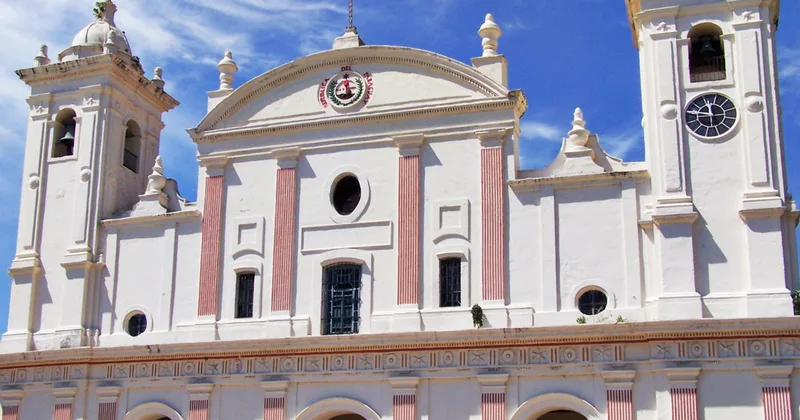
Paraguay is predominantly Catholic, and religion remains a visible thread through Paraguayan culture, family milestones, and the calendar. Even among people who are not especially devout, the rhythms of the church shape holidays, baptisms, weddings, and funerals, and religious imagery is common in homes and public life. The Virgin of Caacupé is a beloved national figure, and her feast day in December draws enormous pilgrimages, with hundreds of thousands walking to the basilica.
The festival calendar is lively and, like the country's wider things to do in Paraguay, worth planning around. Semana Santa (Holy Week) is a major family occasion, when many people travel to their home towns and chipa is baked in large batches for the household.
Local patronal festivals honor each town's patron saint with music, food, and community gatherings, and Carnival, while more restrained than in Brazil, is celebrated with real energy in cities like Encarnación. Christmas and New Year are family-centered and often celebrated late into the warm summer night.
For a newcomer, these dates are your best window into the culture. If a Paraguayan friend invites you to a festival, a Caacupé pilgrimage, or a family celebration around a religious holiday, accept. You will see the country at its most open, generous, and genuinely itself, and you will understand more in one afternoon than in weeks of observing from the outside.
Practical Tips to Fit In with Paraguayan Customs Respectfully
Fitting into Paraguayan culture respectfully comes down to a handful of habits rather than any grand gesture. Learn functional Spanish and a few warm words of Guaraní. Accept the tereré cup when it comes around and learn the circle's simple etiquette. Say yes to family invitations and asados, and do not rush them. Greet people properly, use courtesy titles, and keep your voice calm even when things run slow. These small acts, repeated, are what turn a foreigner into a familiar face.
Avoid a few common missteps. Do not loudly compare Paraguay unfavorably to your home country or to its flashier neighbors, because national pride here is quiet but real. Do not treat the relaxed pace as a personal insult or lecture people about efficiency. Steer clear of heavy political debate until you understand the context, and never mistake reserve for unfriendliness. Patience and humility read as respect; impatience and superiority read exactly as they do anywhere.
Above all, give it time. The relationships that make life in Paraguay rich are built slowly, over shared cups and long Sundays, and they cannot be rushed any more than the country can. For a practical view of how these cultural rhythms shape your arrival week by week, see our guide to your first 30 days in Paraguay. Show up, stay patient, and let the warmth find you.
Looking at residency in Paraguay? See what each package covers in the residency process, at a clear, fixed fee. View the packages.
Frequently Asked Questions About Paraguayan Customs
Do I need to speak Guaraní to fit into Paraguayan culture?
No. Spanish handles daily life completely, and Guaraní is not required for newcomers. But learning a few warm Guaraní phrases signals real respect for Paraguayan culture and tends to earn a delighted response, moving you from outsider to welcome guest faster than almost anything else you can do.
What is tereré and why is it central to Paraguayan culture?
Tereré is cold yerba mate brewed with ice water and herbs, sipped through a metal straw and shared in a circle. It is the daily social ritual of Paraguayan culture, appearing in parks, offices, and homes. Being invited into a tereré circle is a genuine sign of inclusion and belonging.
How important is family in Paraguay?
Family is the organizing unit of Paraguayan culture. Extended relatives share homes and streets, major decisions are weighed together, and trust generally flows through personal relationships rather than cold outreach. For newcomers, investing time in real relationships is how life and business actually get done here.
Why is punctuality so relaxed in Paraguay?
The pace of Paraguayan culture is captured by the word tranquilo, meaning calm and unhurried. Social timing is flexible, so a gathering at "eight" often means later. Keep your own appointments punctual but hold others' timing loosely, build slack into your day, and bring patience.
What should I know about Paraguayan greeting etiquette?
Greetings in Paraguayan culture are warm. Women often greet with a cheek kiss, men shake hands or hug when familiar, and a handshake with eye contact suits formal settings. Greet each person individually, use courtesy titles like señor and señora, and keep your tone calm and polite.
What religion shapes Paraguayan culture and its holidays?
Paraguay is predominantly Catholic, and religion threads through Paraguayan culture and the calendar. The Virgin of Caacupé is a national figure whose December feast draws huge pilgrimages, while Holy Week and local patron-saint festivals are lively, family-centered occasions well worth experiencing as a newcomer.
What is asado and why does it matter in Paraguay?
Asado is the slow-cooked barbecue at the heart of weekend family life in Paraguayan culture. It is an all-day occasion rather than a quick meal, served with staples like chipa, sopa paraguaya, and mandioca. A first asado invitation is a milestone, so arrive relaxed and stay for the afternoon.
How can newcomers show respect for Paraguayan culture?
Respect Paraguayan culture through consistent small habits: learn functional Spanish, accept the tereré cup, say yes to family gatherings, greet people properly, and stay calm about the relaxed pace. Avoid comparing Paraguay unfavorably to other countries, and give relationships the time they need to grow.
Disclaimer: This article is a general cultural overview. Customs vary by family and region in Paraguay, so treat it as a starting point, not a rulebook.

About the author
Yannick Schroth
Founder · Paraguay relocation support
Spends regular time in Paraguay and, with his team on the ground in Asunción, guides international nomads, entrepreneurs and investors through residency, the cédula and the RUC paperwork.
Note: this article reflects the position at the time of publication. Laws, prices and deadlines can change, so individual details may since be out of date. Check the current rules before you act on them: we answer questions about residency and our services, while the tax treatment of your own case belongs with a qualified tax adviser.