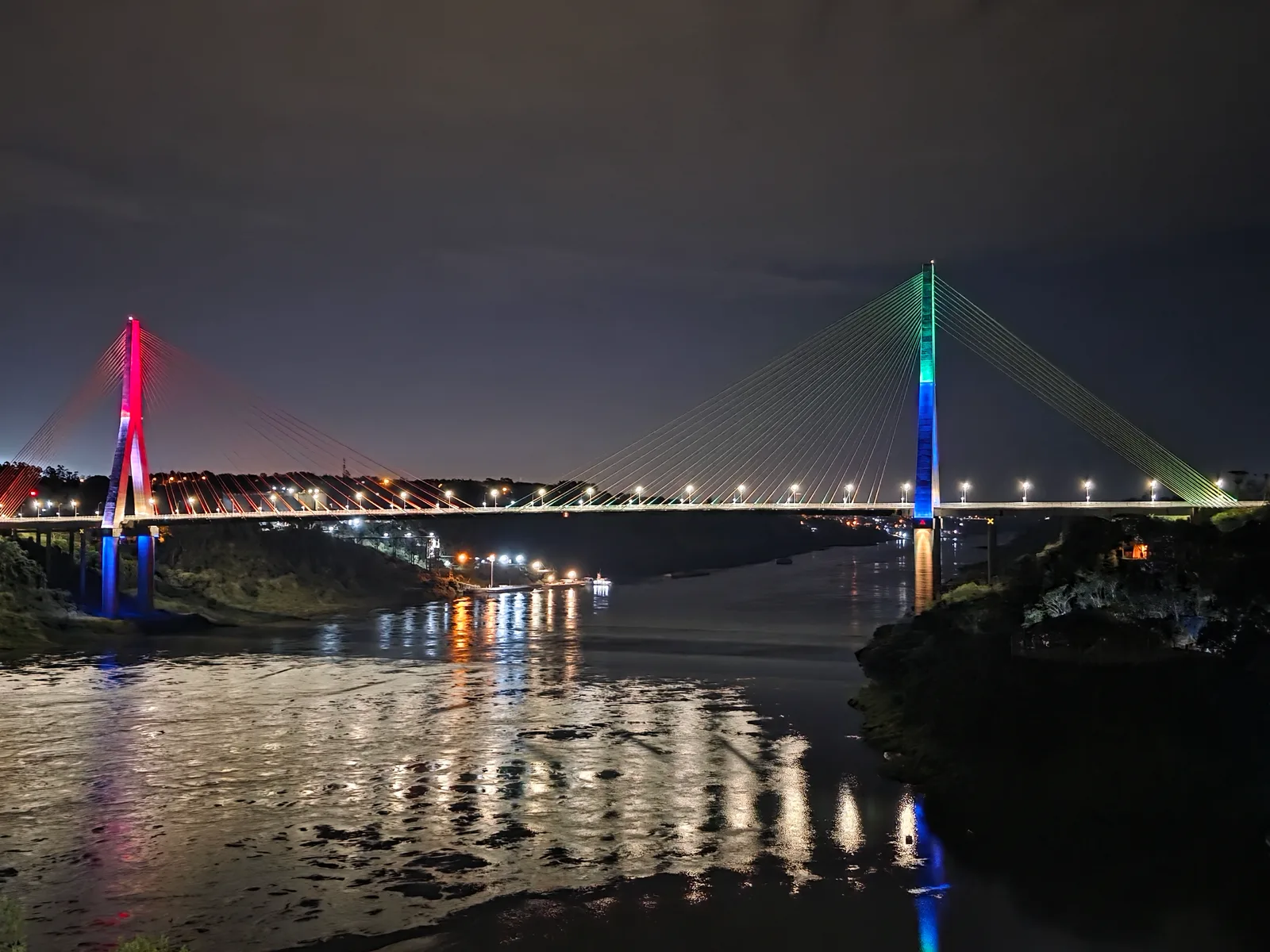
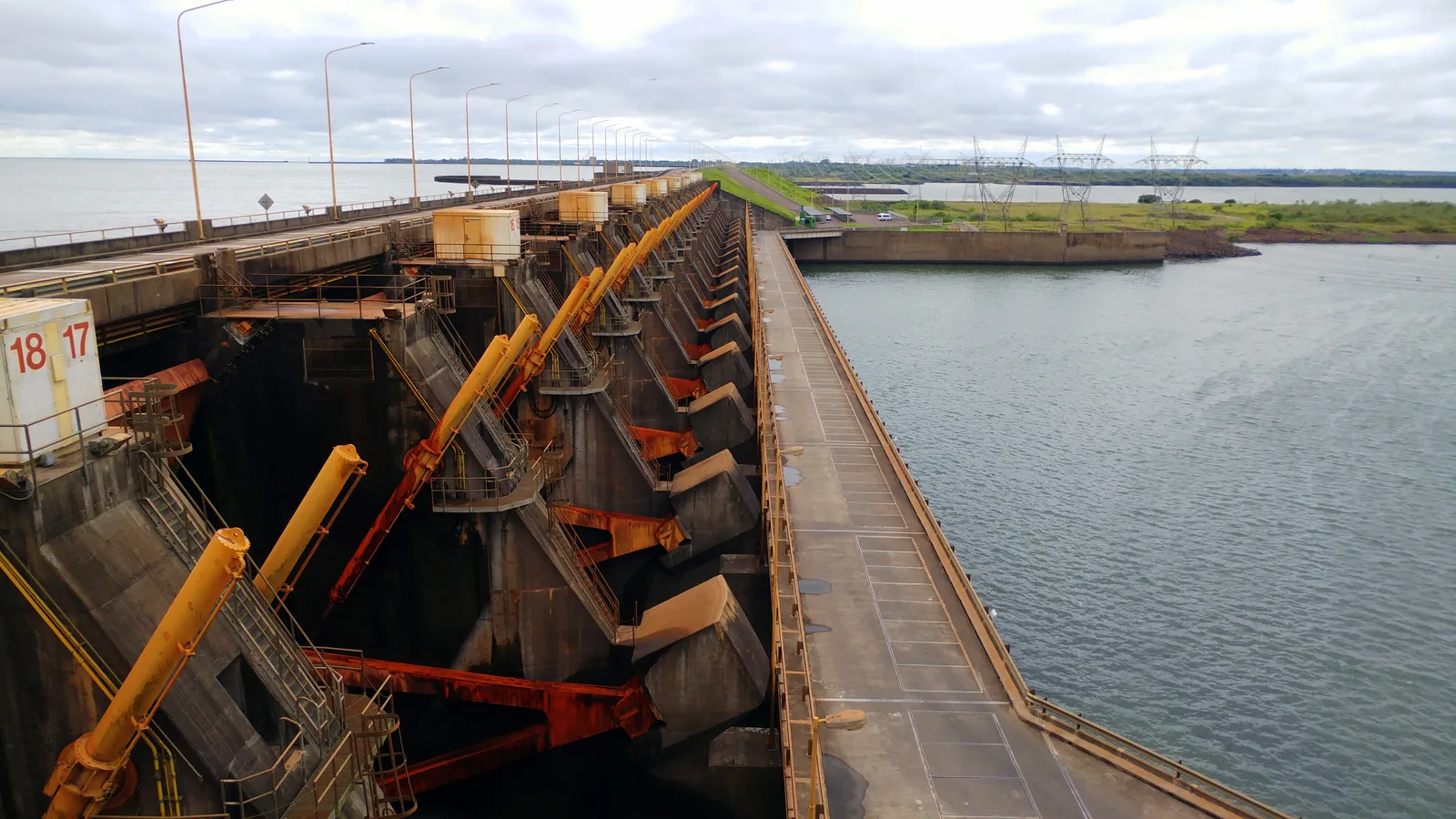
Paraguay is edging physically closer to Brazil. The Bioceanic Bridge over the Río Paraguay is roughly 90% complete as of 13 July 2026, and the two banks are due to be joined in mid July, with current reporting pointing to around 15 July. The span links Carmelo Peralta on the Paraguayan side with Puerto Murtinho on the Brazilian side, and it is the centerpiece of the wider bioceanic corridor.
Update, 13 September 2026: the two sections were joined on 23 July 2026, a week later than the mid-July date reported here. Finishing works, paving, lighting and signage were still under way afterwards, with completion expected within months rather than on a fixed date.
What the Bridge Connects
The structure runs 1,294 meters across the Río Paraguay, between Carmelo Peralta in the Alto Paraguay department and Puerto Murtinho in Mato Grosso do Sul. It is being built by the binational PYBRA consortium and financed by Itaipú Binacional, the hydroelectric utility jointly owned by Paraguay and Brazil. Around 90% of the work has been carried out by Paraguayan crews. A further 3.8 kilometers of access road will tie the bridge directly into Route PY15.
The Bioceanic Corridor
The bridge is more than a river crossing. It is the missing link in the bioceanic corridor, a route meant to connect the Atlantic with the Pacific: from Brazilian ports, through Paraguay's Chaco and Argentina, to ports in Chile. The aim is to shorten export routes, especially toward Asia, and to open up the thinly populated Chaco economically. For Paraguay, it means a strategic role as a transit axis between two oceans.
What It Means for Expats and Investors
For individuals the bridge changes little directly, but as a signal it is telling: Paraguay is investing in hard infrastructure and knitting itself more closely to its largest neighbor. Border trade hubs like Ciudad del Este stand to gain from closer exchange with Brazil. That fits the wider picture of steady growth, an investment-grade rating, and a territorial tax system that, in principle, does not tax income genuinely earned outside the country.
If you are thinking entrepreneurially, the groundwork is in our guide to investing in Paraguay. But keep the honest caveat in view: closing a gap in a bridge is not the same as a finished trade route.
Making the corridor fully usable still needs more roads and working customs and border procedures, and a piece of infrastructure does nothing to change the tax rules that apply to your own case. What decides your position is genuine tax residency, not a headline about a highway. Income from work done here is Paraguayan-source whoever the client is, and the IRS keeps taxing US citizens and green-card holders on worldwide income regardless of residency.
Frequently Asked Questions
When will the Bioceanic Bridge be finished?
The two sections were joined on 23 July 2026, with the structure roughly 90% complete. Finishing works were expected to take several more months, and full use, including access roads and border processing, will take longer still.
What is the bioceanic corridor through Paraguay?
A planned trade and logistics route linking the Atlantic, via Brazil, with the Pacific, via Chile, running across Paraguay and Argentina. It is meant to speed up exports and open up Paraguay's Chaco region.
Disclaimer: This article reflects the position on 13 July 2026 and is not legal or tax advice. Construction dates can slip, and the corridor's full economic effect will unfold over years.
Sources
- ▹Paraguay TV: less than six meters to unite the two sections of the Bioceanic Bridge
- ▹La Nación: the Bioceanic Bridge is 21 meters from completion
- ▹Infobae: the Bioceanic Bridge is 13.60 meters from closing the Paraguay-Brazil connection
- ▹Prefeitura de Porto Murtinho: physical connection of the Bioceanic Route bridge, 23 July 2026
Questions about residency and tax residency in Paraguay? A free intro call runs through the residency stages and what each trip involves. If your plans raise tax questions, we connect you with a local tax professional who can answer them. Get in touch.

About the author
Yannick Schroth
Founder · Paraguay relocation support
Spends regular time in Paraguay and, with his team on the ground in Asunción, guides international nomads, entrepreneurs and investors through residency, the cédula and the RUC paperwork.