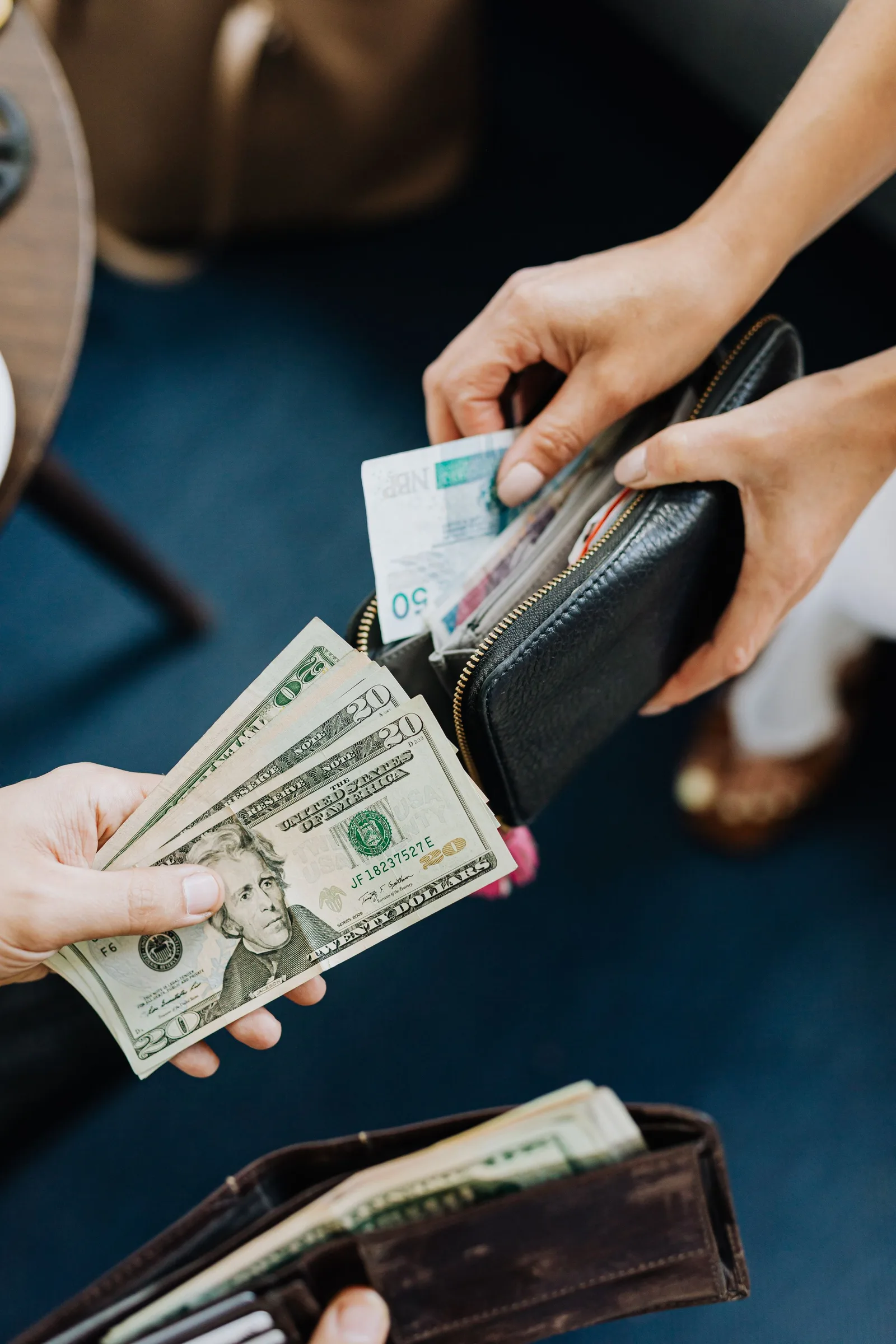
Picture a cedi savings account as "a bucket with a slow leak": the image sticks because it's accurate. Moving money from Ghana to Paraguay is less about a single wire transfer than about picking rails that don't leak value on the way. Cedi depreciation, forex access, and getting funds usable in a dollar-priced country make the mechanics matter as much as the destination itself.
This article covers why the cedi makes this move harder than a typical transfer, which rails actually work for Ghanaians today, and what changes once Paraguay residency is in place, including the honest friction points fees and bank scrutiny create.
Why the Cedi Complicates Moving Money to Paraguay
The cedi lost roughly half its value against the US dollar during the 2022 debt crisis, then rebounded sharply in 2025 under an IMF program, with smaller moves since. Welcome as the recovery is, it shows how far the currency can travel in either direction. For cedi savers, those swings land directly on purchasing power measured in dollars, which Paraguay uses for rent and larger purchases.
That volatility is the whole reason forex planning matters here. Converting cedis to dollars only at the point of transfer exposes you to whatever rate happens that week, and Ghana's spread between official and parallel-market rates has not always been small. Converting in stages, not in one rushed trade, keeps a single bad week from setting your whole fund's value.
Forex Access Challenges for Ghanaians Sending Money Abroad
Ghana's central bank has periodically tightened foreign exchange rules, and commercial banks have followed with their own internal caps and documentation demands for larger outbound transfers. During the height of the 2022 crisis, some account holders reported delays just to move dollars that were technically theirs. Confirm current limits with your bank before assuming any figure still holds.
None of this makes transfers impossible. It means Ghanaians moving money abroad should expect more scrutiny than a eurozone wire and should build in time for compliance checks rather than assume same-day execution. Larger amounts, in particular, tend to draw source-of-funds questions.
Practical Rails: Bank Wires, Wise, and Forex Accounts
A standard SWIFT wire from a Ghanaian bank still works and remains the most familiar option for larger, one-off transfers, though fees and intermediary deductions can eat a noticeable slice of the total. Expect the receiving side, typically a Paraguayan bank or your US LLC's account, to also charge an incoming fee, so budget for both ends, not just the sending fee quoted upfront.
Wise and similar services often beat traditional wires on cost and exchange-rate transparency for mid-sized transfers, since they show the markup upfront rather than burying it in a quoted rate. Availability for Ghana-originated transfers varies and changes, so check current corridor support directly before relying on it for a time-sensitive move.
Holding a USD account, through a fintech, an offshore bank, or your US LLC, before relocating lets you convert cedis to dollars on your own schedule instead of scrambling during the actual move. That single step, done months ahead, is often the simplest way to reduce cedi-exposure risk.
Stablecoins as a Bridge for Moving Money Abroad
USDC and USDT have become a genuinely common bridge for Ghanaians moving money internationally, largely because peer-to-peer markets let you convert cedis to a dollar-pegged token without waiting on a bank's forex queue. From there, funds move to an exchange or wallet reachable from Paraguay, then convert to cash or bank funds locally.
This route carries real risks worth naming plainly: counterparty risk on whichever platform you use, regulatory uncertainty as Ghana's crypto rules keep evolving, and the hassle of on/off-ramping in Paraguay, where crypto-to-bank conversion isn't yet as smooth as in some hubs. Treat stablecoins as one tool, not a full replacement for bank rails.
Planning the transfers around your residency dates? A short intro call explains the residency steps and typical cédula timelines in Paraguay. Book a call
What Changes Once You Hold Paraguay Residency
Once you're a resident, opening a Paraguayan bank account becomes realistic, and holding funds locally removes a layer of the cedi-exposure problem entirely, since Paraguay prices daily life in guaraníes but handles larger transactions comfortably in dollars. That said, opening an account still means a cédula, proof of address, and a bank's own onboarding checklist, so it isn't instant on arrival.
Our detailed guide to opening a bank account in Paraguay covers what documentation Paraguayan banks expect and how long the process typically runs. For the mechanics of getting money into Paraguay itself, our full breakdown of money-transfer options for Paraguay goes deeper on rails, fees, and timing than we can cover here.
The Paraguay Visa Step That Comes Before Any Transfer
Money logistics only matter once you're in Paraguay, and Ghana sits on Paraguay's visa-required list, so a visa has to be sorted before residency can even start. We can handle visa and residency together for Ghanaian applicants, rather than leaving you to coordinate a consulate and a residency lawyer separately.
Pricing for that combined track is on request, since consulate speed and documentation vary case by case, and no provider can honestly promise entry. The final decision rests with the Migraciones officer reviewing the file. Our guide to Paraguay residency for Ghanaians and walkthrough of moving to Paraguay from Ghana cover that groundwork.
Building a Realistic Money-Moving Timeline
Rather than treating the transfer as one event on moving day, most Ghanaians who make this work spread it across steps: opening a USD-holding account months ahead, converting cedis gradually, testing a small transfer through whichever rail they'll use, then moving the bulk of funds. That staged approach reduces exchange-rate risk and the chance of a large transfer triggering extra bank scrutiny.
It also gives you a working buffer once you land, since Paraguayan bank accounts take time to set up and rent deposits tend to come up faster than expected. Having funds for the first months available in a form that complies with Bank of Ghana rules means early expenses in Paraguay do not depend on one transfer clearing on time.
Frequently Asked Questions About Moving Money from Ghana to Paraguay
Why is moving money from Ghana to Paraguay harder than from other countries?
Mainly the cedi's volatility and Ghana's periodic forex restrictions, which add documentation and timing friction that a eurozone transfer typically doesn't face. Transfers aren't blocked, but Ghanaians should plan for more scrutiny and extra time.
Does Paraguay use the cedi or another local currency?
Neither, really. Paraguay's currency is the guaraní, but larger transactions and cross-border transfers are commonly priced and settled in US dollars, part of why many movers convert out of cedis in stages before moving day.
Is Wise reliable for transfers from Ghana to Paraguay?
Often, yes. Many users find it cheaper and more transparent than a standard bank wire for mid-sized amounts. Corridor availability and limits for Ghana-originated transfers change over time, so confirm current support directly with Wise first.
Are stablecoins a safe way to move money from Ghana to Paraguay?
They're a workable bridge, but not risk-free. Counterparty risk on the platform used, Ghana's evolving crypto rules, and Paraguay's still-developing crypto-to-bank on-ramps mean stablecoins work best as one part of a plan, not the only rail.
Can I open a Paraguayan bank account before I have residency?
Generally no, or only with difficulty. Most Paraguayan banks expect a cédula and proof of local address, so the practical sequence is residency first, then a local account, with USD-holding accounts elsewhere covering the gap.
Do Ghanaians need a visa to enter Paraguay?
Yes. Ghana is on Paraguay's visa-required list, so a visa application has to be arranged before residency proceedings begin. We handle the visa and residency steps together for Ghanaian applicants, since separating them causes avoidable delays.
How much does it cost to move money from Ghana to Paraguay?
It depends on the rail, the amount, and current bank fees on both ends, so there's no single honest number to quote. Wire fees, intermediary deductions, and exchange-rate spreads all vary, which is why comparing methods before a large transfer matters.
Will Paraguay residency stop the cedi from affecting my savings?
Not automatically. Residency changes where you live and how income is taxed, but savings still held in cedis remain exposed to the same currency risk. Converting into dollars, ideally before or during the move, is what actually addresses that exposure.
Legal basis and disclaimer: This article is general information, not individual tax, exchange-control, or financial advice, and rules change. Ghana's foreign-exchange rules are set by the Bank of Ghana (BoG), and Paraguay's territorial income-tax treatment by the Dirección Nacional de Ingresos Tributarios (DNIT). Check the current limits with the relevant authority or a qualified adviser before you send money. Paraguay's end of this is documented by PwC's country summary.

About the author
Yannick Schroth
Founder · Paraguay relocation support
Spends regular time in Paraguay and, with his team on the ground in Asunción, guides international nomads, entrepreneurs and investors through residency, the cédula and the RUC paperwork.
Note: this article reflects the position at the time of publication. Laws, prices and deadlines can change, so individual details may since be out of date. Check the current rules before you act on them: we answer questions about residency and our services, while the tax treatment of your own case belongs with a qualified tax adviser.