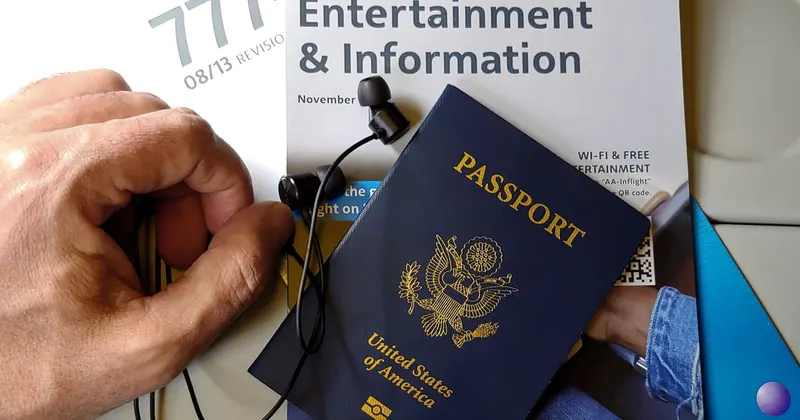
You moved to Asunción, Paraguay's territorial rules in principle leave income earned genuinely abroad outside its tax net, and then you remembered the US passport sitting in your drawer. For an American abroad, the single most important line on the tax return is the Foreign Earned Income Exclusion, filed on Form 2555. Used correctly it can wipe out US federal income tax on roughly $133,000 of what you earn. Used carelessly it convinces people that Paraguay made them tax-free, which it did not.
This is the honest breakdown of what the Foreign Earned Income Exclusion covers, the two tests you must pass, and the gaps it leaves wide open.
US citizens and green-card holders: You are taxed on your worldwide income regardless of where you live (citizenship-based taxation). Paraguay residency does not remove your US tax filing or liability. The FEIE only helps partially. Consult a US-qualified advisor and see our US citizens and Paraguay taxes guide.
What the Foreign Earned Income Exclusion (FEIE) Actually Is
The Foreign Earned Income Exclusion is a provision of US tax law that lets a qualifying American living abroad exclude a capped amount of foreign earned income from US federal income tax. You claim it on Form 2555, attached to your Form 1040. It does not cancel your filing duty, and it does not touch passive income or self-employment tax.
That last sentence is the whole article in miniature. The Foreign Earned Income Exclusion is narrow by design: Congress built it so Americans posted overseas would not be double-taxed on their salary. It was never meant to hand a nomad in a 0% country a clean zero US bill.
The word that carries all the weight is earned. In US tax language, earned income means compensation for services you personally perform: wages, salary, a consultant's fees, the net profit of a business you actively run. It pointedly does not mean money your assets make while you sleep.
How Much the FEIE Cap Shelters for 2026
For the 2026 tax year, the Foreign Earned Income Exclusion caps out at $132,900 of foreign earned income per qualifying person. The 2025 figure was $130,000, and the cap is indexed to inflation, so it rises most years. Check the current-year amount before you file rather than carrying last year’s number forward.
The cap is per person, not per household, and this matters for couples. If both spouses work and both individually qualify, each can file their own Form 2555 and claim their own exclusion, roughly doubling the sheltered amount to around $265,800 of combined earned income for 2026. A stay-at-home spouse with no earned income has nothing to exclude, because the FEIE only works against income you personally earned.
One mechanical point trips people up: the exclusion is not a rate cut on everything else. Under the "stacking" rule, it carves the excluded income out first, and any income above your exclusion is then taxed at the rate it would have hit anyway, not a lower bracket.
Form 2555: How You Claim the Foreign Earned Income Exclusion
There is no automatic exclusion. You get the Foreign Earned Income Exclusion only by affirmatively electing it on Form 2555. According to the IRS instructions, that first election usually has to sit on a timely filed Form 1040 (extensions included) or on an amendment to one. Exceptions do allow a late election in some cases, explained in IRS Publication 54, but they come with conditions, so treat filing on time as the plan and a late claim as a repair job for your preparer.
Form 2555 asks you to establish three things: that your tax home is in a foreign country, that your income is genuinely foreign earned income, and that you pass one of the two residency tests below. Tax home is not the same as where you sleep; it is your main place of business or work. If you are a remote worker or online business owner physically based in Asunción, your tax home is generally Paraguay, which is exactly what you want for the FEIE.
The election is also sticky. Once you claim the Foreign Earned Income Exclusion, it stays in force automatically until you revoke it, and after revoking you generally cannot re-elect for five years without IRS permission. In some years, especially when you have paid meaningful foreign tax, the Foreign Tax Credit beats the FEIE. That trade-off is a conversation for a US-qualified preparer, not a blog.
The Physical Presence Test: 330 Full Days Abroad
The first way to qualify for the Foreign Earned Income Exclusion is the Physical Presence Test. It is mechanical and unforgiving: you must be physically present in a foreign country or countries for at least 330 full days during any rolling 12-month period. The 12 months need not match the calendar year, giving you flexibility to pick the window that captures your qualifying days.
"Full day" means a full 24-hour period from midnight to midnight spent abroad. Travel days over international waters, or the day you fly into or out of the US, can fail to count, so the real margin is tighter than 330 sounds. In practice the Physical Presence Test rations your US time to roughly 35 days a year, and a single badly-timed trip home can push you under 330 and blow the exclusion for that whole 12-month window.
The advantage of the Physical Presence Test is that it is objective: you either counted 330 full days or you did not. For a first-year nomad who has not yet built a full calendar year of foreign residency, this is usually the test you lean on. Keep a genuine travel log with dates and border stamps, because if the IRS questions your Foreign Earned Income Exclusion, the burden is on you to prove the days.
The Bona Fide Residence Test and Your Paraguay Cédula
The second route to the Foreign Earned Income Exclusion is the Bona Fide Residence Test, and it is the one a real Paraguay move supports well. Instead of counting days, this test asks whether you were a genuine, settled resident of a foreign country for an uninterrupted period that includes a full calendar year. It is qualitative: the IRS looks at whether you actually put down roots.
This is where a real Paraguayan residency and cédula earns its keep. A cédula, a local lease or property, local bank relationships, and an intention to stay indefinitely all point toward bona fide residence. Because it is judged on the totality of your situation rather than a day count, the Bona Fide Residence Test can tolerate more US travel than the Physical Presence Test, provided your trips are clearly temporary and you always return to your genuine home in Paraguay.
The catch is the calendar-year requirement: you have to be a bona fide resident for a period spanning an entire January-to-December year, which rules out most people in their first partial year abroad. The typical pattern is to qualify by Physical Presence in year one, then switch to Bona Fide Residence once a full calendar year of Paraguay residency is on the record.

The Foreign Housing Exclusion Stacks on Top of the FEIE
Beyond the main cap, qualifying Americans can also claim the Foreign Housing Exclusion, which shelters a slice of housing costs above the Foreign Earned Income Exclusion. It sits on top of the base exclusion, so it can push the total income you shield past the headline $132,900 figure, though not by much in a low-cost city.
The mechanics are fiddly. The Foreign Housing Exclusion covers reasonable housing costs, rent chiefly, above a "base" floor that the IRS sets as a percentage of the main exclusion, and it is capped at a ceiling that varies by how expensive your city is. Asunción is not a high-cost location on the IRS tables, so the housing benefit here is real but modest next to what an expat in London or Singapore could claim.
One structural note: the Foreign Housing Exclusion is for employees, while self-employed people claim a Foreign Housing Deduction on the same Form 2555. Either way, it only exists if you already qualify for the Foreign Earned Income Exclusion; it is an add-on, never a standalone relief.
What the Foreign Earned Income Exclusion Does Not Cover
Here is where the hype dies. The Foreign Earned Income Exclusion covers earned income and nothing else. It does absolutely nothing for passive income. Dividends, interest, capital gains, crypto disposals, rental income, and portfolio profit are all fully taxable by the United States, with no FEIE shelter whatsoever, no matter how many days you spent in Paraguay.
For an investor or trader living off a portfolio, this is decisive. If your money comes from selling appreciated stock, harvesting crypto gains, or collecting dividends, Form 2555 barely helps, because none of that is earned income. Paraguay's 0% territorial tax removes the local tax on that foreign income, but the US tax on your capital gains and dividends lands in full. Americans who expected the "0% country" headline to cover their trading account are the most disappointed group I talk to.
This is why a US person's math looks so different from a non-American's. For a non-American Paraguay tax resident, income that genuinely arises abroad is in principle outside Paraguayan tax, while work performed in Paraguay can be taxed locally at 8 to 10%. The American cannot, because citizenship-based taxation follows the passport. The comparison of residency countries lays out how much simpler the picture is for non-US nomads, but read it knowing the clean version was written for them, not for you.
Weighing a Paraguay move with a US passport? Book a free intro call about residency, the cédula, and how many trips each package involves. Sorting your earned-versus-passive split and estimating any US bill is work for a CPA or enrolled agent who prepares expat returns; we do not prepare or estimate US taxes. Book an intro call
Self-Employment Tax: The FEIE Does Nothing Here
This is the trap that catches freelancers and one-person online businesses. The Foreign Earned Income Exclusion excludes income from income tax. It does nothing for self-employment tax. If you run your business as a sole proprietor or a US LLC taxed as a disregarded entity, your net profit is subject to US self-employment tax at 15.3%, no matter how far below the FEIE ceiling you sit.
Break it down. Self-employment tax is 12.4% for Social Security up to the annual wage base, plus 2.9% for Medicare with no ceiling, totaling 15.3% on net self-employment profit. A digital nomad who nets $100,000, lives 365 days a year in Asunción, and correctly excludes every dollar from income tax through the Foreign Earned Income Exclusion can still owe roughly $14,000 to $15,000 in US self-employment tax. Leaving the United States did nothing to that charge.
Some countries have a Totalization Agreement with the US that lets an American pay into a foreign social-security system instead, switching off the self-employment charge. Paraguay does not have one with the United States, as of 2026, so there is no local system to opt into. This is why the self-employment charge deserves early attention from a US preparer. That decision belongs with a US-qualified advisor, because the wrong structure can cost more than it saves.
Earning Above the FEIE Ceiling in Paraguay
What happens when you earn more than the cap? Everything above the Foreign Earned Income Exclusion ceiling is taxable by the United States at regular federal rates. A high earner shelters the first ~$132,900 and then pays ordinary US tax on the rest.
In a normal high-tax country, the Foreign Tax Credit rescues the high earner: the tax paid locally offsets the US tax dollar-for-dollar. In Paraguay that rescue is often missing. Income Paraguay treats as foreign-source bears 0% locally, so there is no foreign tax to credit, and the US tax on income above the exclusion lands in full. That same 0% can leave a high-earning American more exposed to residual US tax once they blow past the FEIE cap.
Salary or fees for work you do while physically in Paraguay may not stay at 0%, though. Paraguay can treat that pay as local-source income under IRP, where rates run from 8 to 10%, wherever the employer or client is based. Ask a Paraguayan tax adviser how your pay is classified, and let your US preparer decide what any Paraguayan tax means for the credit.
The 0% territorial tax guide is the companion read on how the territorial system is built.
Who Benefits Most From the Foreign Earned Income Exclusion
Strip out the disappointment and the Foreign Earned Income Exclusion is genuinely powerful for the right profile. It serves best an employee or modest-earning solo worker whose income is mostly earned, sits under the cap, and carries little self-employment tax; such a person, living full-time in Asunción and passing one of the two tests, can drive their US income tax on that salary to zero.
The FEIE helps least at the two extremes: passive-income investors get almost nothing because capital gains and dividends fall outside it entirely, and high self-employed earners keep the 15.3% charge and pay ordinary US tax above the cap. Between those poles sits a large middle of earned-income nomads for whom Form 2555 does most of the heavy lifting.
The honest rule of thumb: the Foreign Earned Income Exclusion is a real tool, not a magic wand. It reliably kills US income tax on earned income under the cap, and nothing else. Pair it with the reporting side, because even a year you owe zero can carry filing duties; our FBAR and FATCA guide for expats covers the disclosure forms that ride alongside your 1040. Model the whole picture with a US-qualified advisor before relying on any figure.
Frequently Asked Questions About the FEIE
What is the Foreign Earned Income Exclusion amount for 2026?
For the 2026 tax year the Foreign Earned Income Exclusion caps at $132,900 of foreign earned income per qualifying person, up from $130,000 in 2025. It is indexed to inflation, so it rises most years. Check the current-year IRS figure before you file, and remember each qualifying spouse can claim their own exclusion.
How do I claim the exclusion on Form 2555?
You claim it by filing Form 2555 with your Form 1040 and electing the exclusion, normally on a timely return or an amendment to one. The form establishes your foreign tax home, confirms your income is foreign earned income, and shows you pass either the Physical Presence Test or the Bona Fide Residence Test. Without an election there is no exclusion, although a late one is allowed in some cases, so a missed year is worth raising with a US preparer.
Does the Foreign Earned Income Exclusion cover capital gains or crypto?
No. The Foreign Earned Income Exclusion covers earned income only, so capital gains, crypto disposals, dividends, interest, and rental income are all fully taxable by the US with no FEIE shelter. Paraguay's 0% territorial tax removes the local tax on that income, but the US tax on it still applies in full.
What is the difference between the Physical Presence Test and the Bona Fide Residence Test?
The Physical Presence Test is a mechanical count: 330 full days abroad in a rolling 12-month period. The Bona Fide Residence Test is qualitative, requiring genuine settled residency in a foreign country for a full calendar year, which a real Paraguay cédula and home support. Most nomads use Physical Presence first, then switch.
Does the Foreign Earned Income Exclusion remove self-employment tax?
No. The Foreign Earned Income Exclusion only excludes income from income tax, not self-employment tax. US self-employment tax of 15.3% applies to net self-employment profit even when the FEIE wipes out your income tax. Paraguay has no totalization agreement with the US as of 2026, so nothing switches it off locally.
Can I claim the Foreign Housing Exclusion in Paraguay?
Yes, if you already qualify for the Foreign Earned Income Exclusion. The Foreign Housing Exclusion shelters reasonable housing costs above a base floor, capped by city. Asunción is a low-cost location on the IRS tables, so the benefit is real but modest. Self-employed filers claim a housing deduction instead.
Does the Foreign Earned Income Exclusion make me tax-free in Paraguay?
Not for US persons. The Foreign Earned Income Exclusion can zero out US income tax on earned income under the cap, but it does nothing for passive income, self-employment tax, or income above the ceiling. On the Paraguay side, pay for work done while living there may be taxed locally under IRP, so a clean zero in both countries is rare.
Do I still file a US return if the FEIE covers all my income?
Yes. Claiming the Foreign Earned Income Exclusion requires filing Form 2555 with a Form 1040, so the exclusion itself is what obligates the return. You also may owe self-employment tax and face separate disclosure duties like the FBAR, even in a year your US income tax lands at zero.
Planning the Paraguay side of the move? Our service packages and pricing show what Light, Standard, and Premium include on the way from documents to cédula. Form 2555 and the self-employment math stay with your US-qualified preparer, since no package includes US tax work.
Legal basis and disclaimer: This article is general information, not individual US tax or legal advice, and rules can change. US federal tax rules for citizens and green-card holders are published by the Internal Revenue Service (IRS). Consult a US-qualified adviser before you act. PwC's country file covers the exclusion rules as an independent source.

About the author
Yannick Schroth
Founder · Paraguay relocation support
Spends regular time in Paraguay and, with his team on the ground in Asunción, guides international nomads, entrepreneurs and investors through residency, the cédula and the RUC paperwork.
Note: this article reflects the position at the time of publication. Laws, prices and deadlines can change, so individual details may since be out of date. Check the current rules before you act on them: we answer questions about residency and our services, while the tax treatment of your own case belongs with a qualified tax adviser.