You hold a US green card, you found Paraguay's 0% territorial tax on foreign income, and you assumed the two would combine into a clean tax-free life. They do not. For as long as that card is valid, US immigration law calls you a lawful permanent resident and US tax law calls you a tax resident, taxed on your worldwide income exactly like a citizen.
Green-card holders who move full-time to Asunción keep filing a US return, keep reporting global income, and can still owe US tax on money Paraguay never touched. This guide explains why that happens, what actually ends the status, and where Paraguay genuinely fits.
The most expensive assumption I see green-card holders make is that boarding a one-way flight out of the United States quietly closes their US tax file. It does not. The card stays live in the eyes of the IRS until you formally abandon it, and for long-term holders, giving it up can trigger the same expatriation exit tax that hits citizens who renounce. Timing matters more than almost anyone expects.
US citizens and green-card holders: You are taxed on your worldwide income regardless of where you live. A green card keeps you a US tax resident until it is formally abandoned. Consult a US-qualified advisor and see our US citizens and Paraguay taxes guide.
Why Green-Card Holders Owe US Tax on Worldwide Income
The short answer, because it is the whole article in miniature. A US green card makes you a lawful permanent resident, and a lawful permanent resident is a US tax resident taxed on worldwide income for every year the card is valid, as of 2026.
Moving to Paraguay can remove the local tax on genuinely foreign income, because Paraguay in principle taxes only Paraguayan-source income (work you physically do there counts as local). It does nothing to the US tax, because the United States taxes green-card holders on status, not on where they sleep.
This catches people because most of the world runs on residency-based taxation. In many residency-based systems a genuine move abroad can end home-country tax residency, though departure taxes, extended liability rules and remaining home ties often keep obligations alive for a while. Green-card holders do not get that clean break. The physical move looks identical, but the US keeps its claim, and that claim rides on the plastic card in your wallet rather than on your address.
So the honest framing is this. Paraguay is residency-based, the US treats green-card holders as residents wherever they are, and the two do not cancel out. You have to actively end the US side, or worldwide income reporting follows you to Asunción and everywhere else.
A Green Card Makes You a US Tax Resident While It Is Valid
The rule is mechanical, which is what makes it dangerous. If you have been granted lawful permanent resident status and that status has not been revoked or formally abandoned, you are a resident alien for US tax purposes for the entire year, as of 2026. There is no "but I was not really living there" exception baked into the tax code. The card itself is the trigger.
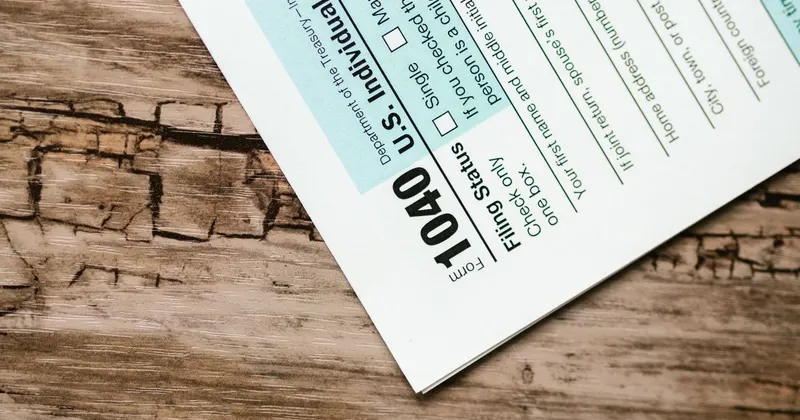
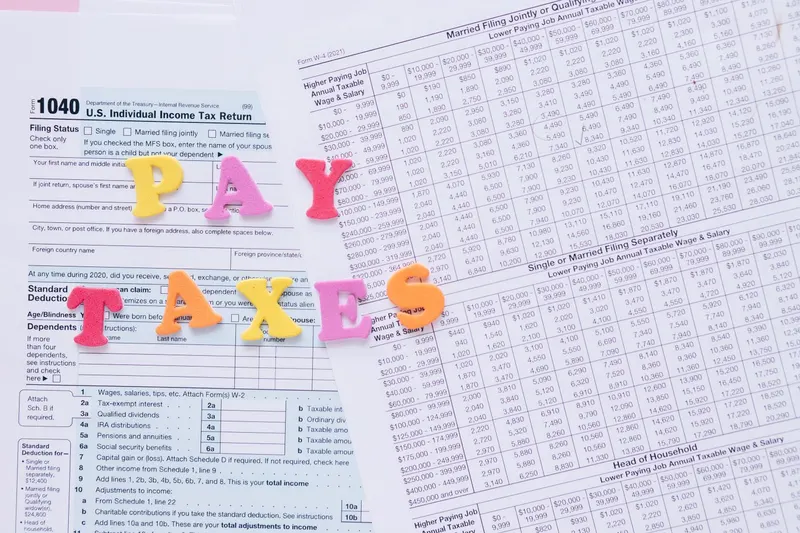
That means the full US resident tax picture applies to green-card holders: an annual Form 1040, worldwide income on it, and the same information-reporting stack a citizen abroad carries. Foreign bank accounts over the aggregate threshold pull in the FBAR (FinCEN Form 114). Larger foreign financial assets pull in FATCA reporting on Form 8938. Wages, self-employment profit, dividends, interest, capital gains, and crypto disposals are all reportable, wherever they arise.
Green-card holders sometimes hope the FEIE erases all of it. The Foreign Earned Income Exclusion helps, but only partially: it shelters a slice of earned income if you pass the physical-presence or bona-fide-residence test, and it does nothing for passive income or for self-employment tax. The mechanics are the same as for citizens, which we cover in the Foreign Earned Income Exclusion and Form 2555 explainer. The exclusion is a discount, not an off switch.
Living Full-Time in Paraguay Does Not End Green-Card Tax Status
Here is the trap dressed up as a plan. A green-card holder rents an apartment in Asunción, gets a Paraguayan cédula, spends 365 days a year in the country, and assumes that a real life abroad must have replaced the US one for tax. It has not. Genuine Paraguayan residency is excellent for many things, but it does not terminate US green-card tax status on its own.
The two statuses run in parallel rather than in competition. You can be a bona fide Paraguayan resident and a US tax resident in the very same year, and green-card holders in exactly that position still file a US return reporting worldwide income. Paraguay in principle leaves genuinely foreign income untaxed, so the local bill on that income can be zero. The US bill is calculated as if the card were the only thing that mattered, because for federal tax purposes it largely is.
One nuance for completeness. Where the US has an income tax treaty with your country of residence, a "treaty tie-breaker" can sometimes reposition you, though it carries its own filing. Paraguay has no such treaty with the US, as of 2026, so green-card holders here have no tie-breaker to lean on. The card keeps you resident.
Leaving the US Does Not Abandon the Green Card: Form I-407
This is the single most common misunderstanding, so read it slowly. Physically leaving the United States, even permanently, does not abandon your green card for tax purposes. The card stays live until you formally give it up or the government formally takes it away. Letting it "expire" in a drawer, or simply never returning, does not quietly end the tax obligation the way people assume it does.
To end lawful permanent resident status cleanly, green-card holders generally file Form I-407, Record of Abandonment of Lawful Permanent Resident Status, and surrender the physical card, as of 2026. Alternatively, an immigration judge or officer can formally rescind the status. Until one of those things is documented, the IRS can continue to treat you as a resident taxed on worldwide income, even years after you left, and even if the card is expired on its face. An expired card is not an abandoned card.
The practical lesson for green-card holders planning a Paraguay move is to treat the surrender as a deliberate, documented step with a chosen date, not an afterthought. When you abandon the card determines which tax years you were a US resident, and that timing interacts directly with the exit tax rules below.
Long-Term Green-Card Holders and the Section 877A Exit Tax
Now the part that turns a paperwork question into a potentially six-figure one. If you are a long-term resident, giving up the green card can trigger the same expatriation exit tax under Section 877A that applies to citizens who renounce, as of 2026. Many green-card holders have never heard the term "long-term resident" and are stunned to learn they qualify.
The definition is specific: you are a long-term resident if you held the green card in at least 8 of the last 15 taxable years ending with the year you expatriate. Partial years of holding the card count as full years for this test, which trips people up. So a green-card holder who has had the card for eight calendar years, even without eight full years of physical residence, can already be inside long-term-resident territory and inside the exit-tax regime on the way out.
This is why "just letting the card go" is bad advice for long-term green-card holders. The abandonment that ends your tax residency is the very event that can crystallize the exit tax. The two are the same moment. Surrender is therefore a step to discuss with a US-licensed tax professional before you take it. The overlap with the citizen rules is close enough that the renouncing US citizenship and exit tax guide covers the same Section 877A machinery in more depth.
How the Expatriation Exit Tax Hits Long-Term Residents
The exit tax bites only if you are a covered expatriate, and green-card holders become covered by meeting any one of three tests, as of 2026. First, a net worth of $2 million or more on the expatriation date. Second, an average annual US income tax liability over the prior five years above an inflation-indexed threshold (set at $211,000 for 2026 and adjusted yearly). Third, a failure to certify five years of full US tax compliance on Form 8854. Any single one is enough.
If you are covered, Section 877A treats you as if you sold everything you own the day before you gave up the card, at fair market value. The unrealized gain above an indexed exclusion amount ($910,000 for 2026, adjusted yearly) is taxed at capital-gains rates in that final year. Retirement accounts and certain deferred assets get their own less favorable treatment. For an asset-heavy green-card holder, that mark-to-market event can be the largest tax bill of their life, all in one year.
The flip side is genuinely reassuring for many. A green-card holder with a modest net worth, ordinary income, and clean compliance can often surrender the card without becoming a covered expatriate at all, and therefore without any exit tax. The regime is aimed at wealth and non-compliance, not at every departing resident. Modeling your own numbers with a US-qualified advisor is the only way to know which side of the line you sit on.
Why the Surrender Date Has Tax Consequences
Because the long-term-resident test counts years of holding the card, and because the exit tax lands in whatever year you expatriate, the date you surrender has tax consequences.
How the surrender date interacts with the 8-in-15-year test and the mark-to-market rules depends on your own history, and only a US-licensed CPA or enrolled agent can assess it.
Planning residency in Paraguay? A free intro call lets us line up the residency side, from the first Migraciones filing to the cédula, with the timing you have in mind. Counting your years held and judging covered-expatriate status are tasks for a US-licensed CPA or an enrolled agent, and we leave them there. Book an intro call
Five Clean Years of US Tax Compliance Before You Expatriate
Compliance is the one variable entirely within your control, and it is decisive. To expatriate cleanly, green-card holders must be able to certify five prior years of full US tax compliance, as of 2026. That certification is made on Form 8854, filed with your US return for the year the card is given up. Skip the form or fail the certification, and you are automatically a covered expatriate regardless of your net worth, which drags you straight into the exit tax you were trying to avoid.
The practical implication is that clean compliance is not a last-minute task. If your returns for the past few years are missing, late, or wrong, you generally want them corrected and on record well before the surrender date, so that five clean years actually exist when you certify. Green-card holders who discover a compliance gap the month they want to leave often find the surrender delayed by a year or more while they fix the record.
None of this is a reason to panic and stop filing. It is a reason to get a US expat tax preparer involved early, get the back years right, and treat the five-year clean record as the foundation the whole surrender plan is built on.
How Paraguay Fits Into a Green-Card Holder's Plan
Strip out the tax fantasy and Paraguay still earns its place for green-card holders, just not as an instant 0% switch. As a low-cost base with a straightforward, stable residency, it is a strong plan B and a comfortable place to actually live while you sort out the US side on your own timeline. The Paraguay residency and cédula guide walks through how that residency is obtained.
For green-card holders specifically, the sequencing tends to be different from a citizen's. Many green-card holders intend to give up the card eventually anyway, and how they sequence residency abroad and the surrender is a question for their US tax professional.
Paraguay's territorial tax system means that once the US card is properly abandoned, foreign-source income such as dividends from abroad can sit at 0% locally, subject to any remaining US obligations from the exit. Earnings from work you carry out on Paraguayan soil are another story: they can fall under IRP as local income, so a Paraguayan tax adviser needs to look at them first.
Where Paraguay does not perform magic is during the years you still hold the card. In that window, worldwide income reporting to the US continues, passive income stays fully US-taxable, and the 0% headline applies only to Paraguay's side of the ledger.
What Green-Card Holders Should Do Before Moving to Paraguay
The rule of thumb is simple: for a green-card holder, Paraguay changes the cost of living immediately, while the US tax position changes only once the card is formally abandoned. Anyone who tells you the move alone flips off US tax is selling the version written for non-Americans.
A sensible order of operations looks like this. Count your years held and find out whether you are already a long-term resident. Get five clean years of US tax compliance on record. Model your covered-expatriate exposure and your exit-tax number with a US-qualified advisor. Establish real Paraguayan residency. Form I-407 and Form 8854 then follow on the date your US adviser recommends.
Ready to build the Paraguay side of the plan? See our packages and pick the level of hands-on support that fits a green-card holder's residency and relocation timeline. View our packages
Frequently Asked Questions About Green-Card Holders and US Tax
Do permanent residents pay US tax while living in Paraguay?
Yes. Green-card holders are US tax residents taxed on worldwide income for as long as the card is valid, even living full-time in Paraguay, as of 2026. Paraguay's territorial system can remove the local bill on genuinely foreign income, but the US return, the reporting, and any US tax owed continue unchanged.
Does leaving the US end green-card tax residency?
No. Physically leaving, even permanently, does not end green-card tax status. The card stays live for US tax until it is formally abandoned or officially rescinded. An expired or unused card is not an abandoned one, so green-card holders can remain US tax residents years after departure without a documented surrender.
What is Form I-407 for green-card holders?
Form I-407 is the Record of Abandonment of Lawful Permanent Resident Status. Filing it and surrendering the physical card is how green-card holders formally end lawful permanent resident status, and with it US tax residency, as of 2026. The date you file determines which tax years you were a resident, and long-term residents also owe Form 8854 for that year.
Do long-term green-card holders face the exit tax?
They can. Green-card holders who held the card in at least 8 of the last 15 taxable years are long-term residents, and giving up the card can trigger the same Section 877A expatriation exit tax as a renouncing citizen, as of 2026. It applies only to covered expatriates.
How many clean tax years does the IRS require before surrendering a green card?
Five. To expatriate cleanly, long-term residents (green card held in at least 8 of the last 15 tax years) must certify five prior years of full US tax compliance on Form 8854, attached to the return for the year the card is surrendered. Failing that certification makes you a covered expatriate automatically, regardless of net worth, which can trigger the exit tax. Correct any missing or late returns well before the surrender date.
Does Paraguay residency cancel US tax for lawful permanent residents?
No. Paraguay residency and a cédula do not terminate green-card tax status, which rides on the card itself, not your address. Green-card holders can be Paraguayan residents and US tax residents in the same year. Only formally abandoning the card ends the US worldwide-income obligation.
Does the surrender date of a green card matter for tax?
Yes. The long-term-resident test counts years held, and the exit tax lands in the year you expatriate. How that applies to you is a question for a US-licensed CPA or enrolled agent.
Can green-card holders use the FEIE while living in Paraguay?
Partially. Green-card holders can claim the Foreign Earned Income Exclusion on earned income if they pass the physical-presence or bona-fide-residence test, but it does nothing for passive income or self-employment tax. It reduces US tax while the card is valid; it does not end the underlying tax residency.
Legal basis and disclaimer: This article is general information, not individual US tax or legal advice, and rules can change. US federal tax rules for citizens and green-card holders are published by the Internal Revenue Service (IRS). Consult a US-qualified adviser before you act. A second reference for the US position is the PwC tax summary.

About the author
Yannick Schroth
Founder · Paraguay relocation support
Spends regular time in Paraguay and, with his team on the ground in Asunción, guides international nomads, entrepreneurs and investors through residency, the cédula and the RUC paperwork.
Note: this article reflects the position at the time of publication. Laws, prices and deadlines can change, so individual details may since be out of date. Check the current rules before you act on them: we answer questions about residency and our services, while the tax treatment of your own case belongs with a qualified tax adviser.